In short: A mole should be checked by a doctor if it changes, looks clearly different from your other moles or causes symptoms such as itching or bleeding. The ABCDE rule helps you pay attention to shape, border, colour, size and change over time. It is a guide and can neither confirm nor rule out skin cancer. A single noticeable change is reason enough to have a mole examined, even if it is small and does not hurt.
What makes a mole look suspicious?
A mole, known medically as a naevus, is usually benign. The aim is therefore not to label as many spots as possible as suspicious. It is more useful to get to know your own skin: which moles have been there for a long time, what do they look like, and does one of them stand out from the usual pattern?
In dermatology, a mole that stands out like this is sometimes called the «ugly duckling». If, for example, you have many similar light brown moles and notice one spot among them with a clearly different colour, you should show it to a doctor. The same applies to a mole whose shape is noticeably different from the others. A difference is not a cancer diagnosis, but it deserves attention.
Look at areas of skin without any existing mole as well. A melanoma can develop on skin that previously looked normal. If you only check the moles you already know, you may miss a new change.
The ABCDE rule as a checklist
Take your time going through the following features. You do not need to count points, and a mole does not have to «meet» every letter. Describe as specifically as you can what you have noticed. The medical assessment takes into account the overall appearance of a skin lesion and how it has developed.
| Feature | What to look at | What can be a warning sign |
|---|---|---|
| A: Asymmetry | Compare the two halves of the spot. | The halves clearly differ in shape. |
| B: Border | Look at where the spot meets the surrounding skin. | The edge looks ragged, irregular or blurred. |
| C: Colour | Notice how the shades are distributed. | Light and dark areas alternate unevenly, for example brown and black, or with additional reddish areas. |
| D: Diameter | Note the size and compare it with how it used to be. | A mole is getting bigger. Size alone does not allow a reliable judgement, however: small melanomas occur too. |
| E: Evolution | Ask yourself what has changed. | The shape, colour, size or surface looks different from before. |
You may have come across a different set of letters. The Swiss Cancer League uses the ABCD rule, in which D stands for dynamics. This refers to changes in size, colour, shape or thickness. In the ABCDE version explained here, E for evolution covers the same idea. The message is the same: changes should be assessed by a doctor.
Changes the rule can miss
An even border or a uniform colour does not rule out melanoma. Some melanomas grow as a nodule and do not fit the usual ABCDE description well. So also watch for a new raised lesion that feels firm and grows quickly. Have it examined promptly, even if it looks round or symmetrical.
In German, melanoma is commonly called «black skin cancer», which can be misleading: a melanoma does not have to be dark. It can, for example, appear reddish or skin-coloured. A new, growing skin lesion should therefore not be considered harmless simply because it is pale.
Raised does not automatically mean dangerous
E is sometimes explained as elevation. Benign moles can also be raised above the level of the skin. What matters more than elevation alone is whether a lesion is new, changing or growing. Conversely, a flat mole is not automatically harmless.
The checklist helps you notice anything unusual. A self-check that seems reassuring should never be a reason to ignore a change or a feeling that something is not right.
How to check your skin systematically
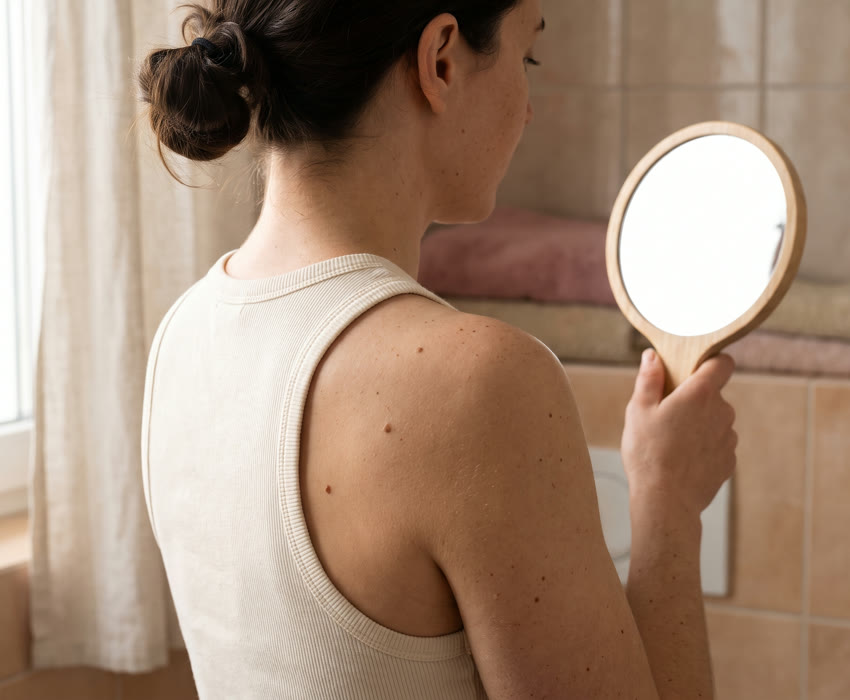
Use a full-length mirror and, where needed, a hand mirror. Someone you trust can look at areas that are hard for you to see. Always follow the same order so that you do not only look at the easily visible moles on your arms and stomach.
- Front and sides: Look at your body from the front and from each side. Raise your arms so that your armpits are visible too.
- Arms and hands: Check your upper arms, forearms, palms and fingernails.
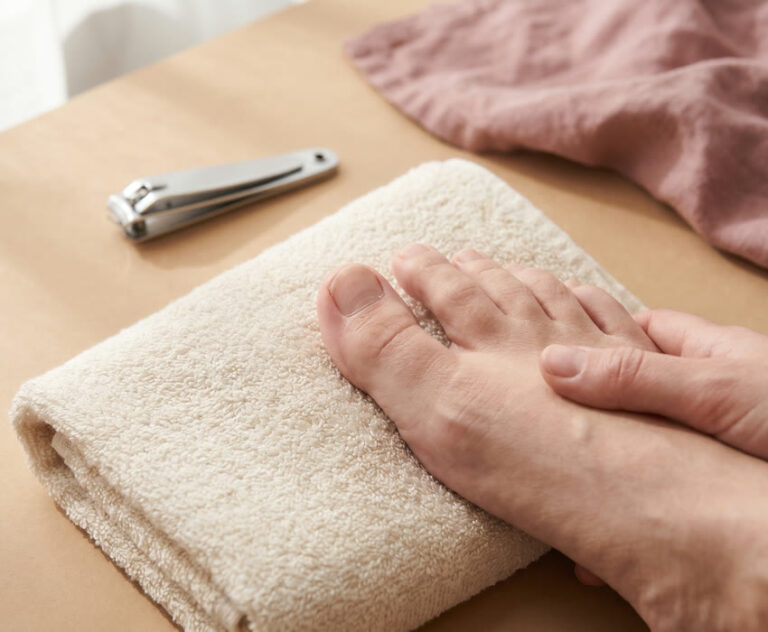
- Legs and feet: Remember the backs of your legs, the soles of your feet, the spaces between your toes and your toenails.
- Head and back: Use the hand mirror to look at the back of your neck, your scalp, your back and your buttocks. Part your hair to see the scalp more clearly.
Skin changes can also occur in places that get little sun. A new dark area under a nail without any obvious injury should be assessed by a doctor as well. So do not limit your attention to the parts of the body that tan in summer.
If you notice an unusual spot, write down where it is and what has changed. If you already have older photos, you can bring them to your appointment. But if a lesion looks suspicious, do not start a long period of observation just to collect a series of pictures first.
When should you see a doctor?
Arrange a prompt assessment if you discover a new, unusual mole or if an existing one changes. This applies in particular to rapid growth, repeated bleeding without an obvious injury, oozing or a spot that does not heal. Itching, pain or new crusting are also reasons to have a skin lesion examined.
Do not wait until your next scheduled skin check. When you book the appointment, say which change you have noticed and how long it has been there. This allows the practice to judge how urgent it is. You are welcome to contact us for a mole check in Zurich. Your family doctor can also be a first point of contact.
Whether regular checks make sense in addition depends on your personal risk. Relevant factors include many or unusual moles, a previous skin cancer, melanoma in close relatives or a weakened immune system. Discuss a suitable follow-up plan with your doctor. What determines the intervals is explained in our article How often should moles be checked? A newly noticed change is assessed independently of this plan.
How we assess a suspicious mole
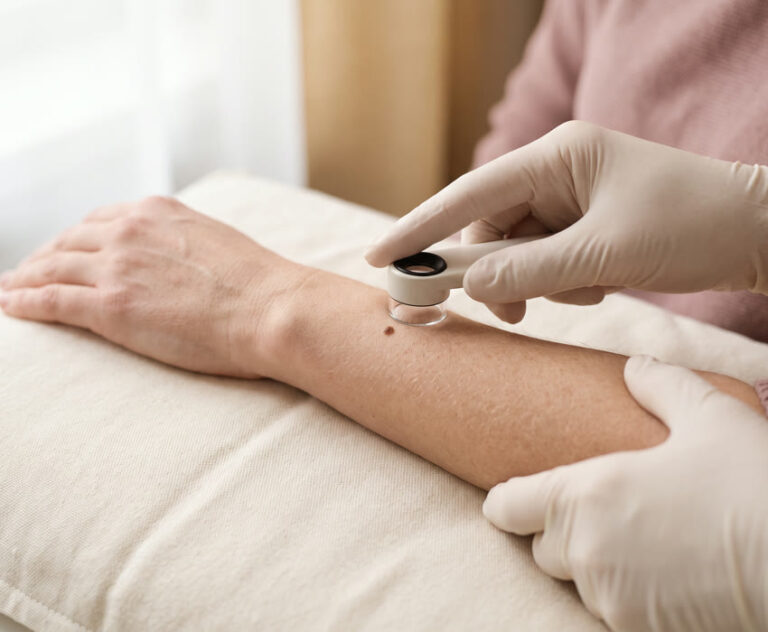
At the Swiss Derma Clinic in Zurich, we examine moles with a dermatoscope. We also offer computer-assisted digital video dermatoscopy. Skin lesions are photographed and the images are stored for later comparison. At follow-up visits, the image comparison is combined with the physical examination.
Show us the spot that worries you and describe what you have observed. It helps, for example, to mention that a previously flat spot can now be felt, or that it has bled without an obvious injury. You do not need to be able to decide beforehand whether it is skin cancer.
If a skin lesion remains suspicious, it may need to be removed and the tissue examined in a laboratory. Only this tissue examination clarifies, where there is such a suspicion, whether a melanoma is present. Our services also include outpatient surgery to remove suspicious skin lesions. Which assessment is appropriate in your case depends on the medical findings.
You can find more information about the examination and digital documentation on our page on skin cancer screening and mole checks.
Frequently asked questions
Do all ABCDE features have to apply?
No. A single warning sign or one clear change can be enough to justify an examination. The rule is not a scoring system. Do not wait for itching or bleeding to appear in addition to a change in shape.
Can a very small mole be dangerous?
Yes. A small diameter does not rule out melanoma. What also matters is whether the spot is changing or looks different from your other moles. Measuring the size yourself therefore does not replace a medical assessment.
Is a mole that does not hurt harmless?
No. A melanoma can be present without pain or any other noticeable symptoms. So pay attention to visible changes as well. If a mole looks different from before, that alone is a reason to seek medical advice.
Does an itchy mole mean skin cancer?
Not automatically. Itching alone does not allow a diagnosis. An itchy mole should still be assessed, especially if its appearance is changing at the same time or if it bleeds or crusts over. At your appointment, describe both the symptoms and the visible changes.
Does every suspicious mole have to be removed?
No. Suspicious first of all means that the skin lesion should be examined more closely. Benign lesions can also show individual warning signs. After the examination, the doctor decides whether monitoring is sufficient or whether tissue needs to be examined for a definite answer.
This article does not replace a medical examination.