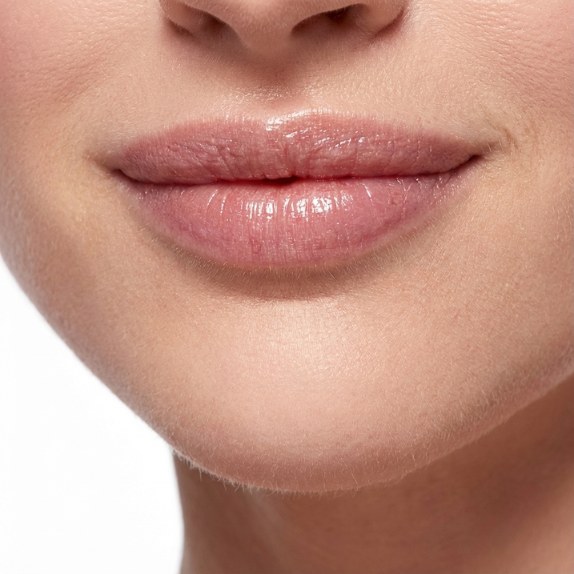
In short: As a rough guide, the visible effect of hyaluronic acid lasts around six to twelve months in the lips and around twelve to twenty-four months in the cheeks when suitable volumising fillers are used. How long it lasts depends on the product, the treated area and your individual result, and it can also be shorter. These time frames do not tell you when all of the material has been broken down. Whether a top-up makes sense should therefore be judged on the basis of an examination and your own wishes.
Lips and cheeks compared
Lip contour and cheek volume play different roles in the face. The requirements for the filler differ accordingly. A range helps with planning, but it does not give you a fixed expiry date.
| Point of comparison | Lips | Cheeks |
|---|---|---|
| Treatment goal | More fullness or a clearer lip contour | Restoring lost volume and supporting facial contours |
| Guide to the visible effect | Around six to twelve months | With suitable volumising fillers, around twelve to twenty-four months |
| What influences the duration | The gel used and the mobile lip area | The gel used and the part of the cheek treated |
| What the time frame does not mean | Not everything has to be gone after twelve months | The effect does not necessarily stay unchanged for two years |
| Deciding on a top-up | Once the desired fullness has faded and after a medical assessment | After reassessing volume, contour and previous treatments |
For the lips, studies show that the effect fades over time, although some patients still have more lip fullness after a year. Longer results in the cheeks have been studied for certain products. This does not mean that every gel or every treatment lasts equally long.
You can find information on the respective treatment goals under lip fillers and cheek fillers. Your personal assessment may differ from these guide values.
Why the filler used matters
Hyaluronic acid occurs naturally in the body and binds water. Injectable treatments use gels whose properties are specifically matched to the treatment. The hyaluronic acid is often cross-linked. This means its molecular chains are bonded together so that the material lasts longer.
The term filler describes a group of materials rather than a single product. Hyaluronic acid fillers also differ from one another. That is why the word «hyaluronic» alone does not tell you how long a particular result is likely to last.
A mobile lip area has different requirements from a cheek augmentation. The area and the properties of the product work together. The longest possible duration is therefore not a sufficient reason to choose a product. The gel also has to suit the treatment goal and the tissue.
Before deciding, ask which product is planned and what experience or studies exist for that specific area. A time frame from a study on the cheeks cannot simply be applied to the lips.
Visible effect versus actual breakdown
After an injection, a change is usually visible straight away. Swelling can make the lips or cheeks look fuller at first. Once it subsides, the result looks less pronounced. That alone does not mean the filler has already been broken down.
Mild swelling, tenderness or bruising often settles within one to two weeks. Symptoms can, however, last longer. A course that seems unusual or becomes increasingly painful should be assessed by a doctor rather than simply waiting for a typical period to pass.
Less visible does not mean fully broken down
Imaging studies show that fillers in the midface can remain detectable for longer than the usual figures for the visible effect would suggest. These findings do not mean that the desired result lasts just as long. They do suggest that previous treatments should be taken into account before a top-up.
The data on long-term persistence come partly from small, selected groups of patients. They cannot be used to determine an exact duration for everyone or for the lips. Nor can you tell from the mirror how much material is still there.
What you can influence yourself
How long a filler lasts cannot be reliably planned to the month. Besides the material and the area, your existing tissue and the amount used play a role in the result. More filler is therefore not automatically the better solution. Too much can lead to overcorrection.
You will receive individual advice for the first period after treatment. This may include a short break from strenuous exercise and avoiding pressure or rubbing. Only massage the treated area if you have been specifically advised to do so.
This advice is part of aftercare. It is not a promise that the filler will last several months longer. There is also no reliable basis for blanket claims such as «drinking more water makes it last longer» or «exercise breaks down hyaluronic acid quickly».
It is more useful to keep a record of your treatment: the date, area and product name are helpful for future consultations. Bring any existing documents with you if you change practice.
When does a top-up make sense?
A top-up is an option if the desired fullness fades and you would like to maintain the result. It is not an obligation. An agreed follow-up appointment does not automatically mean that another injection is needed either.
Before any further treatment, you should clarify the following together with your doctor:
- What change actually bothers you today?
- Which areas have been treated before and which material was used?
- Is there still enough volume, or are there noticeable swellings or lumps?
- Does another injection suit the findings, or is a medical assessment needed first?
Comparable photos can help to put changes into context. Pictures taken right after the injection are of limited use as a reference because of possible swelling. Lighting, facial expression and camera angle should also be as similar as possible.
If you would like to have hyaluronic acid injected again, an assessment of the existing result is more helpful than a fixed schedule. Our page on hyaluronic acid fillers describes the treatment areas and how the product is chosen individually.
Consultation and warning signs
If you are looking into hyaluronic acid fillers in Zurich, we discuss your wishes and the treatment options with you at Swiss Derma Clinic. We offer hyaluronic acid injections for the lips and cheeks. The choice of product and technique is matched to the area being treated.
Bring details of any previous fillers and mention any existing symptoms. For your consultation on hyaluronic acid treatment, it is important to know whether you would like a first treatment, a top-up or an assessment of a result that bothers you.
New or persistent lumps, recurring swelling and redness should be checked by a doctor. Such changes are not simply a sign that the effect is wearing off. Besides temporary reactions, infections and delayed inflammatory reactions are also possible.
Seek help immediately if you notice these signs
Unusually severe pain, white, grey or bluish discolouration of the skin, or visual disturbances during or after a filler treatment require immediate medical attention. They may indicate a problem with blood flow. In the event of sudden visual disturbances or other severe acute symptoms, call 144 in Switzerland. Do not wait for a routine follow-up appointment.
Frequently asked questions
Is hyaluronic acid completely gone after a year?
There is no general answer to this. A fading visible effect and the complete breakdown of the material are two different things. Fillers can remain detectable for longer, especially in the midface. There is no general deadline after which no material is left for certain.
Does the second treatment always last longer?
This cannot be promised. Material remaining from previous treatments can influence how the result is assessed. However, this does not mean the effect will reliably last longer, nor that regular additional amounts should be injected. What matters is what the examination shows and what goal you have.
Why do my lips soon look smaller again?
One possible reason is that the initial swelling has gone down. The freshly treated volume is therefore not a reliable guide to how long the result will last. If you are unsure about the result, have it assessed before deciding on additional volume.
Do I have to top up my lips and cheeks at the same time?
No, there is no medical need for this. Each area should be assessed on its own findings. If your cheek contour still matches your expectations, fading lip fullness alone is no reason to have your cheeks treated again too.
Can unwanted hyaluronic acid filler be removed?
Hyaluronic acid fillers can be broken down by a doctor using the enzyme hyaluronidase. Whether this makes sense depends on the cause of the unwanted result. This treatment also carries risks, including allergic reactions. You can find information on the medical assessment under removing hyaluronic acid filler.
This article does not replace a medical examination.