Plastic Surgery

Rhinoplasty (nose correction) in Zurich

Aes­the­tic or func­tion­al cor­rec­tion of the nose at the Swiss Der­ma Clinic

The nose shapes our appearance more than many other struc­tures. Even small chan­ges have an effect on our facial expres­si­on and how others per­cei­ve us. At the same time, the nose ful­fills a cen­tral func­tion for breathing. 

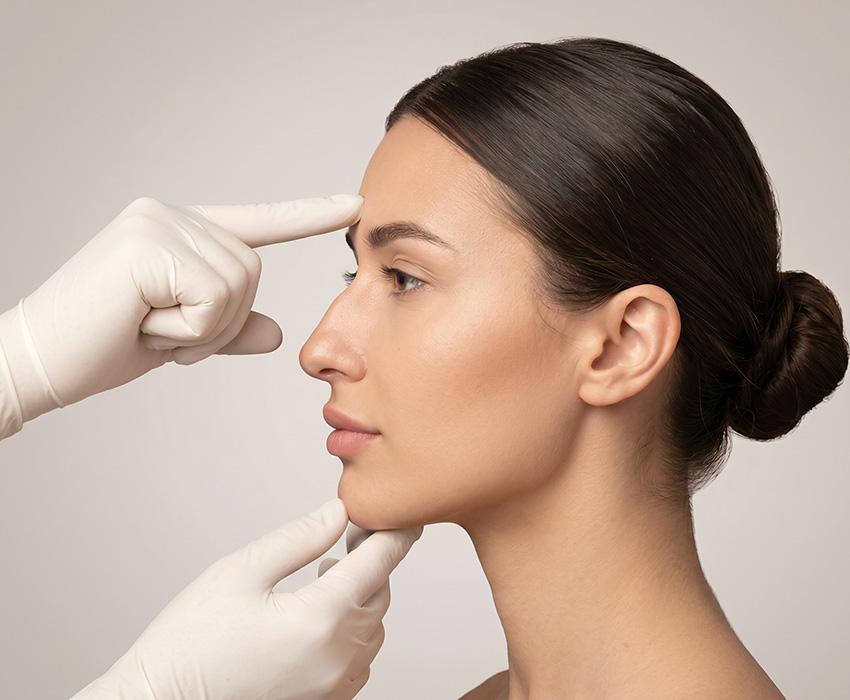
Rhi­no­plasty (sur­gi­cal nose cor­rec­tion) affects the exter­nal shape and takes into account func­tion­al rest­ric­tions to nasal breathing. Your trea­ting spe­cia­list for pla­s­tic and aes­the­tic sur­gery and expert for rhi­no­plasty at the Swiss Der­ma Cli­nic is Dr. Nun­zio­lu­ca Chia­ne­se.

Read more

In brief

Rhinoplasty is used to correct the shape of the nose and, if necessary, to improve nasal breathing. At the Swiss Derma Clinic, we first assess the external shape, the internal nasal structures and the functional situation. Each procedure is planned individually and usually performed under general anesthesia. The aim of the treatment is to achieve a change that blends harmoniously into the face and maintains or even improves the function of the nose.


When a rhinoplasty can be useful

The reasons for a rhinoplasty vary. Some patients feel that their nose is too big, too wide or asymmetrical. This often concerns the bridge of the nose, the tip of the nose or the proportion of the profile.

There may also be functional problems. For example, restricted nasal breathing due to a curved nasal septum or constricted structures inside the nose .

In many cases, several aspects exist side by side. Form influences perception, function influences everyday life.


Anatomy of the nose: every correction is individual

The nose consists of bone, cartilage and soft tissue. Important structures that determine shape, stability and breathing.

Changes always have an effect on the function.

When we plan an operation in this area, we take all aspects into account. Including the facial proportions and skin texture.


How the procedure is performed

We usually perform rhinoplasty under general anesthesia. Depending on the initial situation, access is via the inside of the nose or via a small incision on the bridge of the nose. Bone and cartilage are gently sculpted. This includes straightening the bridge of the nose, refining the tip of the nose or adjusting the width of the nose.

If necessary, we also correct the nasal septum or the nasal valves.

After the procedure, the nose is stabilized. With the help of an external splint and, if necessary, tamponades.


Healing process and result

After the procedure, swelling and bruising in the nose and eye area are normal. These gradually subside over the first few weeks.

The fine shape of the nose develops over several months. Especially in the area of the tip of the nose.


Function and aesthetics

Rhinoplasty not only changes the appearance. An excessive reduction in size, for example, can lead to functional problems in the long term. At the Swiss Derma Clinic in Zurich, we take all influencing factors into account and, if the desired result is not justifiable from a health point of view, we may also advise against treatment.

Are you unhappy with the shape of your nose or do you suffer from restricted nasal breathing?

Have your nose assessed by a specialist at the Swiss Derma Clinic in Zurich. Arrange your appointment here
nasen op zürich

FAQ

nasen op zürich

When can a rhinoplasty be useful?

Whenever the shape of the nose is perceived as disturbing or nasal breathing is restricted. It is often a combination of both. The individual anatomy and a realistic assessment of what can be changed are important.

How much can the nose be changed?

The options depend on the bone structure, cartilage, skin thickness and facial proportions. Rhinoplasty can significantly change the shape and contour, but always remains tied to the existing structures. The treatment goal should always be a nose that fits the face and blends harmoniously into the overall appearance.

How long does it take to heal after a rhinoplasty?

Swelling and bruising usually disappear significantly within two to three weeks. The nose already appears changed afterwards, the final result develops over several months, this process can take up to six months or longer. Healing takes a little longer, especially in the area of the tip of the nose.

Is rhinoplasty painful?

There is no sensation of pain during the procedure due to the anesthesia. After the operation, many patients report a feeling of pressure rather than severe pain. Mild discomfort can usually be treated well.

Do scars remain visible after rhinoplasty?

With the so-called open technique, a small, very narrow incision is made on the bridge of the nose, which usually heals inconspicuously. Visibility also depends on individual skin healing.

Can the result change over time?

The shape of the nose generally remains stable. Minor changes may occur over time due to tissue healing and natural ageing processes, but these are usually minimal. Through careful surgery, we usually achieve a very stable durability.

When will I be socially acceptable again after the operation?

The majority of our patients feel safe to return to their everyday lives after around two to three weeks. By this time, most of the visible swelling has already subsided. Residual swelling may persist for longer, but is usually barely noticeable to others. Minor bruising can usually be easily concealed with make-up.

Does the operation improve nasal breathing?

If functional problems are present, nasal breathing can often be improved as part of rhinoplasty. This involves widening or correcting internal structures such as the nasal septum or narrowed areas.

Our Q&A texts are by no means a substitute for a medical consultation. For an individual and well-founded medical assessment, we recommend a personal consultation at the Swiss Derma Clinic. We are happy to take the time for you!

Table of contents
Search
Jetzt anrufen
WhatsApp schreiben
Mail verfassen
Contact on WhatsApp
Option auswählen
Specialist Consultation (paid)
Select your option
Specialist Consultation (paid)
All dates

December 24, 2024, to December 27, 2024: No dermatology consultations or aesthetic treatments.

December 23, 2024, December 30, 2024, and December 31, 2024: Dermatology consultations available.

December 24, 2024, December 27, 2024, and December 28, 2024: Cosmetic treatments available.

December 20, 2024, and December 31, 2024: Cosmetic treatments available.

January 1, 2025, to January 2, 2025: No cosmetic treatments or dermatology consultations.