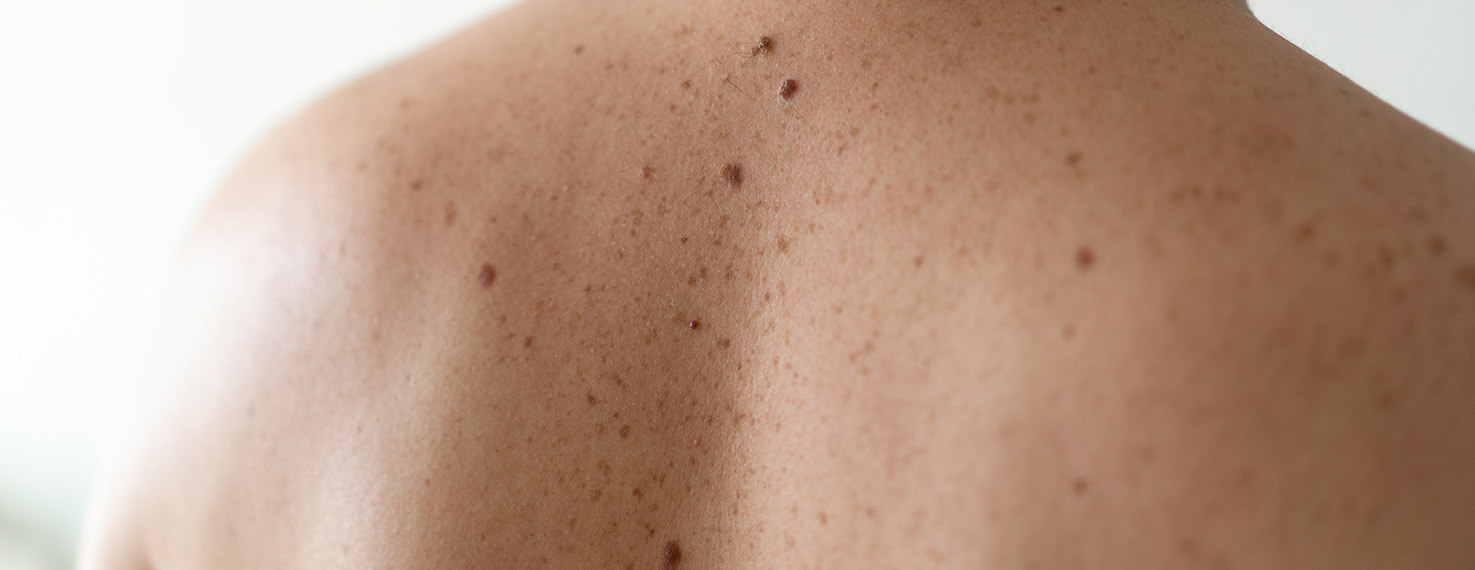
Dermatology

Ear­ly dia­gno­sis of mali­gnant mela­n­o­ma deter­mi­nes the cour­se of the disease

Black skin can­cer, medi­cal­ly known as mali­gnant mela­n­o­ma, is one of the most dyna­mic skin tumors. It occurs rela­tively fre­quent­ly and is capa­ble of pene­t­ra­ting into deeper lay­ers of the skin and spre­a­ding throug­hout the body. Ear­ly dia­gno­sis and rapid tre­at­ment are important. 

At the Swiss Der­ma Cli­nic, we spe­cia­li­ze in the dia­gno­sis, tre­at­ment and ear­ly detec­tion of skin can­cer. Con­spi­cuous moles and pig­ment chan­ges are iden­ti­fied using der­mo­sco­py, digi­tal fol­low-up and a tho­rough spe­cia­list exami­na­ti­on. After the spe­cia­list exami­na­ti­on, we deci­de tog­e­ther on the next steps. 

Are you worried about a birth­mark or a chan­ge in the skin? Have them che­cked by a spe­cia­list – at the Swiss Der­ma Cli­nic in Zurich

Read more

Recognizing malignant melanoma: Which changes are conspicuous

Malignant melanoma develops from the pigment-forming cells of the skin, the melanocytes. It can develop from a pre-existing mole or appear anew.

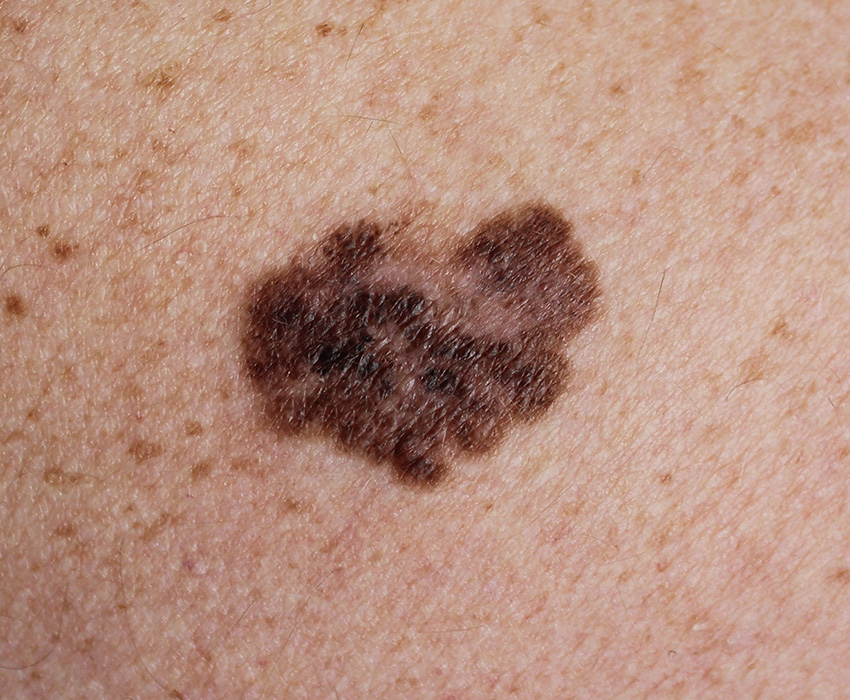
Changes in color, shape or size are typical. Newly appearing pigment spots in adulthood should always be clarified by a specialist. In addition to classic criteria such as asymmetry or irregular edges, we also assess the change over time.

Important: Not every conspicuous or darker skin change is a melanoma, there are many harmless variants. Nevertheless, every change that develops or looks different over time should be examined.


Skin cancer screening: dermoscopy and digital progress monitoring

Dermatoscopy

In dermoscopy, the skin is examined using a special reflected light microscope. Structures that are not visible to the naked eye become recognizable. Pigment changes can thus be classified very precisely.


Video dermoscopy and follow-up

We use video dermatoscopy to assess the progression and document conspicuous areas of skin.

Changes can be compared image by image, over months or years. This is particularly important for the prevention of melanoma.


Personal risk profile

Not every skin carries the same risk. Factors such as skin type, number and type of moles, sun exposure or family history are included in the assessment. Depending on the individual risk profile, we can then determine examination intervals in order to detect abnormalities at an early stage. It helps to determine sensible check-up intervals and detect abnormalities at an early stage.


Treating melanoma: Surgical removal with a safety margin

If melanoma is suspected or has already been diagnosed, the focus is on complete removal.

The procedure is performed surgically with a safety margin that depends on the extent of the tumor. The altered tissue is completely removed.


After removal: histology and further clarification

The tissue is then examined histologically. Only this examination confirms the diagnosis and provides important information on how to proceed.

Depending on the findings, additional steps may be useful, such as further clarifications or interdisciplinary care. We will discuss all these options with you as part of your treatment at the Swiss Derma Clinic in Zurich.


Precaution and prevention: regular checks and UV protection

In the case of malignant melanoma, the time of diagnosis is decisive for the further course of the disease. If detected early, the treatment options are very good.

Regular skin checks play a central role. Regular screening and follow-up checks for conspicuous moles. All changes are documented and assessed over time.

Advice on prevention:

New or changing pigment spots should always be clarified promptly. A conscious approach to UV radiation, suitable sun protection and avoiding intensive sun exposure also contribute to prevention.

Specialist assessment: Experience in the diagnosis of pigmentary changes

The examination and treatment at the Swiss Derma Clinic is carried out by experienced dermatology specialists. We assess your skin changes in the right context and avoid unnecessary interventions. With modern diagnostics, structured follow-up checks and a well-founded medical assessment.

schwarzer-hautkrebs-behandeln-in-zuerich-faq

FAQ

schwarzer-hautkrebs-behandeln-in-zuerich-faq

How do I recognize a dangerous birthmark?

Moles that change or newly appear, as well as irregular shapes, different colors within a skin change, blurred edges or growth over time are conspicuous. Itching or bleeding may also be indicative. However, there are also variants that do not exhibit these characteristics, or only very subtly, and not every conspicuous mole is necessarily dangerous. A specialist examination is always necessary and recommended as soon as possible.

How often should I go for a skin cancer screening?

This depends on the personal risk. If the findings are normal, a check-up every one to two years is usually sufficient. In the case of many or conspicuous moles, fair skin or a family history, shorter intervals may be advisable. After an initial examination at the Swiss Derma Clinic in Zurich, we will determine a control plan that suits your skin.

Is the examination painful?

The entire examination of the skin as well as the dermoscopy is a pure observation of the skin. No needles, incisions or similar are used. The examination usually only takes a few minutes.

When does a birthmark need to be removed?

Removal is recommended if a malignant change is suspected or if a mole changes conspicuously over time. Unclear findings can also be a reason for removal in order to obtain a reliable diagnosis through a histological examination.

What is the procedure for removing a melanoma?

The affected area of skin is surgically removed, usually under local anesthesia. It is important to keep a safe distance from the surrounding tissue. The procedure is usually performed on an outpatient basis. The removed tissue is then examined in the laboratory to confirm the diagnosis and determine the next steps.

Can black skin cancer also occur in younger people?

Malignant melanoma can occur at any age, even in young adults. The risk increases with intensive UV exposure or genetic predisposition. It therefore always makes sense to check for skin changes at an early stage, regardless of age.

What role does the sun play in the development of skin cancer?

UV radiation is one of the most important risk factors in the development of skin cancer and therefore also melanoma (black skin cancer). Repeated sunburns, especially during childhood, significantly and demonstrably increase the risk. Conscious exposure to the sun and consistent sun protection are key preventative measures.

What happens after a melanoma diagnosis?

Once the diagnosis has been confirmed, our dermatologists will classify the findings in detail. Depending on the depth and spread of the tumor, further examinations may be useful. In many cases, complete removal is sufficient. In the case of advanced findings, further treatment is carried out in close consultation with specialized centers. This is discussed on an individual basis.

Our Q&A texts are by no means a substitute for a medical consultation. For an individual and well-founded medical assessment, we recommend a personal consultation at the Swiss Derma Clinic. We are happy to take the time for you!

Table of contents
Search
Jetzt anrufen
WhatsApp schreiben
Mail verfassen
Contact on WhatsApp
Option auswählen
Mole check Body Mapping (AI-powered)
Select your option
Mole check Body Mapping (AI-powered)
All dates

December 24, 2024, to December 27, 2024: No dermatology consultations or aesthetic treatments.

December 23, 2024, December 30, 2024, and December 31, 2024: Dermatology consultations available.

December 24, 2024, December 27, 2024, and December 28, 2024: Cosmetic treatments available.

December 20, 2024, and December 31, 2024: Cosmetic treatments available.

January 1, 2025, to January 2, 2025: No cosmetic treatments or dermatology consultations.