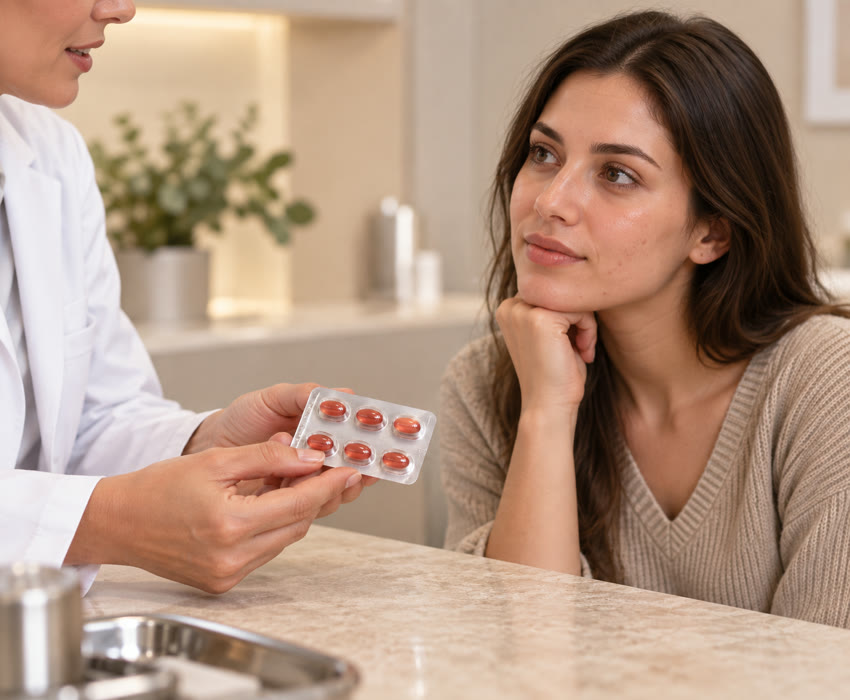
In short: Isotretinoin is a highly effective prescription medicine. A lower dose can make sense for selected dermatological conditions. However, it does not make the treatment risk-free, and taking it routinely just for finer pores or anti-aging is not sufficiently backed by science.
On social media and in lifestyle media, low-dose isotretinoin is increasingly presented as an insider tip against oily skin, visible pores or even skin ageing. We are also being asked about it more and more often in our consultations.
The idea sounds tempting at first: a small dose, less sebum and possibly a more even complexion. But behind the trend is not a dietary supplement, but a systemically acting medicine with clear medical rules.
What is isotretinoin?
Isotretinoin is a derivative of vitamin A. It reduces the activity and size of the sebaceous glands, lowers sebum production and influences keratinisation and inflammatory processes in the skin.
In Switzerland, oral isotretinoin is intended in particular for severe forms of acne that have not responded adequately to suitable standard therapies or where permanent scarring is a risk. In this situation, the medicine can be extremely effective.
What does „low dose“ mean?
„Low dose“ does not refer to a uniform dosage. The term generally describes a lower daily dose than in classic isotretinoin regimens. The exact amount, frequency and duration of treatment must be determined individually.
A reduced dose may be considered if there is an increased risk of side effects or the usual dosage is not well tolerated. A longer course of treatment is then often necessary; depending on the condition, the risk of relapse may also be higher.
Why for oily skin and large pores?
Because isotretinoin can significantly reduce sebum production, the skin often appears less oily during therapy. Sebum-filled pores and so-called sebaceous filaments can appear less visible as a result.
There are smaller studies on the treatment of pronounced seborrhoea and seborrhoeic dermatitis. However, these results do not mean that all oily skin should be treated with medication. Oily skin can have many causes, from unsuitable skin care and acne to hormonal influences. A dermatological diagnosis must therefore always come before systemic therapy.
And what about anti-aging?
Some small studies have examined low-dose oral isotretinoin in photoaged skin. In some cases, changes in collagen, elastin or skin structure were described. However, the studies were small, used different treatment regimens and showed no sufficiently robust superiority over established methods.
A scientific review therefore concluded that the available evidence is not sufficient to recommend oral isotretinoin as a regular anti-aging therapy. For purely cosmetic goals, the possible benefit must be weighed particularly critically against the systemic risks.
Low dose does not mean low risk
Some side effects depend on the dose and can be milder at a lower dosage. However, certain risks do not disappear. In particular, the risk to an unborn child exists regardless of dose and duration of treatment.
What side effects are possible?
Skin and mucous membranes very often become dry. Dry or inflamed lips, dry eyes and a more sensitive nasal lining are typical. In addition, the following complaints or changes, among others, can occur:
- headaches and muscle or joint complaints
- changes in blood lipid or liver values
- increased sensitivity to light and more sensitive skin
- eye complaints or reduced night vision
- rare but potentially serious skin or general reactions
The prescribing information also lists psychological complaints such as mood swings, depression or anxiety. Whether isotretinoin causes these complaints in every individual case cannot always be clearly determined. Changes in mood, suicidal thoughts or other new psychological symptoms must nevertheless be discussed with a doctor immediately.
Reliably preventing pregnancy
Isotretinoin is highly harmful to the unborn child. It must not be taken during pregnancy or while breastfeeding. The risk of severe malformations exists regardless of how low the dose is and how briefly the medicine is taken.
Patients who can become pregnant must therefore follow a binding pregnancy prevention programme. This includes reliable contraception, medically supervised pregnancy tests and regular check-ups. The requirements also apply to a so-called microdose.
Why medical supervision is essential
Before starting, the indication, concomitant conditions, medicines and possible pregnancy risks are carefully checked. Depending on your personal situation and the applicable prescribing information, laboratory tests and follow-up checks are part of the therapy.
Other medicines, preparations containing vitamin A and planned skin treatments must also be discussed. Certain peels, laser treatments or other intensive procedures may be unsuitable during or after isotretinoin therapy or may need to be rescheduled.
Isotretinoin should never be taken using other people’s capsules, from dubious online sources or without medical supervision.
When does a low dose make sense?
Low-dose therapy is not fundamentally wrong. For selected patients it can be a medically justified option, for example with certain forms of acne, intolerance of higher doses or individual other dermatological conditions outside the approved indication.
What matters is not whether a dose is described as „low“ on the internet. What matters is the correct diagnosis, a realistic treatment goal and an individual weighing of benefits and risks.
What alternatives are there?
Depending on the cause, adapted cleansing, non-comedogenic skin care products and suitable topical active ingredients may already help. For acne, rosacea, seborrhoeic dermatitis or hormonal influences, different medical therapies can be considered. For pigmentation spots, pores and skin texture, established dermatological or device-based procedures are also available.
The right treatment always depends on the diagnosis, skin type, complaints, previous therapies and personal goals.
Frequently asked questions
Is a very small dose of isotretinoin harmless?
No. Some dose-dependent complaints can be less pronounced, but important risks remain. This applies in particular to a possible pregnancy.
Can isotretinoin permanently shrink pores?
Because sebum production is reduced, pores can be less noticeable during treatment. Whether and how long this effect lasts varies from person to person. Pores cannot be permanently „closed“.
Is isotretinoin approved as an anti-aging therapy?
No. Oral use against skin ageing is an off-label use. The current body of studies is not sufficient for a routine recommendation.
Are check-ups still needed with a low dose?
Yes. Which check-ups and intervals are required is decided by the treating doctor based on the individual situation and the applicable prescribing information.
Our conclusion
Isotretinoin is neither a medicine to be universally afraid of nor an uncomplicated beauty hack. With the right indication it can be very effective. For purely cosmetic goals, however, it should not be played down. A personal dermatological assessment provides clarity about benefits, risks and more suitable alternatives.
Personal consultation
Do you suffer from very oily skin, recurring blemishes or visible pores and wonder whether isotretinoin might be right for you? In a dermatological consultation, we first clarify the cause and then discuss the medically sensible options.
This article is for general information and does not replace personal medical advice. Indication, dosage and check-ups must be determined individually.