In short: A basal cell carcinoma, often called a basalioma, is usually cut out under local anaesthetic. The doctor also removes a margin of healthy-looking skin, because individual tumour cells can extend beyond the visible area. The tissue is then examined under the microscope in a laboratory. If tumour cells are still found at the cut edge, a further procedure is usually advisable.
1. Have the spot examined
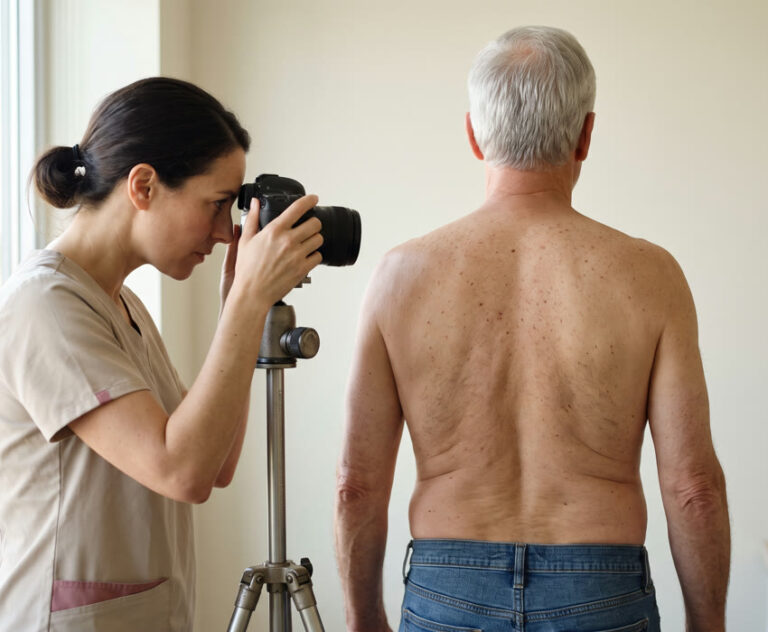
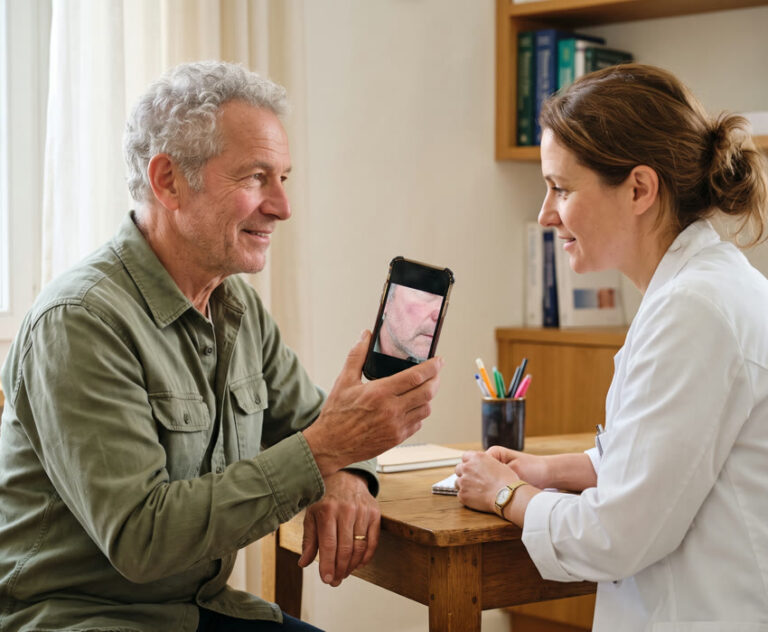
Perhaps you noticed a shiny little lump while washing your face. Or a crust keeps forming on your nose, comes away and then forms again. Have any spot that bleeds repeatedly, grows or does not heal examined by a dermatologist. At the appointment, also describe how the skin has changed in the meantime. This is particularly helpful if there is little of the crust to see that day.
A basal cell carcinoma is a form of non-melanoma skin cancer. It usually grows slowly and only very rarely spreads to other organs. At the site where it develops, however, it can grow into the surrounding tissue. That is why an examination is worthwhile even if the spot is only getting bigger slowly.
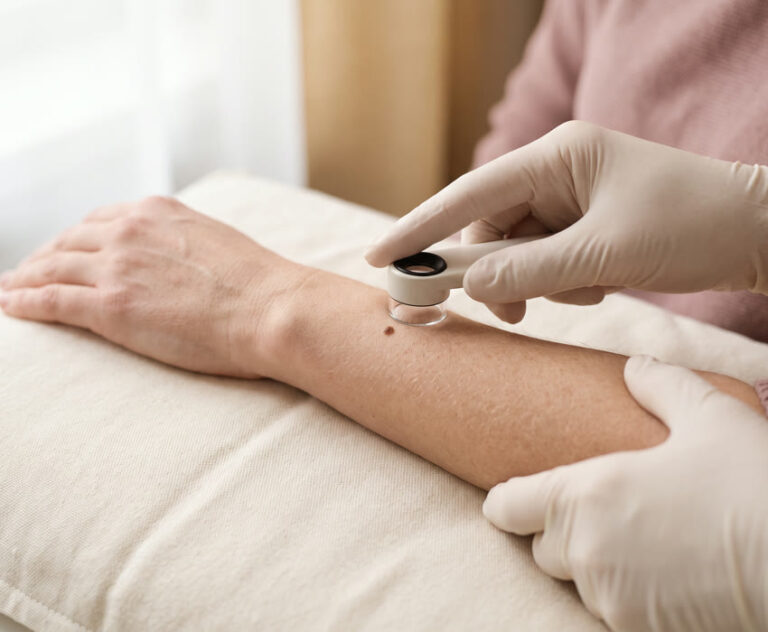
During the examination, the dermatologist looks at the surface and the borders of the spot. With an illuminated magnifier, she can also see fine blood vessels and other structures. This examination is called dermoscopy. If the findings are unclear, if the spot lies in a sensitive area or if it is larger, the doctor will first take a tissue sample. For a small, well-defined spot, it can make sense to remove it completely straight away and have the removed tissue examined.
2. Plan the procedure
Planning depends not only on the size, but also on where the basal cell carcinoma is, how clearly its borders can be seen and how it grows in the tissue. Tell your doctor if the same spot has been treated before. With a basal cell carcinoma that has come back, the visible border can be misleading. On the nose or eyelid, you will also discuss in advance how the wound can be closed. On the eyelid, for example, it matters that the lid still covers the eye well after the procedure.
Bring a list of your medication to the consultation and mention any allergies, for example to plasters or local anaesthetics. If you take a blood thinner, ask the treatment team how you should proceed. Only change how you take it after speaking to a doctor. This is also a good moment to ask whether someone should collect you after the procedure.
At Swiss Derma Clinic in Zurich, we remove basal cell carcinomas as part of our skin cancer treatment in our own practice operating room. Our page on outpatient dermatological surgery describes procedures under local anaesthetic. If inpatient treatment is needed, we take care of the preparation and the aftercare.
3. Remove the basal cell carcinoma
Before the incision, the doctor cleans the skin and injects a local anaesthetic. The injection may sting briefly. You stay awake throughout. You may still feel touch or pulling even when the anaesthetic is working. If you feel pain, say so straight away.
The doctor cuts out the skin change with the planned safety margin. She also removes tissue in depth so that the lower cut edge can be assessed later. How wide the margin around the visible border should be depends on the findings. The aim is to remove the tumour completely while preserving as much healthy skin as possible.
With a small wound, the edges can often be stitched together directly. With a larger gap, or where the skin is not very mobile, the doctor can move skin from the immediate surroundings. Another option is to transfer a piece of skin from another part of the body. Ask in advance which of these options applies to you and whether this would create a second wound where the skin is taken from.
4. Discuss the tissue report
After the removal, a specialist laboratory examines the tissue. The report describes the type of tumour and whether tumour cells can be seen at the examined side edges or at the base. If only a sample was taken first, the report mainly answers the question of diagnosis. Whether the basal cell carcinoma has been removed completely can only be assessed after the actual removal.
What does «clear margins» mean?
The laboratory found no tumour cells at the examined cut edges. A further excision is then usually not necessary. If the report instead says that the tumour reaches the cut edge, tumour cells may still remain in the skin at that point. In most cases, the doctor will recommend removing further tissue there. This can make sense even if the wound looks fine from the outside.
Before you go home, clarify when and how you will receive the result. At the follow-up conversation, ask for a concrete recommendation. Is further treatment needed, or can you now book your next skin check?
5. Check the wound and your skin
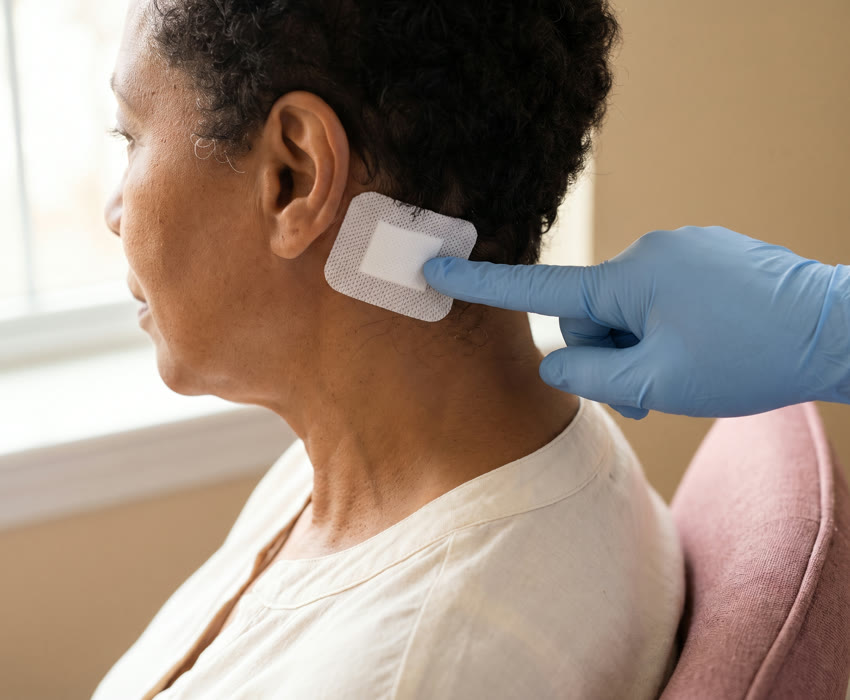
Ask to be shown how to look after the dressing. Ask when the wound may get wet, which movements pull on the stitches and whether stitches need to be removed. If you lift heavy loads at work or swim regularly, for example, you can mention this before the procedure. That way the break can be planned to suit the area of the body and the type of wound closure.
If the skin around the wound becomes increasingly red and hot, the pain increases or you develop a fever, contact the treatment team straight away. If the wound bleeds again, press firmly and continuously on the dressing with a clean compress. If the bleeding continues despite pressure, seek medical help immediately.
Once the wound has healed, attention also turns to the rest of your skin. Anyone who has had a basal cell carcinoma can develop another one elsewhere. Your doctor will agree the interval between skin checks with you. If you notice a new spot that heals poorly between appointments, or the skin at the scar changes, have it looked at sooner.
Frequently asked questions
Does every basal cell carcinoma need surgery?
For most basal cell carcinomas, surgery is the first choice. For certain superficial forms with a low risk of recurrence, a prescribed cream or photodynamic therapy may be an option, especially if surgery is unsuitable. In photodynamic therapy, an applied substance makes the altered cells sensitive to light. The area is then illuminated in a targeted way. You can discuss which form of skin cancer treatment suits your findings after the examination.
Will there be a scar after the procedure?
Cutting out the tissue leaves a scar. The final line of stitches can be longer than the visible lump, because the safety margin and the shape of the wound closure also need space. Ask beforehand where the scar is likely to run. This is often easier to explain when your doctor shows you the area in a mirror.
Will I have to stay in hospital overnight?
Many basal cell carcinomas can be removed as an outpatient under local anaesthetic. You can then usually go home the same day. For an extensive or deeply grown tumour, a larger procedure with a specialised team may be advisable. Whether a hospital stay is needed is clarified during planning.
How do I protect my skin after treatment?
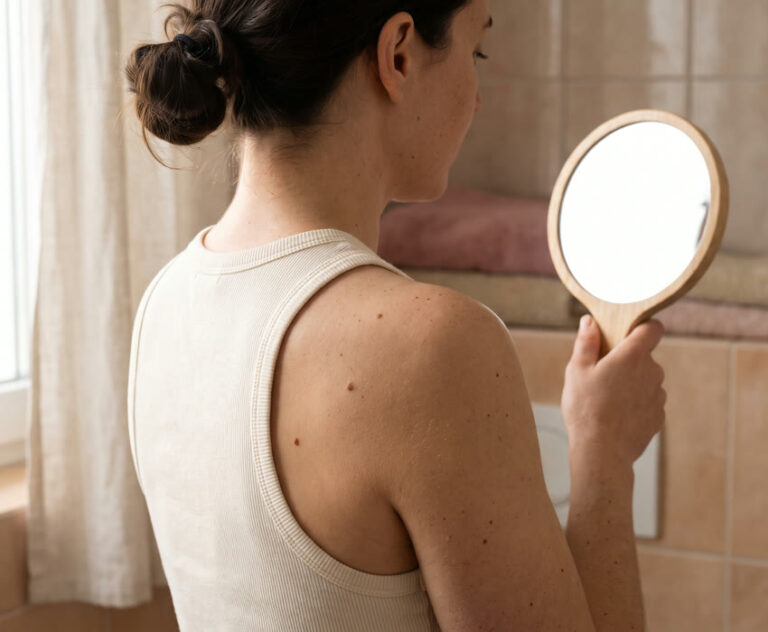
Seek shade in strong sunshine, wear a hat and cover exposed skin with clothing. Use sunscreen on uncovered, healed skin. Look at your skin regularly, including areas away from the operated site. For the fresh wound, follow the care instructions from your treatment team.
This article does not replace a medical examination.