In short: For adults, there is no particular age from which skin rejuvenation with a laser or ultrasound becomes worthwhile. If fine lines stay visible even when your face is relaxed and they bother you, a fractional CO₂ laser may be an option. For slightly loose skin under the chin or on the neck, ultrasound can produce subtle tightening. If your main goal is to prevent skin ageing, consistent sun protection is enough for now.
What would you like to change?
Perhaps you notice the fine lines around your mouth when you look in the mirror. Or perhaps you are happy with your skin but wonder whether you will miss something later if you wait now. These are different starting points. A good reason for a consultation is a concrete wish, for example that your lipstick no longer settles so clearly into the lines at the edge of your lips. A milestone birthday on its own is not a reason for treatment.
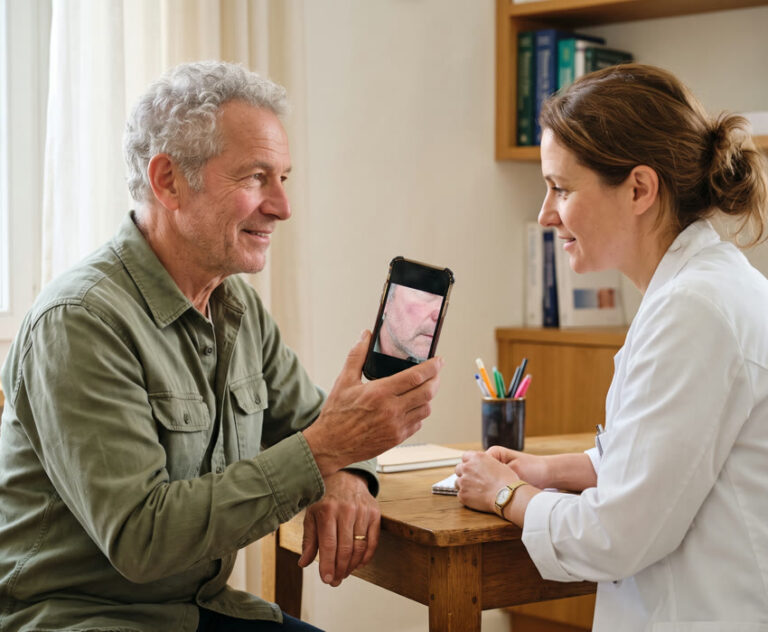
Look in daylight at what actually bothers you. Do the lines remain visible when you relax your mouth? Or do you notice from the side that the skin under your chin sits more loosely? With this observation, the consultation can clarify more precisely which change is achievable. It also helps you judge whether the possible difference is worth the effort for you.
| What you notice | What you can consider |
|---|---|
| Fine, persistent lines around the mouth or on the cheeks | A laser consultation can clarify how far the surface can be smoothed and how much healing time you would need to plan for. |
| Slightly loose skin under the chin or on the neck | Ultrasound may be an option if even a small change in contour would matter to you. |
| Clearly excess skin on the neck | Ask to be shown the limits of both methods before you decide on a treatment. |
| You are happy with your skin and want to prevent ageing | Shade, a hat and sunscreen on exposed skin are effective measures against further UV exposure. |
Is there a window you can miss?
Behind the question of age there is often a worry about being too late. There is no evidence for this. Studies on laser and ultrasound have examined people who already had wrinkles or slightly lax skin. Whether a treatment without any visible change prevents later changes was not tested. A treatment you do not start today has therefore not been missed.
The influence of the sun, on the other hand, is well documented. UVA radiation penetrates deep into the skin and contributes to premature skin ageing. The Swiss Cancer League recommends combining shade, clothing, a hat and sunscreen. This works at any age, regardless of whether you later decide on a treatment.
No deadline on the calendar
What matters is the change that bothers you, the healing time you can plan for and the risk you are willing to accept for a particular result. Two people of the same age can therefore reach different and still sound decisions.
When is a fractional CO₂ laser suitable?
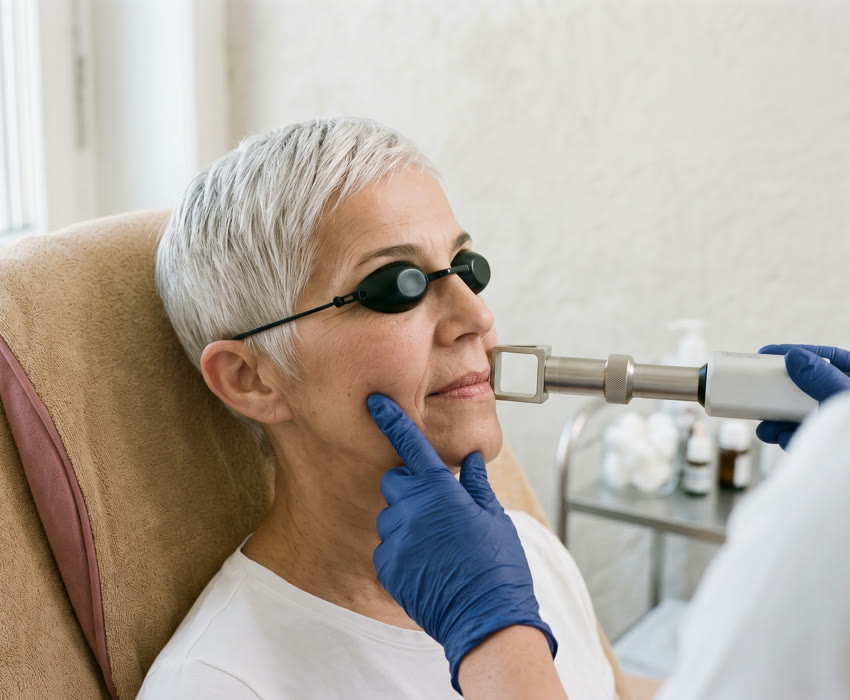
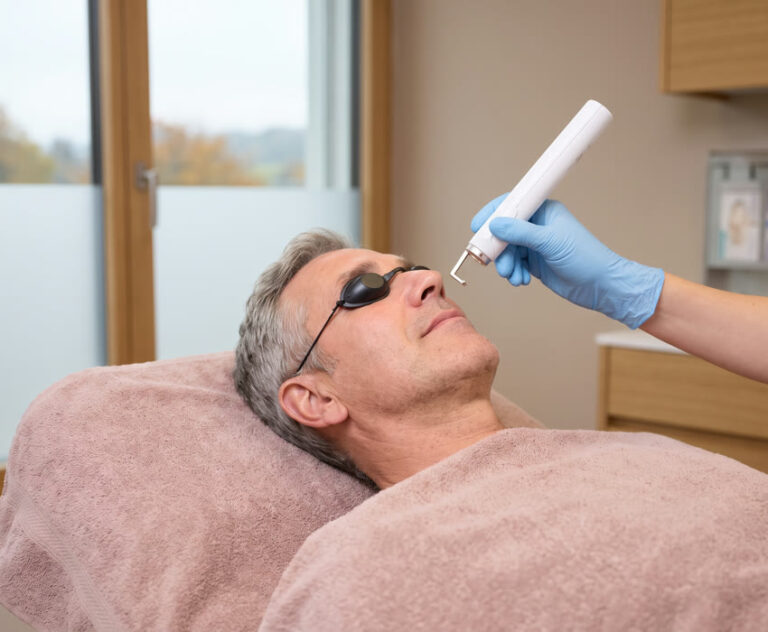
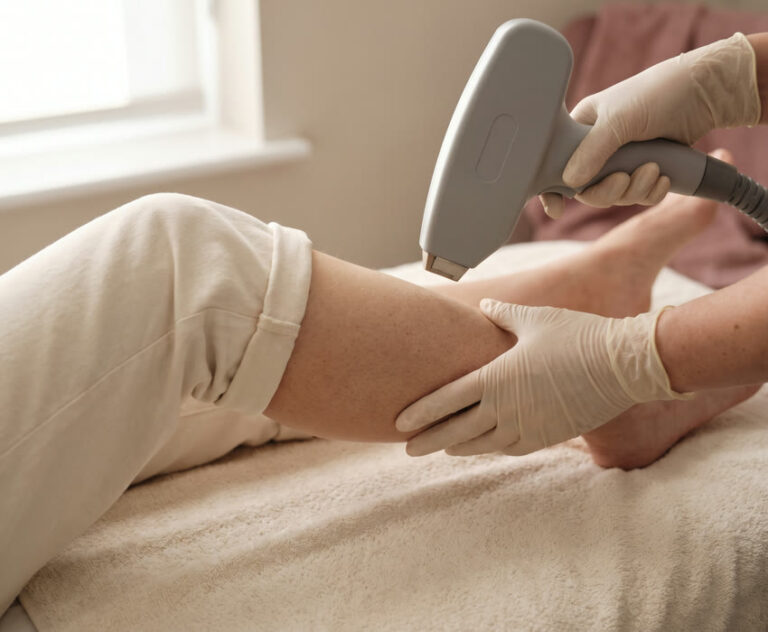
A CO₂ laser can soften fine wrinkles and make a sun-damaged skin surface look more even. In this form of fractional laser therapy, the laser removes tiny columns of skin. Narrow areas in between remain intact, and the surface heals from there. In the deeper skin, the heat also stimulates the remodelling of collagen fibres. How clearly the skin changes depends, among other things, on the depth of the wrinkles and the treated area.
The time after the appointment is part of the decision. After treatment with the fractional Pixel CO₂ laser, the skin may be red and swollen, weep or form fine crusts. Depending on the intensity, it can take around one to two weeks for the surface to heal. Redness may remain visible for longer. If you meet many people at work, you may want to plan this time differently from someone who can easily work from home.
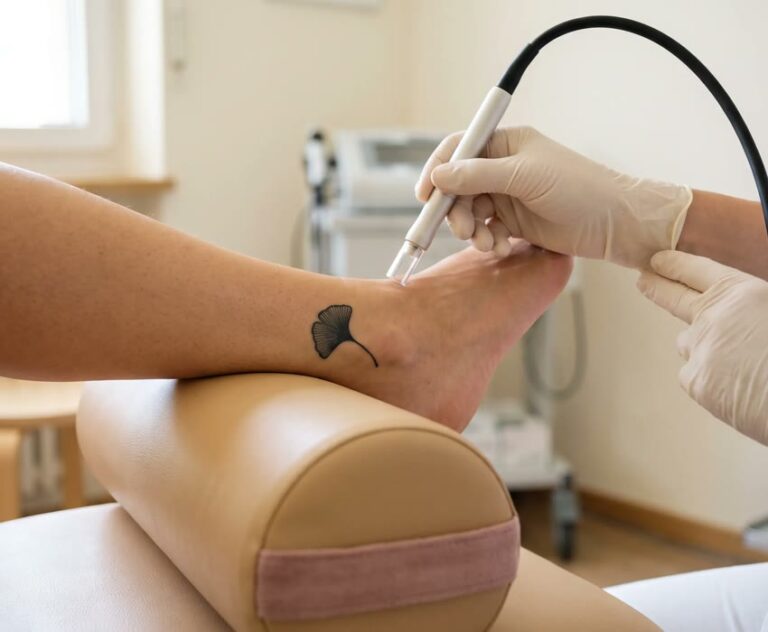
With darker skin tones or a tendency to develop dark marks after minor inflammation, the risk of pigment changes deserves particular attention. After laser treatment, the treated area may look darker or lighter than the surrounding skin. Scarring is also possible. Tell us how your skin has reacted to previous treatments. This helps in choosing the method and in deciding whether the possible benefit outweighs the risk for you.
What can ultrasound do for the neck?
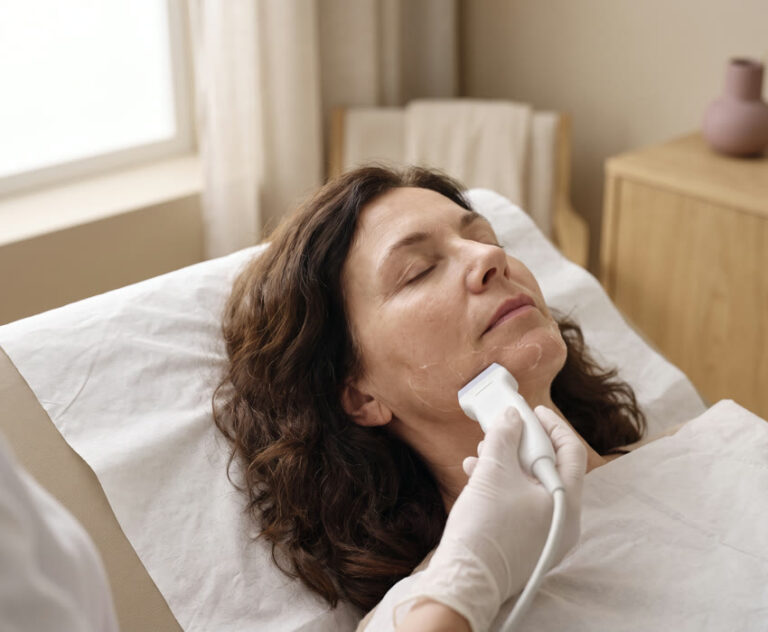
If you are mainly bothered by looser skin under the chin, the treatment has a different goal. With Sofwave skin tightening, parallel ultrasound waves deliver heat into the dermis. This is where the collagen fibres that give the skin support are located. Their remodelling takes time. Whether the contour has visibly changed can therefore be judged better over the following months than directly after the appointment.
Fine facial lines can also soften somewhat with ultrasound. For choosing the method, however, it makes a difference whether you mainly want smoother skin on the cheeks or a little more firmness on the neck. The skin surface stays intact during ultrasound treatment. The heat pulses can be painful during treatment, and temporary redness or swelling is possible afterwards. With mild laxity, the effect may match your wish. If you expect a smooth neck or a markedly changed jawline despite clearly excess skin, the achievable result with ultrasound is usually too small. That is exactly when it is worth discussing beforehand whether you would be satisfied with a small change.
What do we clarify before treatment?
At the Swiss Derma Clinic in Zurich, before a treatment with the Pixel CO₂ laser, we examine the skin area concerned and discuss with you which improvement is realistic. Let us know if your wounds heal poorly, if scars tend to become raised or if you are prone to cold sores. Please also bring your list of medications. This information is important for the decision, even if your skin looks unremarkable on the day of the examination.
A single spot that grows or changes its shape or colour needs its own assessment. Book a medical skin check for it before you consider a cosmetic treatment of that area. If you have fresh cold sores in the planned treatment area, please also get in touch before your appointment.
Finally, ask how to care for your skin at home, when you can wear make-up again and whom to contact if you have any problems. If you are planning a holiday with lots of sun, mention it when you book. After an ablative laser treatment, healing skin needs protection from direct sunlight. If pain or redness increases or you develop a fever, contact the practice that treated you.
Frequently asked questions
Am I too early in my early thirties?
That depends on what you would like to have treated. There is no general recommendation for a preventive start at this age. If you are happy with your skin, you can wait. If you spend a lot of time outdoors, protection from UV radiation is particularly worthwhile. Use shade and clothing, and add a product that protects against UVA and UVB on exposed skin.
Is a consultation still worthwhile over sixty?
Yes, if a particular area bothers you. Fine lines around the mouth can still be a sensible target for a laser. With pronounced excess skin on the neck, the assessment is different. Discuss your wish as close as possible to the specific area, together with how your wounds have healed in the past and how much time you want to spend on aftercare.
I have fine lines and loose skin. Do I need both?
You can limit yourself to the concern that matters more to you. If you are mainly bothered by the surface of your cheeks, ask specifically about the achievable effect on the fine lines. If it is about the neck contour, have the laxity assessed first. You can then decide calmly whether the expected difference justifies a treatment for you.
Can I start shortly before a celebration?
If a particular date is important to you, there is a lot to be said for postponing. With the CO₂ laser, crusts and redness can remain visible for longer than your calendar allows. With ultrasound, any tightening develops gradually. You can book a consultation regardless of the celebration and leave the timing of the treatment open.
This article does not replace a medical examination.