In short: A tattoo almost never disappears after a single laser session. For clear fading, four to twelve sessions are a rough guide, and depending on the amount of ink, the colours and the body area it can be fewer or more. Each session is followed by a break of several weeks while the skin heals and the body clears away the broken-up ink particles. Depending on the intervals, treatment can therefore stretch over many months, sometimes more than a year. Faint traces of colour may still remain afterwards.
Clarify your goal before the first visit
Would you like a lettering tattoo to disappear as completely as possible? Or does only a dark outline bother you because it would show through a new design? Your answer helps decide how many sessions make sense and when you can be happy with the result. For a new tattoo over the old one, known as a cover-up, lightening individual lines may be enough. If you want the skin to look as unremarkable as possible later on, even faint traces of colour matter.
At Swiss Derma Clinic in Zurich, we treat tattoos dermatologically with laser. With tattoo removal in Zurich, individual parts of a design can also be treated selectively. During your consultation, show us which areas you would like to keep. If you already have a sketch for the new tattoo, bring it along. It helps show where light areas will be needed later.
What determines the number of sessions
A small solid black area and a fine black drawing can be the same size and still respond very differently to the laser. What matters most is how much ink lies in the skin. In a Swiss study of black tattoos, ink density was the most important factor, while size alone predicted little. A dense outline can therefore still be clearly visible when the lightly shaded area next to it already looks much paler.
| Feature | What it means for planning |
|---|---|
| Amount and density of ink | Densely tattooed lines and areas usually need more sessions than lightly shaded parts. |
| Colours | Black often responds well. Green or yellow can be more stubborn and remain visible for longer. |
| White or skin-coloured ink | Some of these pigments can darken under the laser. A small test area can show how they react. |
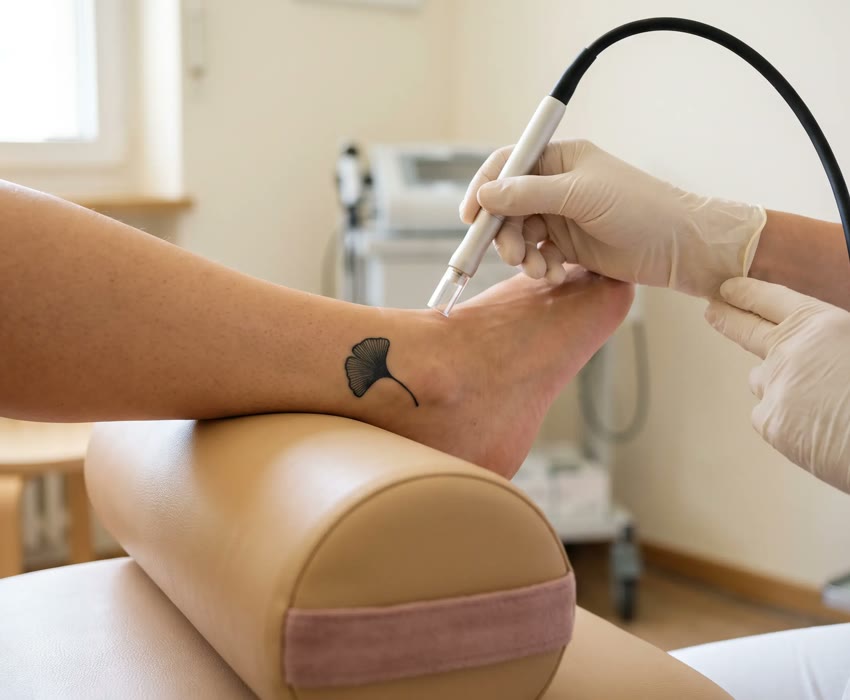
| Body area | Treatment on the ankle or foot can take more effort than on the torso. |
| Goal | Fading for a cover-up may be reached sooner than removal that is as complete as possible. |
With a colourful tattoo, each colour also absorbs laser light differently. For laser treatment, a wavelength is chosen to suit each shade. Even when the black outline is already fading, individual colours may remain. A firm number can therefore only be estimated more precisely after an examination, and often only after the first sessions.
What matters at the assessment
For the medical assessment, it is not only the design that counts but also your skin and your history. Mention any previous treatment of the tattoo, your medication and how earlier skin injuries have healed. It is important, for example, if you have ever developed a raised, thickened scar after an injury.
If the tattooed skin is freshly tanned, injured or still irritated from tattooing, mention this before your appointment. It may be sensible to wait before starting. Also point out small white highlights or areas covered with skin-coloured ink, as far as you remember them. These colours in particular need extra attention.
What you see after the first session
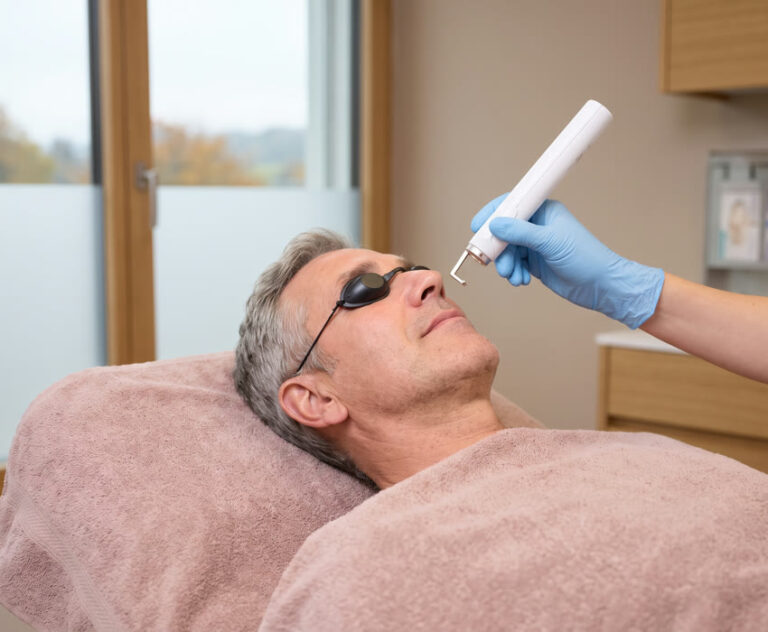
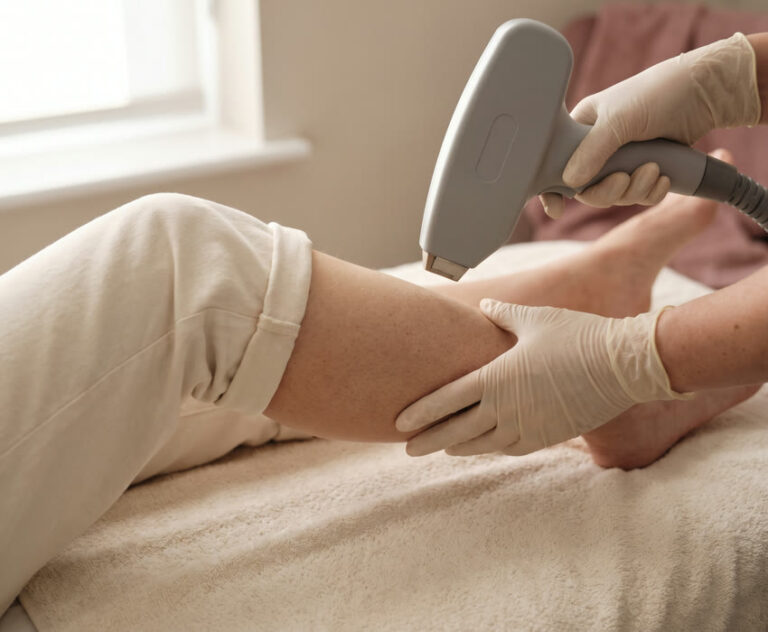
You wear protective goggles during treatment. The doctor guides the handpiece over the part of the tattoo that should become lighter. Very short pulses of light break up the ink particles in the skin. Right afterwards, the treated area may look whitish. This temporary effect is caused by tiny gas bubbles and says nothing yet about the result. Once it fades, the design is often clearly visible again.
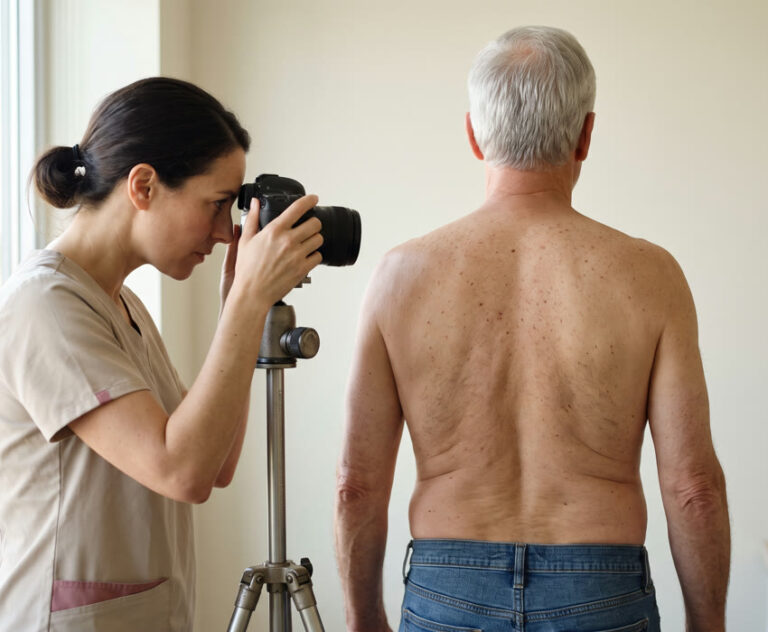
The actual fading can only be judged after some time. In the weeks following a session, the immune system gradually carries away the small ink particles. You can read more about this principle in our glossary under laser tattoo removal. If you want to track progress yourself, photograph the tattoo before you start and again later from the same angle in similar light. This makes it easier to see which areas have already become lighter.
How much time lies between sessions
The break is part of the treatment. Even when the skin feels smooth again, the tattoo can continue to fade. How long to wait before the next session depends on how the skin has healed and how much ink is still visible. Two appointments are often several weeks to a few months apart. If the skin is still red on the planned date or the design is still getting lighter, a longer interval may be sensible.
Six sessions mean five breaks
With eight weeks between appointments, about nine months pass from the first to the sixth session. With twelve-week intervals, it is sixty weeks, which is more than a year. The ink may also continue to fade a little after the last appointment.
If you have a particular date in mind, such as a wedding or an appointment for a new tattoo, raise it early. Expect that during treatment only parts of the design may be visible for a while. Before an important occasion, also consider whether you would feel comfortable with a partly faded design.
Caring for your skin between sessions
After laser treatment the skin may be red or slightly swollen. Blisters or crusts are also possible. Keep the area clean, let crusts fall off on their own and protect the area from the sun with tightly woven clothing. Follow the care instructions you receive after your session.
If redness, warmth or swelling increase, have the area assessed by a doctor promptly. A lasting change in skin colour is also best discussed before the next session. A brownish patch may come from the skin itself. This kind of darkening after irritation is called post-inflammatory hyperpigmentation. Whether it is a skin reaction or remaining tattoo ink can be judged more reliably during an examination.
Frequently asked questions
Is a small black tattoo gone after one session?
As a rule, no. Even with a small black tattoo, you should expect several appointments. A thin ring around a finger, for example, can hold a lot of ink in a small space. The effort involved can be estimated better once the design has been examined and it becomes clear how it responds to the first pulses.
Can I shorten the breaks for a cover-up?
Even when only part of a tattoo is lightened, the skin needs time to heal. If only a certain area should become lighter, you can define this goal during your tattoo removal consultation. Whether the fading is enough for your new design and when the skin can be tattooed again are two separate questions that you clarify with us and your tattoo studio.
What if a shadow remains after several sessions?
Have it checked whether ink is still present or whether the skin tone has changed. Both can look similar. If the design has barely faded recently, discuss how much another session is likely to achieve and what risk of pigment changes or scarring it carries.
Do I have to plan all sessions at the start?
No. The first assessment serves as a guide. Along the way, you decide together with your doctor whether you are already happy with the fading or whether another session makes sense. At each follow-up visit, ask which areas could still become lighter and what is likely to remain visible.
Do older tattoos fade faster?
There is no fixed rule. The amount of ink, the colours and the body area usually matter more than age. Whether an older design has already faded somewhat is best seen during an examination.
This article does not replace a medical examination.