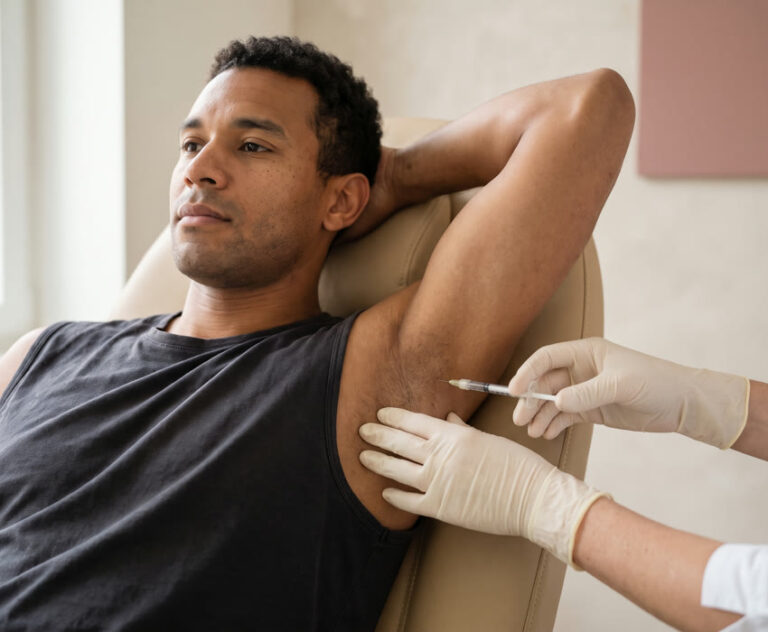
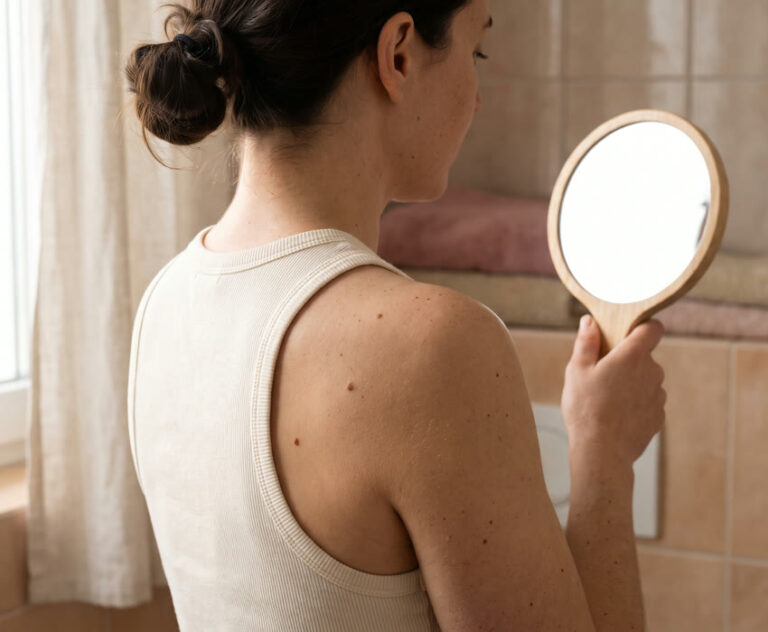
In short: Sofwave uses ultrasound to heat the middle layer of the dermis in a targeted way, which can stimulate remodelling of the skin’s supporting connective tissue. As a result, fine lines and mildly lax skin can gradually become less noticeable. First changes are possible after a few weeks. A good time to assess the result is about three months after treatment. How pronounced the tightening is and how long it stays visible depends on your skin and your starting point.
How does Sofwave work in the skin?
In ultrasound skin rejuvenation, sound energy is converted into heat within the tissue. Sofwave does this with ultrasound beams delivered in parallel. They create limited zones of heat in the middle dermis, where collagen fibres are found, among other structures. These fibres help keep the skin firm. The heat stimulus is intended to trigger repair processes and remodelling of this fibre network.
The skin surface is not deliberately removed or punctured with needles. Integrated cooling protects it while the energy is delivered. Even so, this is a medical aesthetic treatment that acts on the tissue. The fact that the surface is meant to stay intact does not mean that unwanted reactions are impossible.
We also explain the underlying approach in our glossary entry on collagen stimulation. What matters for your expectations is that the skin needs time for this kind of remodelling. Looking fresher straight after treatment is therefore not yet proof of later tightening.
Before: suitability and goals
Sofwave is mainly considered for mild to moderate skin laxity and fine lines. Studies have looked at changes on the face, the eyebrows, the neck and under the chin, among other areas. The likely effect is a limited tightening rather than a fundamental change in your features. Where there is marked excess skin, non-surgical methods have clear limits.
At Swiss Derma Clinic in Zurich, we offer Sofwave treatment for the face, jawline, neck and brow area, among others. Whether the method suits your skin and your goals is something we discuss in a personal consultation. Our overview of skin tightening shows further options that may be suitable depending on your situation.
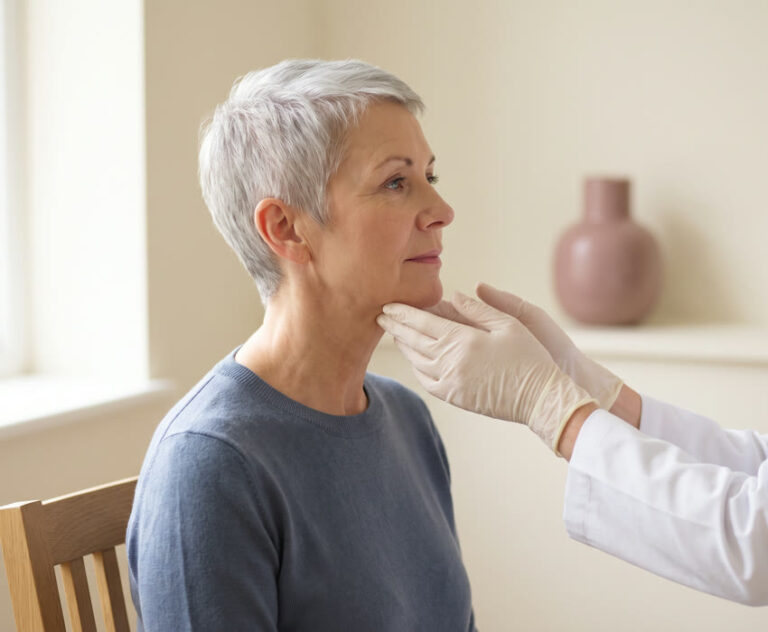
It helps to describe your concern as specifically as possible: are you mainly bothered by fine lines, less firm skin on the neck or a change in your contours? Also ask which changes are likely to be small. This makes it possible to agree on a treatment goal that matches your expectations.
Let us know in advance which medications you take, whether there are implants in the treatment area and which aesthetic procedures have already been carried out there. Inflamed skin, infections, pregnancy or breastfeeding also belong in the initial consultation. This may mean that treatment is postponed or that a different approach makes more sense. Please do not stop any medication on your own for this purpose.
On the day: preparation and ultrasound
On our service page on ultrasound treatment with Sofwave, we describe the preparation with an anaesthetic cream. Allow about one and a half hours for the appointment, including the time the cream needs to work. The actual time depends on the agreed treatment area. We will let you know when we schedule your appointment.
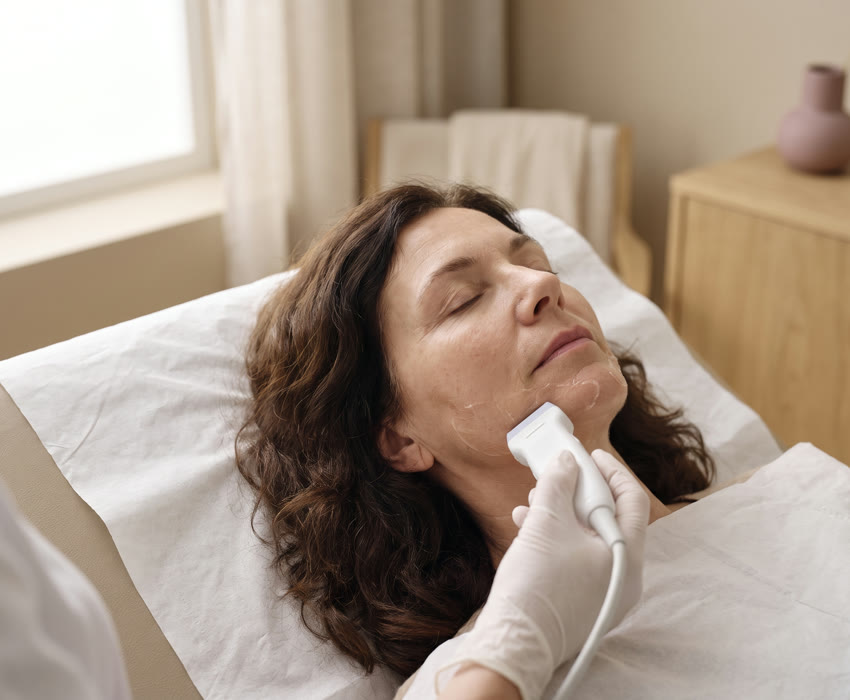
For the ultrasound application, the skin is cleansed and prepared with a contact gel. The handpiece rests on the skin and delivers energy at the planned points. During this, you may feel warmth and also pain. The sensation varies between people and between treated areas.
Tell us straight away if a pulse feels too intense. Local anaesthesia does not automatically make the treatment comfortable. Pain relief should therefore be part of the planning and not only be discussed during the treatment. Only take additional painkillers after consulting your doctor.
The timeline up to the assessment
Comparing with your starting point is more helpful than checking the mirror every day. Photos taken in similar light, with the same head position and a neutral expression make changes easier to follow. The following timeline is a guide, not a promise of a particular result.
| Time point | What can be assessed | What this means for you |
|---|---|---|
| Straight after treatment | Redness or swelling can temporarily change how the skin looks. | The first look does not yet show the later tightening result. |
| After about one month | In one study, changes in certain facial lines were already measurable. | First differences are possible. If you see little yet, no final conclusion can be drawn from that alone. |
| After about three months | Several Sofwave studies assessed the effect at this point. | A comparison with the starting point makes sense. This does not prove that everyone has reached their maximum result. |
The studies examined different areas and used different assessment methods. A measured change in one line is not the same as a clearly visible improvement in your overall facial contour. Medical assessment and personal satisfaction can also differ.
Improvement remains individual
Ultrasound can provide gentle tightening. Where skin laxity is pronounced, it does not replace a surgical lift. Even a professionally performed treatment may change less than you would like.
Afterwards: daily life, care and warning signs
After non-invasive skin tightening, little recovery time is often needed. Temporary redness and swelling are still possible and have also been described in Sofwave studies. So do not count on your skin looking completely unremarkable straight after the appointment, and leave some time before important events or photos.
Ask which skin care suits you and when sport, sauna or other treatments make sense again. Follow the advice agreed with you personally. The term „non-invasive“ does not mean that every activity is automatically fine. Sun protection remains a sensible part of your skin care.
Heat-related skin injuries cannot be completely ruled out. In one clinical study on Sofwave, for example, a temporary blister was described. A single observation like this does not allow a reliable statement about how often this complication occurs overall.
Contact the treating practice if you notice blisters, open areas of skin, increasing pain, or redness and swelling that do not settle. Also have any new changes in sensation assessed by a doctor. Such symptoms should not simply be taken as a sign of a particularly strong effect. If symptoms are severe, do not wait for the scheduled follow-up appointment.
How long does the effect stay visible?
Improvements can last beyond the first assessment. In studies, some of those treated still showed an improvement six to nine months later. However, this does not give a fixed duration for every person treated. The studies also used different areas and measurement methods.
The skin continues to age. A result therefore does not mean that your skin will stay unchanged permanently. First discuss what change has actually occurred and whether it meets your original wish. Only then does it make sense to think about further treatments.
There is no fixed schedule for top-up treatments. Whether and when another treatment makes sense is something we decide together with you, based on how your skin has developed, your satisfaction and a new medical assessment.
Frequently asked questions
Is Sofwave the same as HIFU?
Both methods use ultrasound. Sofwave, however, works with parallel, non-focused sound waves and targets the middle dermis. Focused ultrasound devices can treat other tissue depths, depending on the technology. Results and risks of one device therefore cannot simply be transferred to another.
Is cosmetic ultrasound comparable?
No. The cosmetic ultrasound treatment we offer separately is a different application. The names sound similar, but they say nothing on their own about intensity, treatment goal or effect in the tissue. So always ask about the specific procedure planned.
Is one session enough?
Studies have observed improvements after a single treatment. Other studies used several sessions. This means neither that everyone will be satisfied after one appointment nor that a series is always necessary. The scope should be discussed based on your findings and your treatment goal.
Is Sofwave possible on darker skin?
Studies have treated different skin types, including darker skin. This does not mean that it is suitable for every person. What matters is your specific skin condition, any pre-existing conditions and professional application.
What if I hardly see a difference?
Discuss this at your follow-up appointment and compare your skin with the starting point under similar conditions if possible. Clarify whether the agreed goal has been reached and whether further treatment makes sense at all. Little visible change is no reason to increase the intensity or the number of treatments without a new assessment.
This article does not replace a medical examination.