In short: Nail fungus can flare up again if fungi remain in the nail after treatment. A new infection is also possible, for example when athlete’s foot is present at the same time. With a medicated nail lacquer, treatment usually takes six to twelve months; with certain tablets it is roughly six to twelve weeks, depending on which nail is affected. A big toenail can take twelve to eighteen months to grow out completely. A discoloured nail tip on its own is therefore not yet a sign of a relapse.
Why does nail fungus come back?
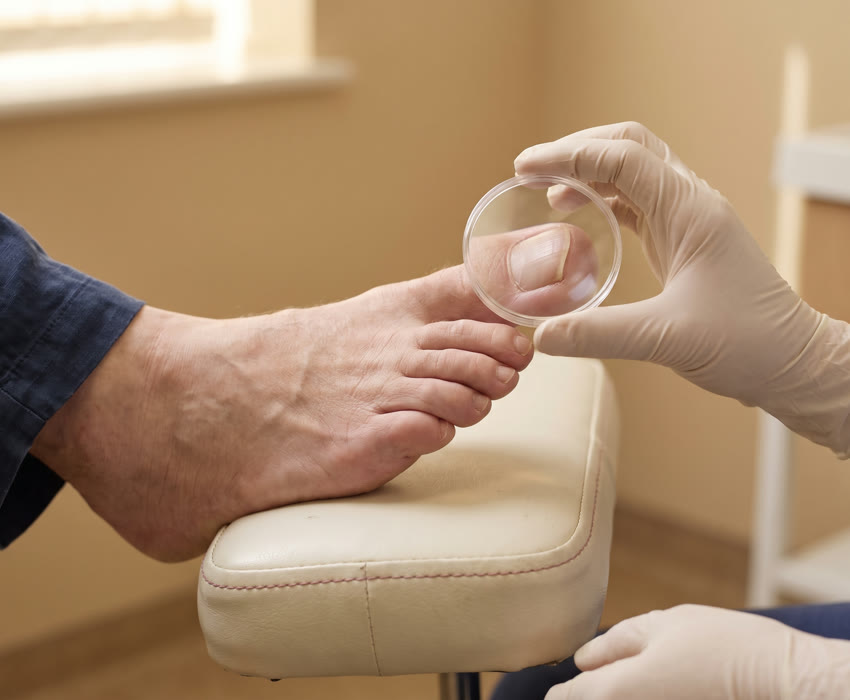
If the same toe catches your eye again, it helps to look back at how things went. Did the nail grow out clear all the way to the tip in the meantime? Or did it already look better at the base while a cloudy patch remained at the front? Both can feel as if the fungus has returned. For further treatment, the difference matters.
The earlier infection can flare up again. If the infection has spread to the nail root, treatment applied to the surface is often not enough. The nail root lies at the back, under the skin. This is where the new nail plate is formed. If a prescribed lacquer is stopped as soon as the first healthy regrowth appears, fungi can also remain in the nail. If the same nail becomes noticeable again, it is therefore important to know which treatment you received and how long you used it.
A nail that has grown back healthy can become infected again. One possible source is athlete’s foot. If the skin between the toes remains affected, fungi can reach the nail again from there. This can happen even after carefully completed treatment. If your big toe repeatedly knocks against the front of your shoe during sport, small nail injuries can also make a new infection more likely. Appearance alone cannot reliably tell whether the earlier fungus has returned or whether you have picked up a new infection.
How long do lacquer and tablets take?
How much time you should plan for depends on the active ingredient and on whether fingers or toes are affected. The following guide values apply to adults and to the active ingredient named. For your own treatment plan, how far the fungus has spread within the nail also matters.
| Treatment | Fingernails | Toenails |
|---|---|---|
| Medicated nail lacquer with amorolfine | About six months | Usually nine to twelve months |
| Terbinafine tablets for confirmed dermatophyte infection, taken continuously | About six weeks if only fingernails are affected | Usually about twelve weeks |
A lacquer is mainly an option when only a limited part of the nail is affected and the nail root is clear. It is then applied as instructed while the affected section grows out. How often you apply it depends on the product. If the nail is so thick that you can hardly trim it, or it presses in your shoe, medical foot care can complement the treatment with professional trimming and thinning.
If the infection is extensive or involves the nail root, tablets may be considered once fungus has been confirmed, often together with a lacquer. Other active ingredients have different courses, some with planned breaks. If you receive both tablets and lacquer, ask for an explanation of when each treatment ends. The lacquer may need to continue even after you have taken your last tablet.
What does the regrowing nail tell you?
Look at the transition between the cuticle and the nail plate. This is where newly formed nail becomes visible. If a clear band grows in at the base and the yellowish area moves towards the tip as the nail grows, that points to improvement. The part that is already damaged keeps its colour and texture at first. Over time it reaches the free edge of the nail, where it can be trimmed.
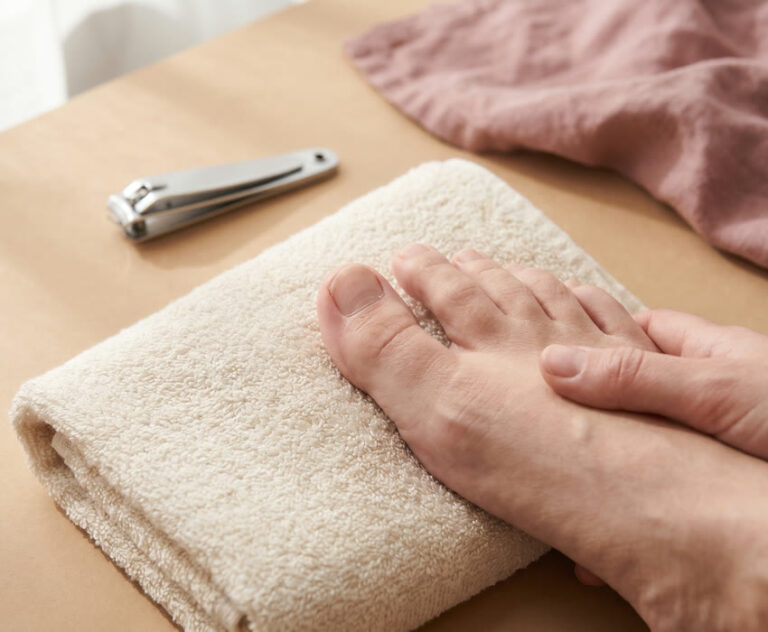
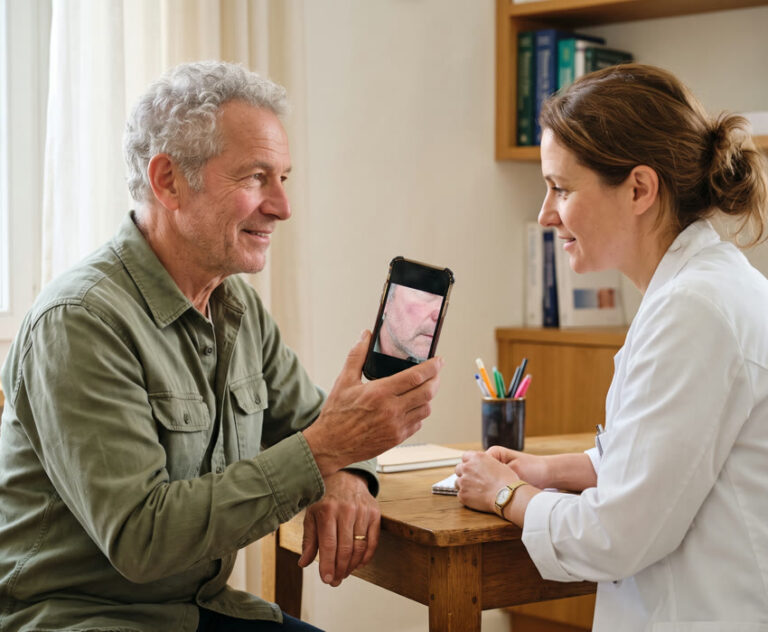
On the big toe in particular, this is hard to judge from one day to the next. A photo at the start of treatment and later pictures in similar light and from the same angle can help. Compare whether the clear section is getting wider. Such pictures also show your doctor what the nail looked like between appointments. If progress is unclear, a nail sample can be examined to see whether fungus is still present.
An example after the last tablet
The course is finished. The front of the nail is still yellowish, but it is growing back clear at the base. This can fit the expected course. Keep your agreed follow-up appointment. If the new section also turns cloudy, or you notice a change in another nail, get in touch sooner.
When is a new assessment worthwhile?
Have the nail examined if the affected area spreads despite treatment, improvement does not come, or a nail that had already grown out clear becomes abnormal again. Pressure in the shoe or psoriasis can also leave similar traces. If you have diabetes, a circulation disorder or a weakened immune system, you should show new changes on your foot to a doctor early. The same applies if the skin around the nail becomes painful, red or swollen.
For the appointment, it helps to know which lacquer or tablets you used, for how long and when you last used them. Previous treatment can affect the result of a fungal culture. When booking, ask how you should handle your product until the sample is taken. For the assessment of nail fungus at Swiss Derma Clinic in Zurich, we examine nail material under the microscope. Depending on the question, a fungal culture or detection of the fungus’s genetic material may also be used.
What helps after treatment?
If you have had nail fungus several times, it is worth checking the skin between your toes at the follow-up appointment too. Scaly or cracked areas can point to athlete’s foot, even if the treated nail is growing back well. Accompanying athlete’s foot should be treated as well. You will find more about early signs, footwear and nail care in our article How do I recognise nail fungus and what can I do myself?
After repeated infections, your dermatologist can discuss with you whether a medicated lacquer makes sense as prevention. This concerns the period after an infection has been treated successfully. How often and for how long you apply the lacquer in this phase is agreed separately.
Frequently asked questions
Can the nail stay thickened even after successful treatment?
Yes. If the nail was already damaged by pressure beforehand, or the growth zone was injured during the infection, the new nail may also look irregular. If the thickening makes walking difficult or starts to increase again, have it checked how much of it is due to nail damage and whether treatment is needed again.
Can laser treatment shorten the process?
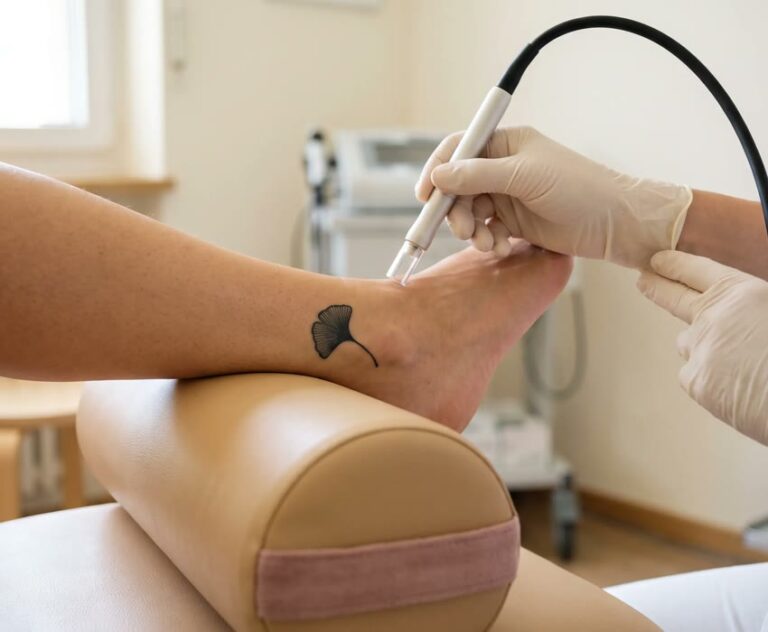
There is no convincing evidence that it reliably shortens treatment time. For nail fungus treatment in Zurich, we also offer the Nd:YAG laser. Specialist guidelines see laser as a possible addition to lacquer or tablets, not as a treatment on its own. Even after the last session, the damaged nail plate still needs time to grow out.
Can I take leftover tablets if it comes back?
Have the finding assessed first. Whether the earlier medication is an option again also depends on other medicines and on your liver function. Bring your list of medications to the consultation. Your doctor will discuss with you whether tablets make sense and which blood tests are part of the treatment.
Can nail fungus come back years later?
Yes. Even if the nail has looked normal for a long time, a new infection is possible. For the assessment, it helps to know whether fungus was confirmed at the time, which nail was affected and whether it then grew back completely clear.
This article does not replace a medical examination.