Dermatology

Insect venom allergy: diagnosis and treatment in Zurich

Red­ness, itching, swel­ling and pain around an insect sting are among the body­’s nor­mal reac­tions. In an insect venom aller­gy the immu­ne sys­tem reacts more stron­gly. The com­plaints extend bey­ond the site of the sting and can affect the enti­re body.

All­er­gies to bee and wasp venom are of par­ti­cu­lar importance. They are respon­si­ble for a lar­ge pro­por­ti­on of seve­re all­er­gic reac­tions in Euro­pe. Ear­ly spe­cia­list dia­gno­sis allows you to assess your indi­vi­du­al risk and initia­te sui­ta­ble pro­tec­ti­ve measures.

Seve­re swel­ling, breathing dif­fi­cul­ties or cir­cu­la­to­ry reac­tions after an insect sting? Have your com­plaints asses­sed all­er­go­lo­gi­cal­ly. At the Swiss Der­ma Cli­nic in Zurich we exami­ne whe­ther an insect venom aller­gy is pre­sent and which tre­at­ment is sui­ta­ble for your situa­ti­on. Arran­ge your appoint­ment here.

Read more

In brief

In an insect venom allergy the immune system reacts to components of bee or wasp venom, for example. The complaints range from pronounced swelling to serious circulatory reactions or shortness of breath. The diagnosis is made by means of an allergological history and on the basis of skin and blood tests. Specific immunotherapy can reduce the risk of severe reactions and is one of the most effective treatments in allergology.


Which insects trigger allergies?

In Central Europe bees and wasps are primarily involved, less often hornets or other stinging insects.

The precise attribution is important for treatment. Every insect venom contains different allergens. That is why, as part of the diagnostics at the Swiss Derma Clinic in Zurich, we examine which venom you actually react to.


Normal reaction or allergy?

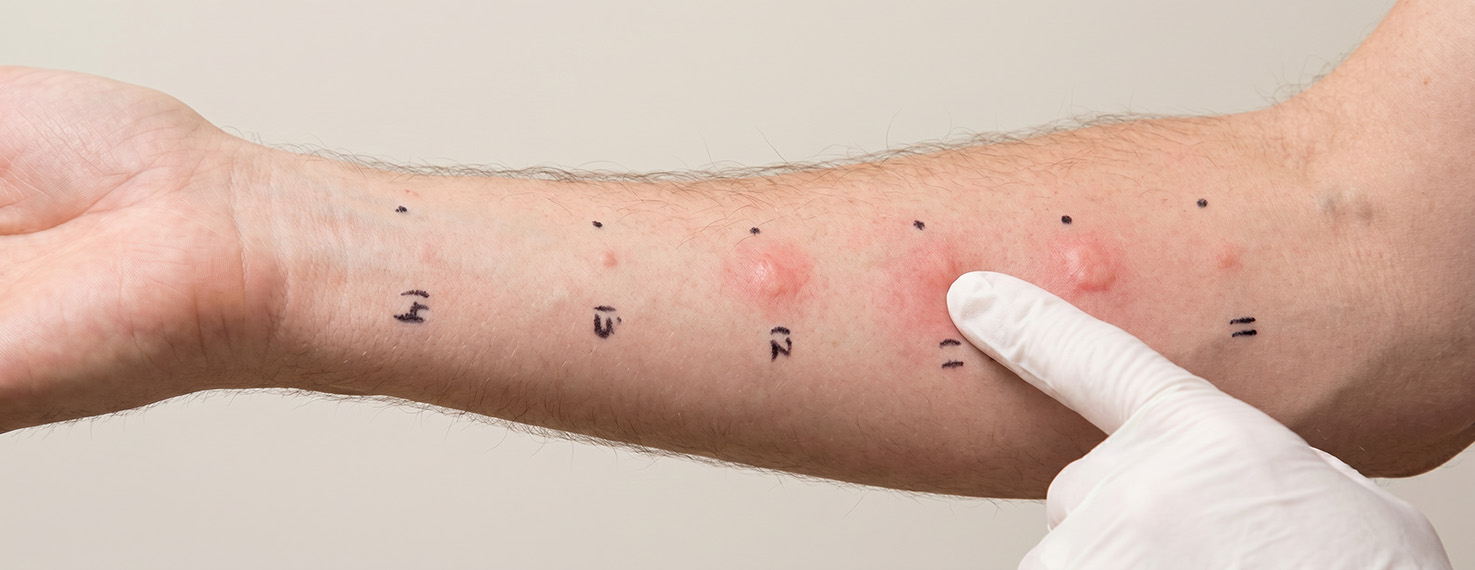
After a sting, pain, itching, redness and limited swelling are normal. Sometimes larger local swelling also occurs without a true allergy being present.

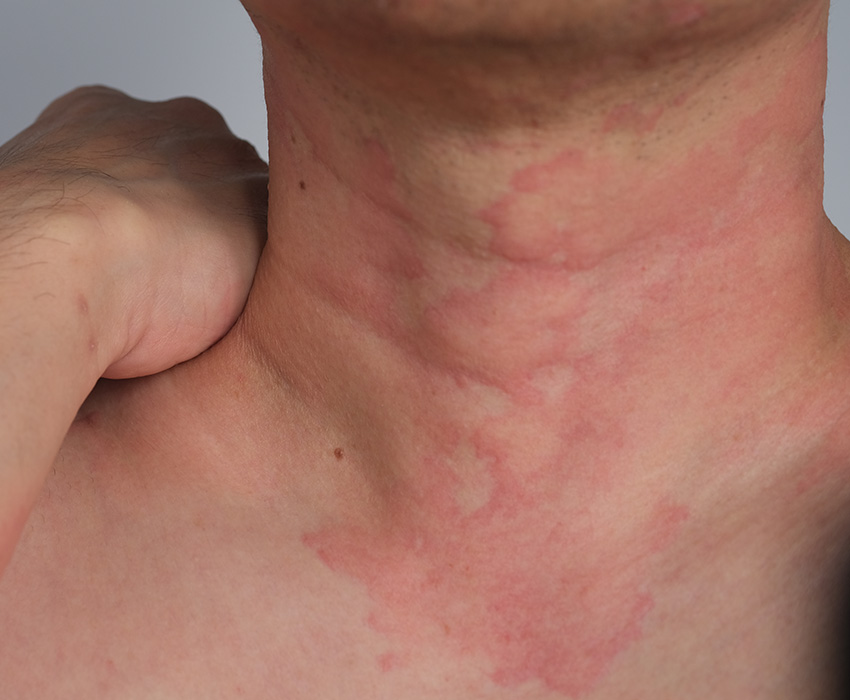
We speak of an allergic reaction when complaints are unusually severe or occur beyond the site of the sting, for example:

  • hives or a rash over the whole body
  • swelling of the lips, eyelids or tongue
  • breathing difficulties
  • shortness of breath
  • dizziness or circulatory problems
  • nausea or vomiting
  • impaired consciousness

An allergological assessment always makes sense if you are unsure whether an insect venom allergy could be involved.


Why precise diagnostics are important

Many people have experienced severe swelling after a sting at some point, and it is not always an insect venom allergy.

At the Swiss Derma Clinic in Zurich we take a close look at the sting and the skin reaction and, if necessary, carry out skin tests and blood tests for specific IgE antibodies. The results are then assessed in the context of your individual complaints.


Specific immunotherapy as causal treatment

Specific immunotherapy is regarded as the most effective treatment for a confirmed insect venom allergy. The immune system is gradually accustomed to the insect venom concerned. The aim is to significantly weaken or completely prevent the allergic reaction to future stings. For bee and wasp venom allergies the therapy achieves high success rates and offers long-term safety in everyday life.


Emergency kit and what to do after a sting

Depending on your risk and on the severity and symptoms of the insect venom allergy, we can prescribe you a personal emergency kit. This can contain various medications.

Just as important is knowing how to act in an emergency. Symptoms should be recognised early and the medication taken in good time. We discuss these points with you in detail during your consultation at the Swiss Derma Clinic in Zurich.


Who should be examined for an insect venom allergy?

We recommend specialist diagnostics in case of:

  • reactions beyond the site of the sting
  • breathing difficulties after a sting
  • circulatory problems or dizziness
  • repeated severe reactions
  • uncertainty after an earlier allergic reaction


Your specialists in Zurich

At the Swiss Derma Clinic you are advised and treated by experienced specialists in dermatology and allergology. Alongside the diagnosis, the individual risk assessment is central. This makes it possible to judge whether an emergency kit, specific immunotherapy or further measures are required.
Insektengiftallergie FAQ

FAQ

Insektengiftallergie FAQ

When is swelling after an insect sting still normal?

Redness, swelling and pain around the site of the sting are a normal reaction. Larger local swelling can also occur, which may likewise be normal. It usually only becomes problematic when the complaints affect the rest of the body, for example hives, shortness of breath, dizziness or circulatory problems. You should see a specialist if you are unsure or if the reaction to the insect sting is unusually severe.

Which insects particularly often trigger allergic reactions?

In Switzerland primarily bees and wasps. Hornets belong biologically to the wasps and can likewise trigger reactions. For treatment it is important to know which insect stung, as the allergens differ.

How quickly do symptoms of an insect venom allergy appear?

Allergic complaints usually begin within a few minutes of the sting. The faster breathing difficulties, dizziness, nausea or circulatory problems occur, the more important prompt action and a subsequent allergological assessment are.

What belongs in an emergency kit for insect venom allergy?

An emergency kit is put together to match your personal risk and usually contains an antihistamine, cortisone and an adrenaline auto-injector. We discuss with you when and how the medications are to be used as part of your treatment at our practice in Zurich.

Can an insect venom allergy disappear again?

Some sensitisations change over time. After a systemic reaction, however, you should not simply wait and see. Specific immunotherapy can considerably reduce severe reactions to future stings.

Who has an increased risk of severe reactions?

An increased risk exists, among others, after previous severe symptoms, in asthma, certain cardiovascular diseases or frequent exposure, for example in beekeepers, gardeners or people who spend a lot of time outdoors.

What should I do after a sting if I suspect an allergy?

Call for medical help immediately in case of shortness of breath, dizziness, circulatory problems or swelling of the face. Once the acute situation has subsided we recommend an allergological examination in order to clarify the further risk and possible protective measures.

Our Q&A texts are by no means a substitute for a medical consultation. For an individual and well-founded medical assessment, we recommend a personal consultation at the Swiss Derma Clinic. We are happy to take the time for you!

Table of contents
Search
Jetzt anrufen
WhatsApp schreiben
Mail verfassen
Contact on WhatsApp
Option auswählen
Consultation 1st Visit
Select your option
Consultation 1st Visit
All dates

December 24, 2024, to December 27, 2024: No dermatology consultations or aesthetic treatments.

December 23, 2024, December 30, 2024, and December 31, 2024: Dermatology consultations available.

December 24, 2024, December 27, 2024, and December 28, 2024: Cosmetic treatments available.

December 20, 2024, and December 31, 2024: Cosmetic treatments available.

January 1, 2025, to January 2, 2025: No cosmetic treatments or dermatology consultations.