Dermatology

Clarifying and treating house dust mite allergy in Zurich (Löwenstrasse)

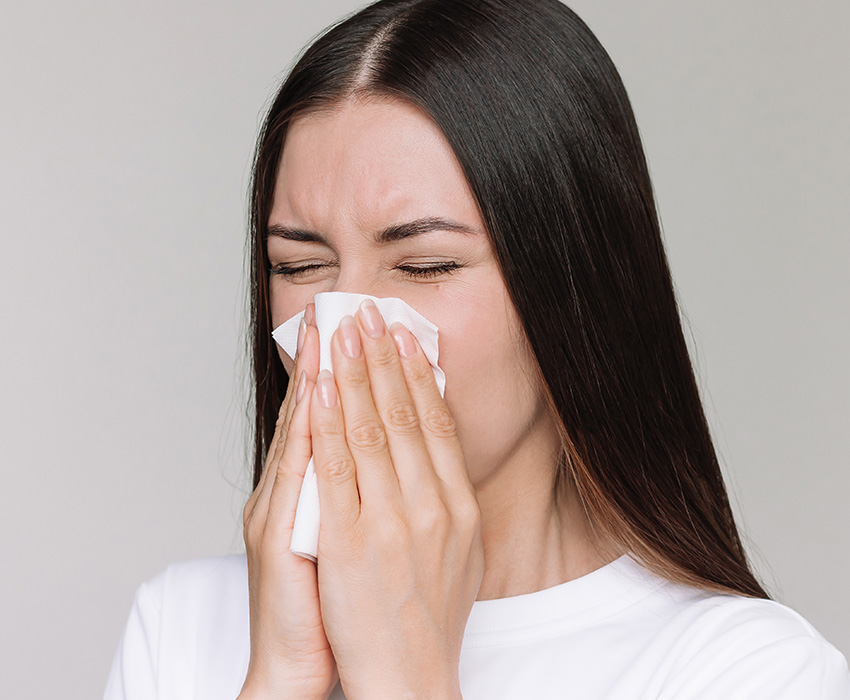
A blo­cked nose in the mor­ning, an urge to snee­ze, wate­ring eyes or a night-time cough? And abo­ve all indoors? What feels like a per­ma­nent cold can be a house dust mite aller­gy. It is one of the most com­mon all­er­gies and affects not only the air­ways but also the skin.

The trig­ger of the com­plaints is not the mites them­sel­ves, but pro­te­in com­pon­ents of their excre­ti­ons. The­se pro­te­ins, invi­si­ble to the eye, are found main­ly on mat­tres­ses, duvets, uphols­te­red fur­ni­tu­re and car­pets. This is why the com­plaints are par­ti­cu­lar­ly pro­no­un­ced at night and ear­ly in the morning.

Read more

In brief

A house dust mite allergy is an allergic reaction to the excretions of house dust mites. Symptoms include an urge to sneeze, a blocked nose, watering eyes, coughing or skin problems, especially indoors and in the morning after getting up. At the Swiss Derma Clinic, the assessment is carried out using allergological diagnostics. Treatment includes avoiding the allergen, special medication if needed and, where required, immunotherapy.


Why house dust mites can trigger complaints

House dust mites are microscopically small arachnids that prefer warm and humid areas. They find favourable conditions in beds and textiles.

The allergic reaction is triggered by protein components taken up via the airways. The immune system reacts hypersensitively with inflammation of the mucous membranes and, in some cases, of the skin as well.

As the exposure indoors exists all year round, the complaints occur permanently or recurrently.


Typical symptoms of a house dust mite allergy

The symptoms resemble an allergic cold and show up as:

  • a blocked or runny nose
  • sneezing fits
  • itching of the nose or eyes
  • watering or reddened eyes
  • an urge to cough, especially at night
  • a feeling of pressure in the area of the sinuses
  • skin rash or eczema (neurodermatitis) flare-ups

Some patients report sleep problems or morning complaints directly after getting up. With stronger allergic exposure the lower airways can also be involved. In some cases allergic asthma develops.


House dust allergy and the skin: what role does neurodermatitis play?

A house dust mite allergy can cause itching, redness and irritation as well as inflammation on the skin. People with neurodermatitis and sensitive, chronically dry skin are more frequently affected.


How the diagnosis is carried out

At the Swiss Derma Clinic we discuss your complaints and plan the examinations accordingly. We are particularly interested in when and where the symptoms occur, whether they differ depending on the season and whether you have permanent complaints.

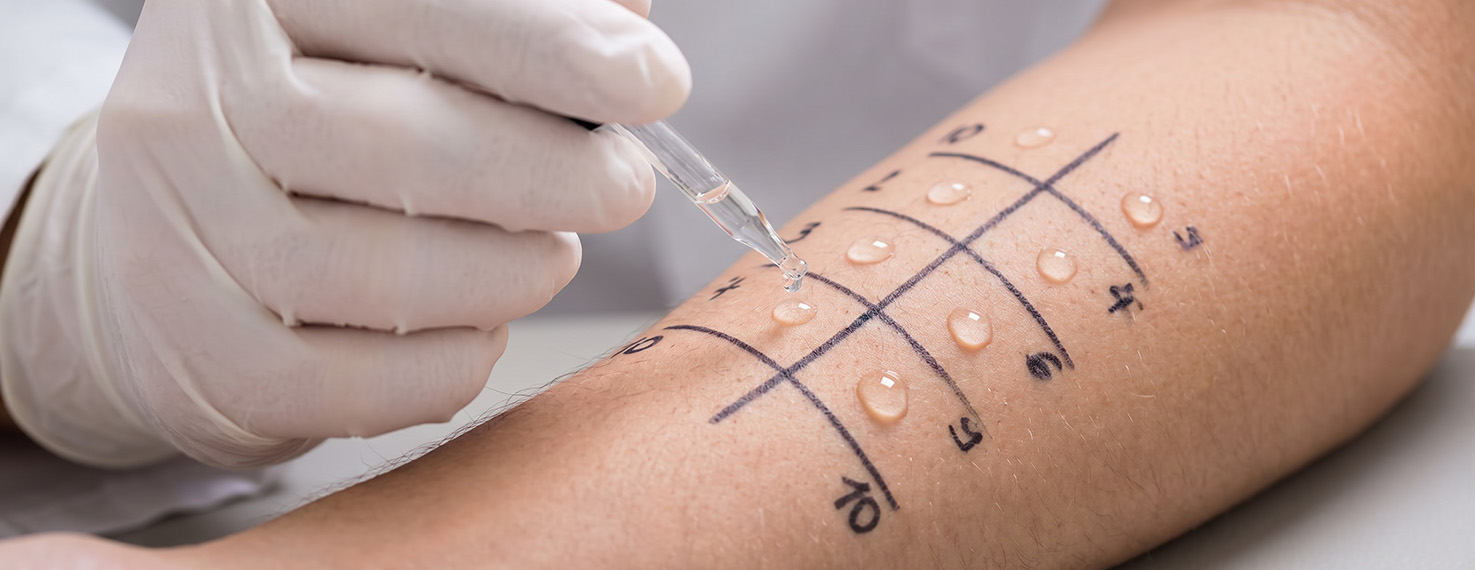
Allergological diagnostics include skin tests or blood tests for IgE antibodies against house dust mite allergens. We assess the test results in the context of your actual complaints. Because: a positive reaction to an allergy test does not automatically mean that an allergy requiring treatment is present.


Treatment: reducing complaints and relieving the airways

Treatment at the Swiss Derma Clinic is always carried out individually.

A special role is played by the consistent reduction of the allergen load – through mite-proof bed covers, regularly cleaning textiles, reducing carpeting as far as possible, and a balanced indoor climate.

Depending on the severity of your complaints, we can prescribe anti-allergic medication – for example nasal sprays or antihistamines.

For stronger or long-term symptoms, a specific immunotherapy is possible. This gradually accustoms the immune system to the allergen.


Why early treatment makes sense

Untreated allergies can worsen over time. In some of those affected the complaints shift from the upper to the lower airways. This so-called “floor change” can contribute to the development of allergic asthma.

Early diagnostics help to classify complaints better and to initiate suitable measures in good time. We do this for you, at the Swiss Derma Clinic in Zurich.


Your specialists in Zurich

In our practice, experienced specialists in dermatology and allergology are available to you throughout. With allergic complaints, differentiation is important: which allergy is present, what role do environmental factors play and which treatment suits the individual situation?

Have your complaints clarified by an allergologist and arrange your appointment here.

Hausstaubmilbenallergie in Zürich

FAQ

Hausstaubmilbenallergie in Zürich

Why are the complaints often stronger in the morning?

House dust mites are found particularly often in and on mattresses, duvets and pillows. During the night there is therefore close contact with the allergens. Many of those affected wake up in the morning with a blocked nose, an urge to sneeze or watering eyes.

Can a house dust mite allergy cause complaints all year round?

Yes. In contrast to pollen allergies, the exposure exists all year round, as house dust mites are permanently present indoors. However, the symptoms can also fluctuate seasonally and be stronger in autumn or winter. The more you are outdoors when you suffer from a house dust mite allergy, the better for your airways and skin.

Can children also develop a house dust mite allergy?

The allergy can appear as early as childhood. Characteristic signs are a chronic runny nose, coughing at night and recurring airway complaints. Particular caution is required with children who have neurodermatitis or asthma; here there is an increased predisposition to develop allergies such as a house dust mite allergy.

Does frequent cleaning help against house dust mites?

Regular cleaning and hygiene measures can reduce the allergen load for a certain time, but do not eliminate the house dust mites completely. A preventive option is mite-proof bed covers, washable textiles and an adapted indoor climate. Vacuum cleaners with a suitable filter system can also be an advantage.

What does immunotherapy for allergies involve?

Specific immunotherapy, also called hyposensitisation, is intended to gradually accustom the immune system to the allergen. The treatment usually takes place over several years and can noticeably reduce complaints.

Can a house dust mite allergy trigger asthma?

In some of those affected the allergic reaction spreads to the lower airways. The consequences are coughing, wheezing or shortness of breath. Early treatment of the allergy can reduce this risk.

What role does the indoor climate play?

House dust mites prefer warm and humid environments. Regular ventilation and a rather lower humidity can help to reduce their reproduction. This is especially important in the bedroom.

Can a house dust mite allergy affect the skin?

People with neurodermatitis or dry, sensitive skin react more frequently to house dust mite allergens. The skin can itch or become inflamed in places. If this is the case, we can counteract it with appropriate dermatological treatments.

Our Q&A texts are by no means a substitute for a medical consultation. For an individual and well-founded medical assessment, we recommend a personal consultation at the Swiss Derma Clinic. We are happy to take the time for you!

Table of contents
Search
Jetzt anrufen
WhatsApp schreiben
Mail verfassen
Contact on WhatsApp
Option auswählen
Consultation 1st Visit
Select your option
Consultation 1st Visit
All dates

December 24, 2024, to December 27, 2024: No dermatology consultations or aesthetic treatments.

December 23, 2024, December 30, 2024, and December 31, 2024: Dermatology consultations available.

December 24, 2024, December 27, 2024, and December 28, 2024: Cosmetic treatments available.

December 20, 2024, and December 31, 2024: Cosmetic treatments available.

January 1, 2025, to January 2, 2025: No cosmetic treatments or dermatology consultations.