In short: Acne scars usually cannot be removed completely. The right treatment can, however, make them less noticeable and improve the texture of the skin. How much is possible depends on factors such as the type of scar, its depth and your skin type. Flat red or brown marks left by spots are not true scars and can fade without any scar treatment.
Myth: scars disappear completely
The facts: The aim of scar treatment is improvement, not a return to untouched skin. In depressed acne scars, inflammation has destroyed some of the supporting tissue. Raised scars, on the other hand, form when too much scar tissue is produced. Neither change can simply be wiped away like something sitting on the surface.
A laser, too, can make a scar less visible but cannot erase it without a trace. For you, improvement may mean that depressions are less noticeable, scar edges look softer or the surface appears more even. Which of these changes is achievable has to be assessed on your own skin.
A realistic treatment goal therefore starts with what bothers you most: a few deep spots, an uneven cheek or remaining discolouration? These concerns do not automatically call for the same treatment. On our page on treating acne and acne scars in Zurich you will find the options we offer at Swiss Derma Clinic.
Myth: every spot mark is a scar
The facts: A change in colour alone is not a scar. After an inflamed spot, red or brown marks can remain even though the surface is smooth. Brown marks are known as post-inflammatory hyperpigmentation. Sunlight can make these pigment marks darker.
True acne scars, by contrast, change the structure of the skin. Discolouration and scars can also occur together. The overview below helps you get your bearings but does not replace an examination.
| Change | Typical appearance | What it means for treatment |
|---|---|---|
| Flat spot marks | Red or brown areas without a dip or bump | Colour and skin protection come first, not filling in a scar. |
| Ice pick scars | Narrow, deep depressions | Treating the surface alone may achieve too little; targeted methods need to be considered. |
| Boxcar scars | Round or oval depressions with sharp edges | Depth helps decide whether surface treatment is enough. |
| Rolling scars | Broad, wave-like dips | Bands of tissue beneath the skin may play a role and require additional treatment steps. |
| Raised scars | Firm scar tissue above the skin surface | They need a different approach from depressed scars. |
Waiting can make sense for flat spot marks, as discolouration may fade over time. Pronounced depressions, however, usually do not disappear on their own. Telling the two apart helps you judge the benefits and limits of any treatment you are offered.
Myth: one laser suits every scar
The facts: What matters is the findings, not the name of the device. Laser treatments can renew the skin surface and stimulate remodelling in the tissue. With a fractional CO₂ laser, small sections of the skin are treated. The appropriate intensity depends on factors such as scar depth and skin type.
Another option is medical microneedling. Fine needles create controlled stimuli that can encourage collagen production. Chemical peels chosen by a doctor, such as a TCA peel, may also be considered. These methods are not interchangeable: a narrow, deep scar places different demands on treatment than a shallower unevenness.
For scars that are tethered firmly downwards, procedures that release these bands of tissue may be needed. Individual deep scars may also be corrected with minor surgical procedures. These are general dermatological options whose suitability has to be assessed separately. Several methods can complement each other when different types of scar occur together.
Choosing a treatment also means looking at possible side effects. Redness, swelling and changes in pigmentation can occur; infections and additional scarring are also possible. In darker skin, the tendency to develop dark marks after inflammation needs particular attention. A method should therefore only be chosen after an examination and a thorough explanation.
Myth: a cream fills in deep scars
The facts: Skincare and carefully chosen active ingredients can help with discolouration or mild changes. An ordinary moisturiser, however, cannot fill in pronounced depressed scars. That does not mean skincare is unimportant: it is part of managing acne and of aftercare following treatment.
Gentle cleansing, suitable skincare and sun protection are more helpful than constantly switching between irritating products. Do not squeeze or pick inflamed spots. This can make the inflammation worse and increase the risk of new scars.
Home needling is no substitute
A home device does not offer the same treatment as medical microneedling. If needles injure the skin or are used too aggressively, infections, pigment changes and new scars can result. First have it checked what kind of change you actually have and whether needling is suitable for it.
Myth: one session shows the final result
The facts: Remodelling scar tissue takes time. After treatment, the skin may initially be red or swollen. How it looks straight away is therefore not a reliable indication of the final result.
Several treatment sessions may be needed. How many make sense and what intervals are appropriate cannot be fixed across the board for all acne scars. It depends on the method, the starting point and how your skin responds. Agree in advance when the result will be assessed and the plan reviewed.
The healing phase is part of the plan. Discuss beforehand which skin reactions to expect, when you can wear make-up or exercise again and how to protect the treated skin. Follow your individual aftercare instructions and avoid tanning. Sun protection is important after scar treatment, because treated skin can become discoloured when exposed to the sun.
When is an assessment advisable?
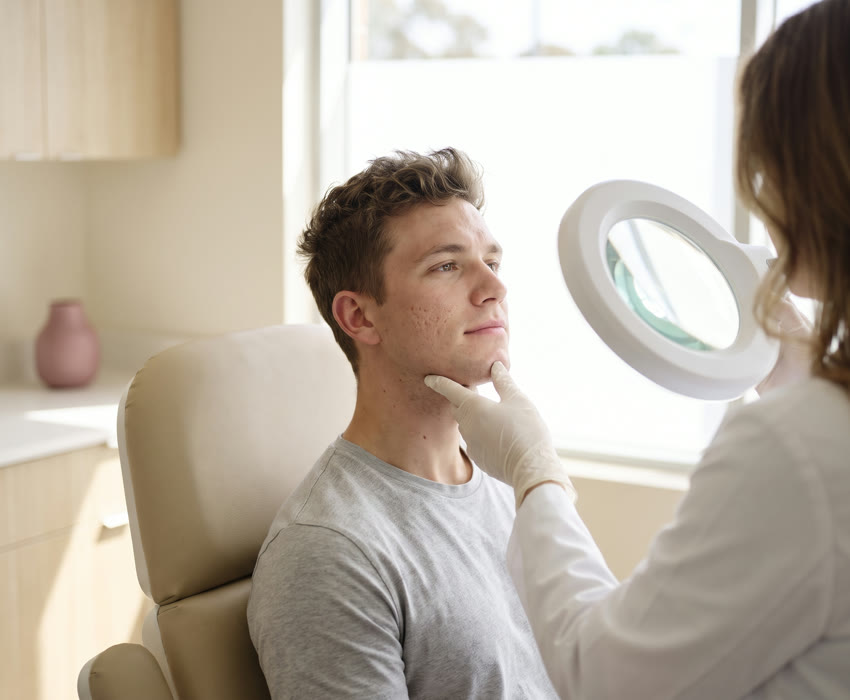
A dermatological examination is particularly advisable if new scars are forming, if you have deep painful spots or if you are unsure whether you are looking at scars or spot marks. If the changes affect your wellbeing, that too is a good reason for a consultation.
If acne is still active, controlling the inflammation comes first. Otherwise new scars may form alongside the treated ones. We explain the assessment and treatment of acne on a separate page. You do not need to wait until the acne has settled on its own before seeking advice.
At Swiss Derma Clinic in Zurich, we tailor treatment to your skin condition, type of acne and the extent of scarring. Our options include CO₂ laser, medical microneedling and peels. Which option makes sense for you is something we clarify during a consultation on acne and acne scars.
Please bring details of previous acne treatments, medication and earlier procedures. Also mention any problems with wound healing or a tendency to form thick, raised scars. These questions can help during the consultation:
- Which types of scar and which discolouration do I have?
- What can the proposed treatment improve, and which areas are likely to remain visible?
- What risks arise from my skin type and previous treatments?
- What aftercare do I need, and when will we decide on further steps?
Frequently asked questions
Can old acne scars still be treated?
Existing scars can also be considered for treatment. Their age alone does not determine what is possible. Shape, depth, skin type and your goal matter more for the choice. Complete removal cannot be promised for old scars either.
Which is better: laser or microneedling?
There is no choice that is better for every skin. Both methods can make depressed scars less noticeable. The decision depends on the findings, possible side effects and your situation. Where different types of scar occur, a combination may make sense.
Can I have scars treated while I still get spots?
First have the active acne assessed and treated. Planned scar correction usually begins once the acne is under control. Which treatment is possible and when depends on the inflammation and the medication being used.
Can new scars form after treatment?
Yes, renewed acne can leave new scars. Scar correction therefore does not replace the acne treatment you need. Scar treatment itself can also cause unwanted skin changes. Careful selection and thorough aftercare help to reduce the risks.
Do acne scars need to be treated at all?
Treatment is a personal decision. If the scars do not bother you, there is no need to aim for smoother skin. If you are troubled, uncertain or emotionally affected, a consultation can help you understand your options without committing to a procedure.
This article does not replace a medical examination.