Assessing symptoms correctly and treating the skin barrier in a targeted way
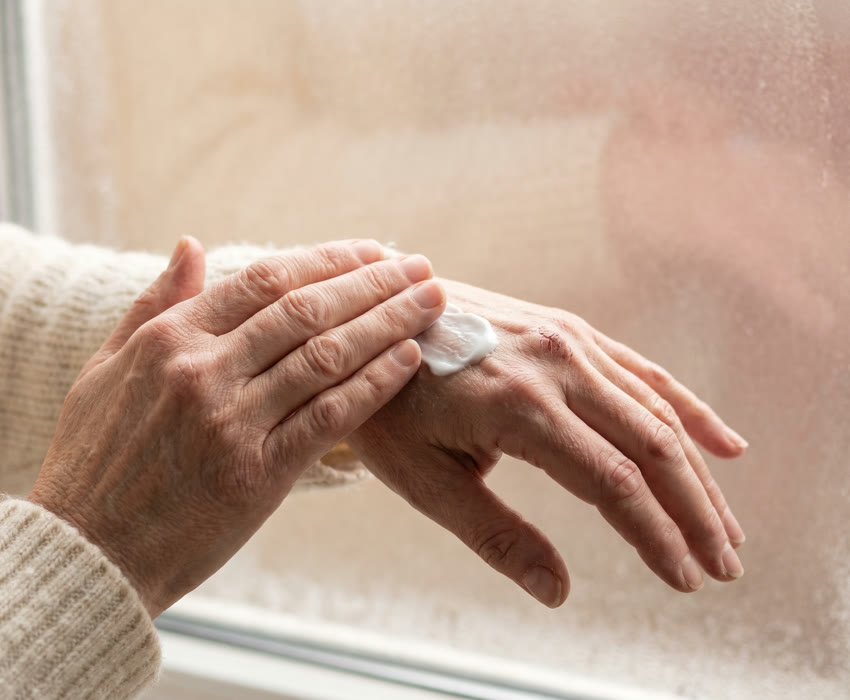
In winter, the skin loses moisture more easily. Cold air, heated indoor spaces, hot showers and frequent washing can put additional strain on the skin barrier.
Many people then notice rough, flaky or tight skin. In most cases, this dry winter skin can be soothed well with adapted skin care.
However, if severe itching, recurring inflammation, cracks, weeping or small blisters occur as well, there may be more behind it. It should then be clarified whether atopic, irritant, allergic or dyshidrotic eczema is present.
How does dry skin differ from eczema?
Dry skin is primarily a disturbance of the moisture and lipid content of the outermost layer of skin. It feels rough, tight and may show fine scaling.
Eczema, by contrast, is an inflammatory reaction of the skin. Typical signs can include:
- severe or recurring itching
- inflamed or swollen skin
- scaling and painful cracks
- small blisters
- weeping or crusted areas
- symptoms that keep returning in the same areas of the body
The boundaries can be fluid. A weakened skin barrier makes inflammatory reactions more likely, and dry skin can itch too. That is why a diagnosis cannot always be made on the basis of a single symptom.
Eczema in the elbow creases in children
In children, atopic dermatitis is a common cause of recurring eczema. An itchy rash in the skin folds, for example in the creases of the elbows or behind the knees, is one of the typical patterns.
In babies and toddlers, the cheeks or the outer sides of the arms and legs can also be affected. On darker skin types, redness may be less noticeable. The skin may instead appear violet, grey-brown or noticeably thickened.
The diagnosis depends not only on the current appearance of the skin, but also on:
- the severity of the itching
- the age at which symptoms began
- the recurring course
- generally dry skin
- personal or family history of atopic conditions such as asthma or hay fever
Not all eczema in a child automatically requires an allergy test. Targeted allergy testing is particularly useful when the medical history or the course of treatment gives rise to a specific suspicion.
Dyshidrotic hand eczema
Dyshidrotic eczema, also known as pompholyx, appears as small, deep-seated and often very itchy blisters on the palms, the sides of the fingers or, less commonly, the soles of the feet.
The blisters can merge. After a few weeks, the skin often peels and may remain dry or cracked.
Contrary to what was once believed, the condition is not caused by blocked sweat glands. Possible contributing factors include:
- irritant contact, for example from frequent hand washing or cleaning products
- allergic contact reactions, including to certain metals
- heavy sweating
- in some people, a fungal infection of the feet
- wet work or repeated contact with irritating substances at work
In the case of one-sided, chronic or unusual changes, a fungal infection, contact allergy, psoriasis or other blistering conditions, among others, must be ruled out.
Which treatment helps?
Treatment depends on the type of eczema, its severity, the patient’s age and the affected area of the body.
Regular basic skin care supports the skin barrier and remains important even during phases with few symptoms. During active inflammation, however, skin care products alone are often not enough. Anti-inflammatory creams or ointments prescribed by a doctor may then be needed.
The following measures can support the skin barrier:
- regularly use fragrance-free, well-tolerated, lipid-replenishing skin care
- apply cream especially after washing
- take short, lukewarm showers or baths rather than long, hot ones
- use mild, soap-free cleansing products
- gently pat the skin dry rather than rubbing it vigorously
- with hand eczema, take wet work, cleaning products and occupational strain into account
- use suitable protective gloves as the situation requires
- use anti-inflammatory medication according to a treatment plan suited to the body area and age
In children, emollients form the basis of treatment. Topical corticosteroids are chosen according to severity and body region. Used correctly, their benefits outweigh the possible risks. However, potent preparations in infants or very strong corticosteroids belong in the hands of a specialist.
With chronic or atypical hand eczema, patch testing to detect a contact allergy or fungal diagnostics may be useful, depending on the suspicion.
When is a prompt medical assessment important?
Weeping skin, pustules, crusts, rapid worsening, lack of response to previous treatment, fever or feeling generally unwell can indicate an additional infection.
Not all weeping eczema needs antibiotics. These signs should, however, be assessed by a doctor.
In children, sudden, painful and rapidly spreading skin changes with clustered blisters or uniform small erosions are particularly urgent. This could be eczema herpeticum. In this case, a medical assessment is needed the same day.
Frequently asked questions
Is all eczema in a child’s elbow creases atopic dermatitis?
No. The pattern is typical of atopic dermatitis. However, irritant or allergic contact eczema and other skin conditions are also possible. The examination and the previous course are decisive.
Does a child with eczema always need an allergy test?
No. With mild atopic eczema and no specific indications, broad allergy testing is usually not necessary. It is used selectively when symptoms, possible exposures or the course of treatment give rise to suspicion.
Is dyshidrotic eczema contagious?
The eczema itself is not contagious. However, similar-looking fungal infections or additional bacterial infections must be ruled out if there are corresponding signs.
Can you pop the small blisters?
No. This causes additional skin damage and increases the risk of infection. In the case of severe itching, large blisters or recurring symptoms, dermatological treatment should be sought.
When is a moisturiser no longer enough?
If the skin is clearly inflamed, very itchy, cracking, weeping, forming blisters or not improving despite consistent care, a medical assessment makes sense.
Dermatological assessment in Zurich
Eczema can look very different and have several causes at the same time. At Swiss Derma Clinic, we assess the appearance of the skin, the course and possible triggers, and create an individual treatment plan for children and adults.
This article is for general information and does not replace a personal medical examination. Treatments, especially for children, must be determined individually.