In short: How often you should have your moles checked by a doctor depends on your personal skin cancer risk and on your skin findings. For people without an increased risk, the Swiss Cancer League does not recommend systematic routine examinations. If your risk is increased, you should agree on a suitable check-up plan with your dermatologist. Regardless of this, a new, conspicuous, changing, itching or bleeding mole should be examined promptly.
Which interval is right for you?
«Once a year» is not a universal answer. What matters first is whether it is a precautionary examination without symptoms, monitoring a specific mole or assessing a change. These situations call for different decisions.
The following overview helps you decide on the next step. It does not set a personal examination date. If you already have a check-up plan agreed with your doctor, follow it and report any new changes in addition.
| Your situation | What makes sense? |
|---|---|
| No conspicuous spots, no known increased risk | Keep an eye on your skin. The Swiss Cancer League does not recommend a blanket annual routine check. |
| Many or unusual moles, skin cancer in the family or other risk factors | Have your personal risk assessed by a doctor and agree on suitable check-up intervals. |
| A specific mole is already being monitored by a doctor | Keep the appointment set for it. It may come earlier than your next general skin check. |
| A spot changes, looks unusual, itches or bleeds | Contact a dermatology practice promptly and describe the change. Do not wait for the routine appointment. |
As a professional guide, intervals of six months to two years apply, depending on the risk profile. For selected moles, check-ups planned by a doctor after three months can make sense. These figures are not a general Swiss screening recommendation and not a waiting period for a new change. The Swiss Cancer League puts the individual assessment first.
If you do not yet know your risk, that is exactly the sensible first step: a one-off medical examination of your skin shows whether you belong to the group with an increased risk and how closely you should be monitored in future. Personal advice on skin cancer screening in Zurich helps you plan further check-ups.
When is your risk increased?
The Swiss Cancer League lists several features that point to an increased risk of skin cancer. These include many pigmented moles, unusual shapes or colours, fair skin that burns easily and frequent sunburn in childhood. A melanoma in parents or siblings, a previous skin cancer of your own and a weakened immune system are also relevant.
A risk factor does not mean that you have skin cancer. It is a reason to talk about suitable early detection. A single feature is also not enough to work out a fixed check-up interval yourself. So tell your doctor what you know about skin cancer in your family and which medicines you take.
The Swiss Society of Dermatology and Venereology (SGDV) also points out the importance of UV exposure, including sun exposure and sunbed use. Sun protection therefore remains important even if your last examination was unremarkable. A check-up detects possible changes, it does not prevent UV damage to the skin.
When should you not wait?
An agreed check-up appointment is no reason to postpone assessing a change you have noticed in the meantime. Have a spot assessed if it is new and conspicuous, changes or looks clearly different from your other moles. Itching and bleeding are also reasons to seek medical advice.
The so-called ABCDE rule helps with observation:
- Asymmetry: the two halves of a spot look different.
- Border: the edge is irregular or poorly defined.
- Colour: different shades appear within the spot.
- Diameter: size is part of the assessment. Small spots can be conspicuous too.
- Evolving: size, shape or colour change.
A memory aid is not a diagnosis
Do not try to classify a change as harmless on the basis of a checklist alone. If you notice a mole, tell the practice what has changed and since when. This helps to plan the assessment.
You do not need to collect several warning signs first. A clearly changed spot is already a reason to see a dermatologist.
What can you check yourself?
Get to know your skin and look for changes regularly. Self-examination complements the examinations recommended by your doctor. The SGDV recommends it regardless of whether an increased risk is known.
Do not only look at existing moles, medically called naevi, but at your whole skin. A melanoma can also develop on a previously unremarkable area. A full-length mirror and a hand mirror help you include areas that are harder to see.
- Look at the front, sides and back of your body.
- Remember your armpits, arms, palms and fingernails.
- Also check your legs, soles of the feet, the spaces between your toes and your toenails.
- Use the hand mirror for the neck, scalp, back and buttocks. Part your hair to see the scalp better.
Notes on a spot can help when you talk to your doctor. Write down where it is and what change you have noticed. If you notice something, documenting it should accompany the medical assessment, not delay it.
How does the medical check-up work?
At Swiss Derma Clinic in Zurich, our service includes an examination of the entire skin, mole checks with a dermatoscope, a personal risk profile and advice on prevention. Mention the spots you have noticed yourself.
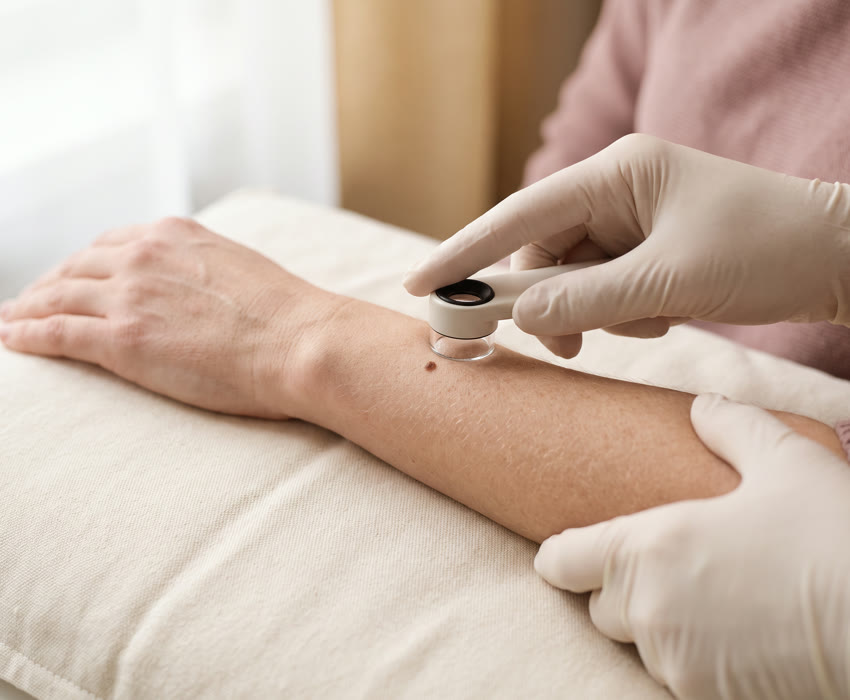
In dermatoscopy, the skin is examined with an illuminated magnifying instrument. This allows the colours and structures of pigmented moles to be assessed more precisely. The examination and your personal history together form the basis for further planning.
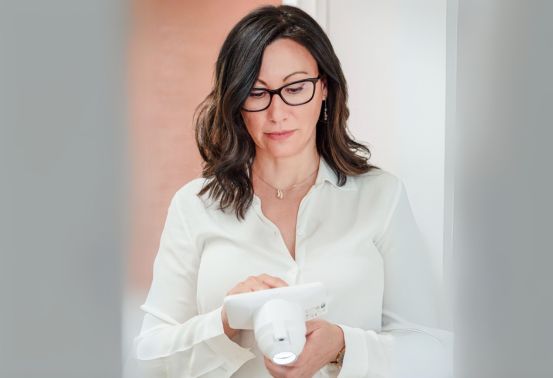
We also offer computer-assisted digital video dermatoscopy. Conspicuous spots can be recorded and the images saved for later comparison. Whether this kind of documentation makes sense for you depends on the medical assessment. Our service page on mole checks in Zurich explains what we offer in more detail.
What to clarify at your next appointment
A good check-up plan should make sense to you. So ask if the reason for a particular interval is not clear. These questions are particularly helpful:
- Is my risk increased, and which findings are decisive?
- When does my next general skin check make sense?
- Should a particular spot be examined again sooner?
- Which changes should I report to the practice between appointments?
Write down the agreed appointments and the reason for each. This makes it clear whether the check concerns the whole skin or the targeted follow-up of a single spot. Also say if you cannot see a spot well yourself or feel unsure about observing it.
Frequently asked questions
Does everyone need an annual check-up?
No. For people without an increased risk, the Swiss Cancer League does not recommend systematic routine examinations because the scientific evidence is not sufficient. With an increased risk, the decision is made individually. Have conspicuous changes examined regardless.
Why should I come back after only three months?
This interval is common for the time-limited monitoring of selected moles. Such an appointment relates to a specific finding. Ask which spot is being monitored. If it changes before then, get in touch before the appointment.
Is it enough to look only at my moles?
No. New skin changes matter too. Check your whole skin and include areas that are hard to see. Self-examination replaces neither the assessment of a conspicuous change nor a follow-up recommended by your doctor.
Do digital images replace the examination?
No. Digital images support the documentation and comparison of skin findings. Assessing them remains a medical task. At Swiss Derma Clinic, image comparison at follow-up appointments is combined with a physical examination.
This article does not replace a medical examination.