In short: Couperose usually refers to fine, permanently visible thread veins on the cheeks and nose. Rosacea is a chronic inflammatory skin condition that can include such veins. One sign of rosacea is widespread redness in the centre of the face that persists and intensifies from time to time. A few visible veins on their own are not enough for a diagnosis, and rosacea can occur without any bumps or pustules.
What do the two terms mean?
Perhaps you notice a fine red line on the side of your nose when you look in the mirror. On closer inspection, you see that it branches out. What you are looking at is a small, dilated blood vessel lying close to the skin surface. The medical term for this is telangiectasia. On the sides of the nose in particular, such vessels are also seen in people who do not have rosacea.
The word «couperose» is used in different ways. Some people mean the visible vessels themselves. Others use it for a form of rosacea in which redness and thread veins are the main features. Occasionally, couperose is simply used as another word for rosacea. So if you have heard both terms in connection with your skin, they may be describing the same finding from different angles.
Thread veins and rosacea compared
To tell them apart, it helps to look at the skin between the veins. Does it stay red on the cheeks and across the nose, even when your face is not flushed? The table shows which observations help with this distinction.
| What to look for | Couperose in the sense of visible thread veins | Possible signs of rosacea |
|---|---|---|
| What you see in the mirror | Fine red to purple lines appear individually or as a small network. | Widespread redness extends across the cheeks and nose, sometimes also the chin and forehead. Thread veins may be present as well. |
| Course | Individual vessels remain visible in the same place. | The background redness can flare up. Sudden flushing with a feeling of heat is also possible. |
| How the skin feels | The term initially only describes what can be seen. | The skin may burn, feel tight or sting when washing, even if the redness is barely noticeable. |
| Raised spots | The visible vessel pattern itself is flat. | Firm bumps (papules) or small pus-filled spots (pustules) may appear. |
| Eyes and eyelids | Thread veins on the cheeks tell you nothing about the eyes. | The eyes may feel dry, and the eyelid margins may be irritated or crusty. |
On darker skin, both the redness and the fine vessels can be harder to see. During the examination, also mention where you feel heat or burning and whether the sensation keeps coming back. This is especially helpful if your skin looks calm on the day of your appointment.
What you can observe yourself
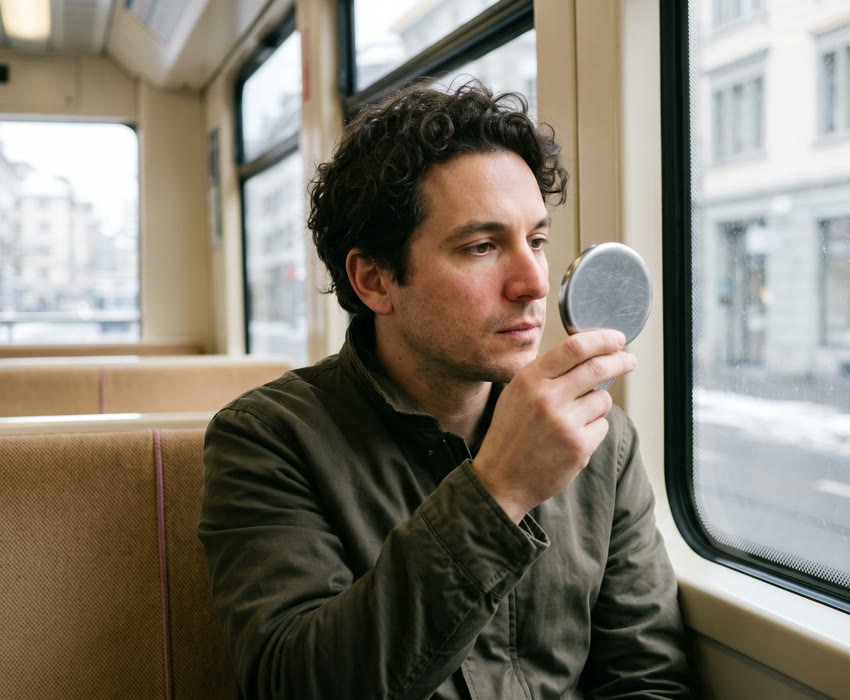
If your cheeks feel hot and turn red when you step from the cold street into a warm tram, this is called flushing. A single moment like this does not allow a diagnosis. Pay attention to how your skin feels once you are comfortably warm again. Does the colour fade completely, does a fine vessel remain visible, or does a whole cheek stay red?
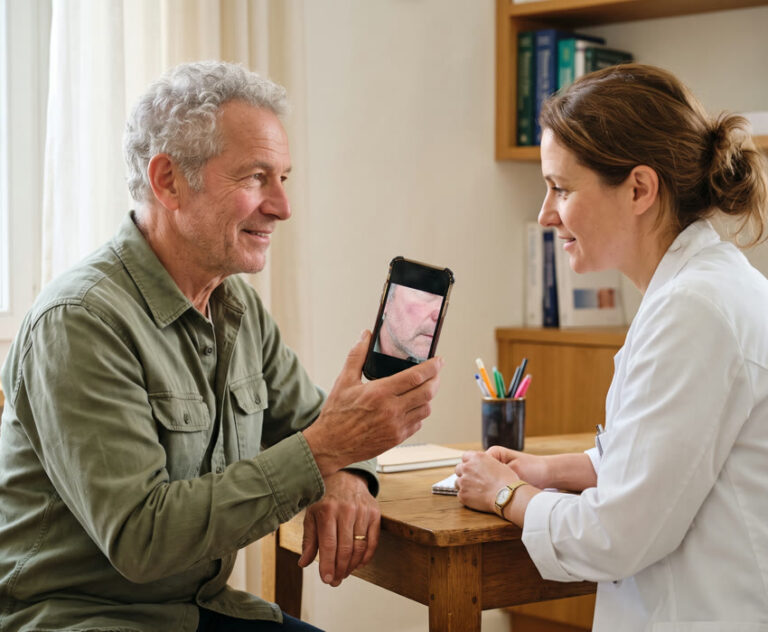
If symptoms keep returning, short notes can help. Write down what you were doing before the flushing, how long the feeling of heat lasted and what remained visible afterwards. A photo taken during a flare can also make the conversation easier. A note such as «After the hot tea both cheeks burned, later only the spot next to my nose stayed red» tells your doctor more than «bad skin day».
Sun, heat, spicy food or alcohol can make rosacea symptoms worse. Which triggers play a role differs from person to person. If you repeatedly notice, for example, that your cheeks burn after a very hot drink, you can let it cool down a little. There is no need to cut out foods you tolerate well just because they appear on a list of possible triggers.
When should you have it checked?
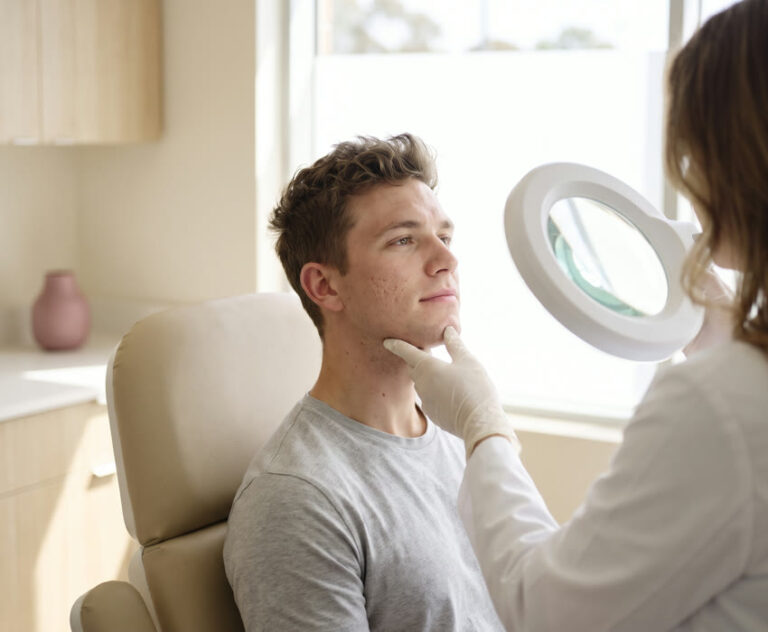
Make an appointment if redness in the centre of your face persists, your cheeks repeatedly burn or inflamed bumps develop. The appearance of the skin, the distribution of the changes and your description of how things have developed are all important for the assessment. This also allows the dermatologist to check whether another cause, such as eczema, could be responsible. If the skin shows a typical picture, a clinical examination is usually sufficient and further tests are generally not needed.
At Swiss Derma Clinic in Zurich, we assess couperose and rosacea dermatologically. Tell us what bothers you most in everyday life. Is it a single visible vein? Or is the burning so unpleasant that even washing your cheeks is difficult? Both matter when choosing a treatment.
If your eyes are affected too
Mention dry eyes or irritated eyelid margins even if your skin shows little change. If you have a newly red eye, a feeling that something is in your eye, eye pain, sensitivity to light or blurred vision, seek medical advice on the same day, for example at an ophthalmology practice or an emergency eye service. This may be caused by inflammation of the cornea. In case of sudden loss of vision or a suddenly very red and painful eye, go to an eye emergency department immediately.
What helps with which finding?
If your skin burns slightly, start with gentle cleansing. Use lukewarm water and carefully pat your face dry afterwards. A rough washcloth or a scrub can irritate the cheeks further. During the day, a well-tolerated sunscreen with a high sun protection factor and a hat that shades your face are a good choice.
If the persistent thread veins bother you most, a vascular laser or intense pulsed light (IPL) can be considered for couperose treatment. These allow dilated vessels to be treated in a targeted way. New thread veins may appear later on. After laser treatment, the skin may be temporarily red or swollen. Whether the expected benefit justifies the effort for you can be discussed on the basis of your skin findings.
If inflamed bumps and pustules are the main problem, a cream or gel prescribed by your doctor can soothe the inflammation. For more pronounced symptoms, tablets may also be an option. If thread veins and inflammation occur together, different treatments can complement each other. You can find out which options we offer in Zurich on our page on treating couperose and rosacea.
Frequently asked questions
Is couperose always an early stage of rosacea?
No. If couperose refers to rosacea with mainly visible vessels, it is already part of the condition. Whether bumps or other symptoms develop later varies from person to person. Individual thread veins on the side of the nose can also exist on their own.
How can I tell the bumps apart from acne?
Blackheads and whiteheads point to acne. In rosacea, the inflamed bumps can look similar, but blackheads and whiteheads are not typical. Also check whether the skin between the bumps stays red and feels hot at times. If it is difficult to tell, have the changes examined.
Can I cover the redness with make-up?
Yes, if your skin tolerates it. A light product with a green tint can visually balance out redness. Apply it without rubbing hard and cleanse your face gently in the evening. If your skin burns when you apply a product, stop using it.
Do I have to wait for a flare before making an appointment?
You can also make an appointment during a calm phase. Describe which areas of your face were affected and whether your eyes were bothering you at the same time. If you already have photos or notes, bring them with you.
This article does not replace a medical examination.