In short: No, based on current knowledge rosacea cannot be cured. With the right treatment, inflamed bumps can heal, redness can fade and symptoms can stay away for a long time. Such a calm phase is called remission. Once your skin has improved, you can discuss with your dermatologist whether a break from treatment or continued treatment makes sense for you.
„If my skin is calm, I am cured“
When you look in the mirror in the morning and, for the first time in a long while, see no inflamed spots, that is a treatment success. With rosacea, active and calm phases can alternate. The skin’s tendency to react again with inflammation or redness remains. How long a calm phase will last cannot be read from a single good day, any more than from a day with many symptoms.
Symptoms can also develop differently within the same area of the face. Perhaps one cheek is still slightly red where painful bumps used to appear again and again. If the bumps have healed and the skin burns less when you wash, something important has already changed. Conversely, skin can look unremarkable in a photo and still feel hot or burn. Both belong in the conversation about how things are going.
„One treatment solves everything“
What you notice on your skin makes a difference to the choice of therapy. A fine blood vessel that remains visible on the nose is something different from a pustule that newly forms there. Both can occur in the same person. The following observations help to define an achievable goal.
| What do you notice? | What can treatment achieve? |
|---|---|
| Inflamed bumps or pustules keep appearing. | Medicines applied to the skin can calm the inflammation. For pronounced or persistent symptoms, tablets may also be an option. |
| A widespread redness remains, even when the skin is smooth. | Certain topical medicines can reduce the redness temporarily. Depending on the findings, light or laser treatment may also be an option. |
| Individual dilated small vessels show on the cheeks or nose. | A suitable vascular laser can make these vessels less visible. New vessels may appear later. |
If you are considering laser treatment, show as precisely as possible during the consultation which areas bother you. That way you can clarify in advance what change to expect there and which risks apply to your skin type. For recurring inflammation, medical therapy may also be useful. You can find out which options we use depending on the findings on our page on rosacea treatment in Zurich.
„Now I will always need medication“
A diagnosis alone does not mean taking tablets for life. During a flare, the first goal may be to get inflamed areas to heal. Once that has been achieved, a different question arises: how can the calm phase be maintained for as long as possible? One option is maintenance therapy. This means you continue treating the skin, for example with a prescribed topical medicine, even though hardly any inflammation is visible.
Your experience with earlier treatments also counts in this decision. Did the pustules come back repeatedly after stopping? Did you tolerate the medicine well? Was it practical to use in everyday life? If your skin has stayed calm for a long time, you can also raise the idea of a supervised break. For a prescribed medicine, agree on how long you should use it, whether a break makes sense and which symptoms should prompt you to get in touch.
A question for your next appointment
„How can I tell from my own skin that I should get in touch again?“ Ask for this to be explained using your own findings. If, for example, individual small vessels stay visible even in good phases while new inflamed bumps signal a flare, you know which change to look out for.
„A relapse was my fault“
Symptoms can return even after successful therapy. This does not mean you made a mistake with your skincare, nor that you should have avoided a particular food. Especially after a longer calm period, a different question is more helpful: do you recognise your earlier symptoms, or has something changed? If your skin used to be mainly red and pustules now appear for the first time, a new assessment is worthwhile.
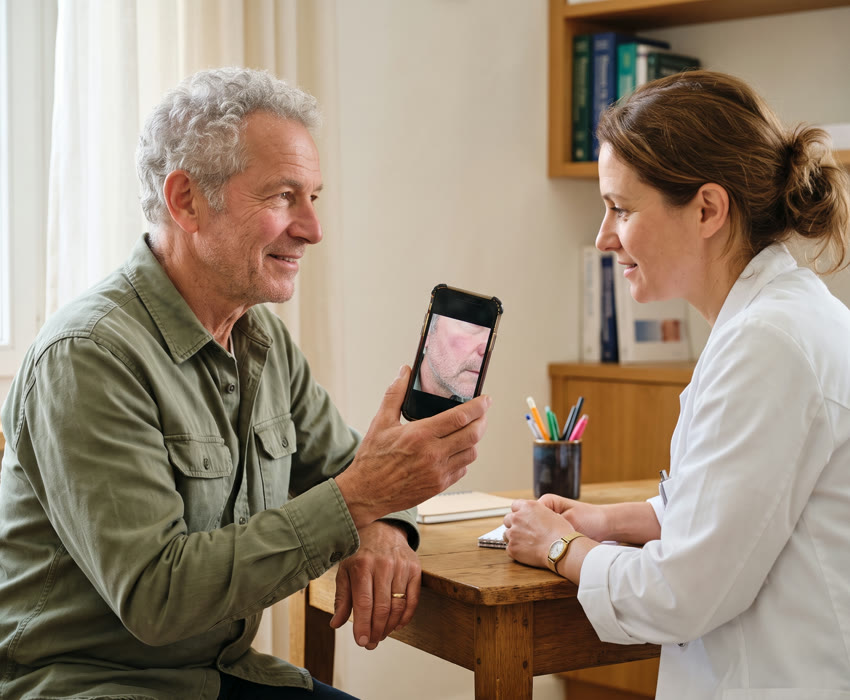
For the appointment, a short note in your own words is enough, for example „My cheeks burn again when I apply cream, the bumps have stayed away so far“. If you like, you can add a photo of the affected area taken in daylight. Also note what did your skin good during the calm phase. Gentle cleansing, a well-tolerated moisturiser and sun protection remain part of basic care. If you notice a link with the season, you will find practical tips in our article on rosacea in winter.
When should you have it checked?
If facial redness keeps recurring, bumps appear or a treatment you used to tolerate well starts causing problems, an appointment is worthwhile. Acne and various forms of eczema can look similar. For a correct assessment, the skin findings and your description of the course are important. Also mention what affects you most in everyday life. If you avoid conversations because of flushing, that is a good reason for a consultation, even if little is visible at the appointment.
At Swiss Derma Clinic in Zurich, we assess which skin changes are present and whether, for example, a topical medicine or a laser for visible vessels may be suitable. Please bring the names of the products you have used so far. This makes it easier to discuss which treatment for your rosacea fits your symptoms and previous experience.
Rosacea can also affect the eyes, even when the facial skin is currently calm. Have a newly red eye or a persistent feeling of something in the eye checked by a doctor promptly. If you have eye pain, sensitivity to light or blurred vision, seek help from an eye specialist on the same day.
Frequently asked questions
How long can rosacea stay calm?
That varies from person to person. There can be longer phases with few symptoms, including after a course of treatment has ended. No reliable time span can be given for an individual. A good reason for your next check-in is a change that you know as the beginning of earlier flares.
Can my skin still burn even though the pustules are gone?
Yes. Burning and stinging are among the possible symptoms of rosacea. Pay attention to whether the burning occurs on its own or immediately after using a particular product. This observation helps to assess whether the skin is still inflamed or whether the product is irritating it.
Are new small vessels after laser treatment a relapse?
Newly visible vessels can form even after successful treatment. On their own, they say little about whether an inflammatory flare is also present. If you would like to discuss changes, show where new vessels are visible and whether other symptoms have appeared.
Is a dermatology appointment worthwhile on a good day?
Yes. Even when your skin is calm, you can discuss what has changed since treatment and how to proceed. A picture from an active phase can show what your skin looks like on other days. Add what the photo cannot show, such as burning or areas that are tender to the touch.
Does rosacea inevitably get worse over the years?
No, not inevitably. Rosacea does not follow a fixed sequence of stages that everyone goes through. Redness, small vessels and inflamed bumps can occur individually or together and develop differently. Early assessment helps to treat symptoms in a targeted way before they become a major burden in everyday life.
This article does not replace a medical examination.