What are warts and why are children often affected?
Warts are benign skin lesions caused by human papillomaviruses (HPV). These viruses enter the skin through the smallest of skin lesions. The immune system of healthy adults can usually control them well. In children, however, the immune system is still developing and this is precisely what makes them more susceptible.
Typical skin areas are
- Hands and fingers
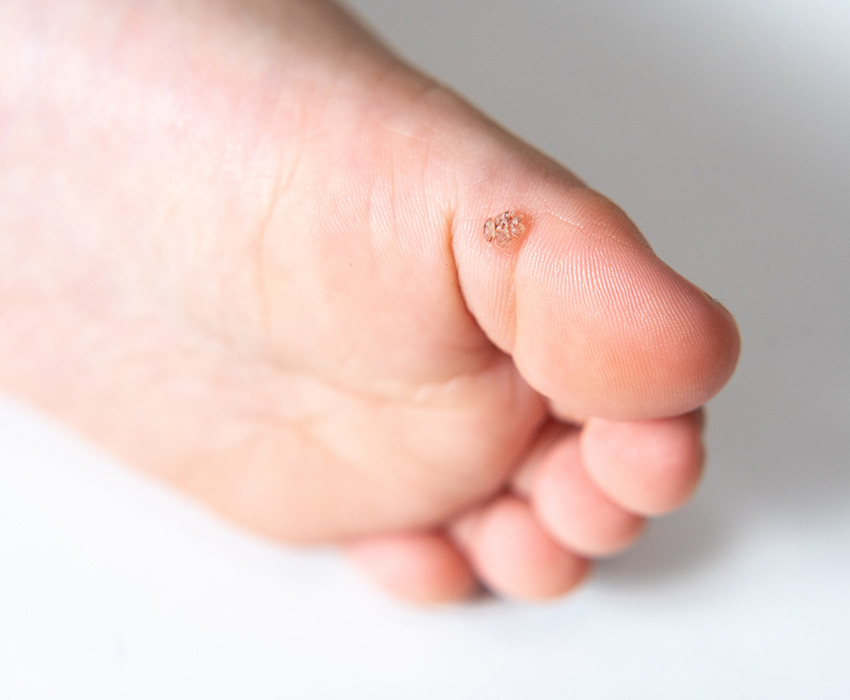
- Soles of the feet (so-called plantar warts)
- Knees, elbows or nail edges
Children often become infected where they walk barefoot a lot or where there is close skin contact: in swimming pools, gyms or at school.
Why warts rarely disappear by themselves
In theory, warts can heal on their own. In practice, it takes months or even years. During this time, they can grow larger, spread, start to hurt and be transferred to other areas of the skin. In the case of plantar warts, they can grow inwards, cause pain when walking and unconsciously affect the child's gait.
The special challenge with children
The treatment of warts in children requires experience, patience and sensitivity. Children's skin reacts more sensitively. Pain, fear or unpleasant memories of treatments should be avoided at all costs. This is our aim at the Swiss Derma Clinic in Zurich. Not every method that works for adults is also suitable for children. The dermatological assessment includes questions such as:
- What type of wart is present?
- How old is the child?
- Is there any pain or inflammation?
- How long has the wart been there?
Modern dermatological treatment for warts in Zurich
At the Swiss Derma Clinic, we have various approaches at our disposal and a calm, trusting atmosphere for you and your children. We take time for our young patients and their parents' concerns. It's not just about removing the warts, it's also about protecting the skin, avoiding scars and supporting the immune system locally. It can make sense to start with gentle methods - because the rule for children in particular is: as little as possible, as much as necessary.
When to see a specialist?
A dermatological examination is advisable if you are unsure whether it is really a wart. A reliable diagnosis protects against unnecessary and incorrect treatments.
You should also consult a specialist doctor if:
- the wart hurts or bleeds
- it increases or "multiplies"
- walking or gripping is impaired by the wart.