In brief
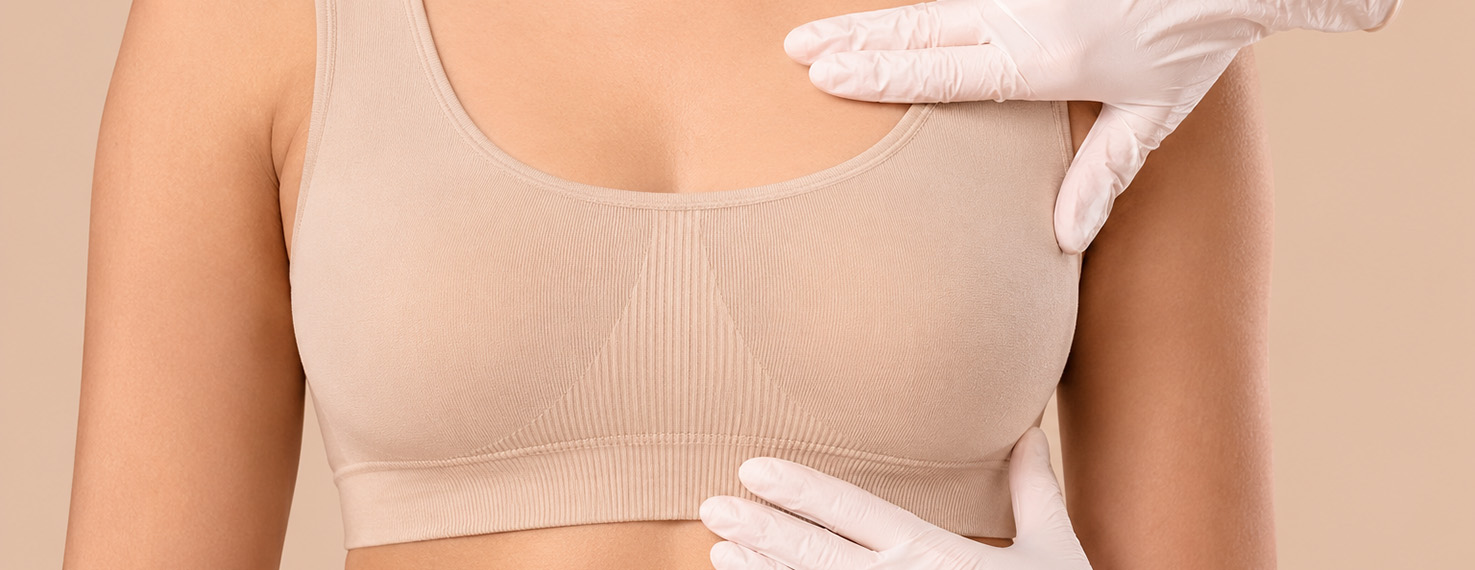
During a breast reduction, excess breast tissue is removed, the breast is reshaped and the nipple is brought into an anatomically suitable position. The procedure can reduce physical complaints and create a harmonious proportion between the breast and the body. The operation is performed under general anaesthesia and is always planned individually.
When is a breast reduction advisable?
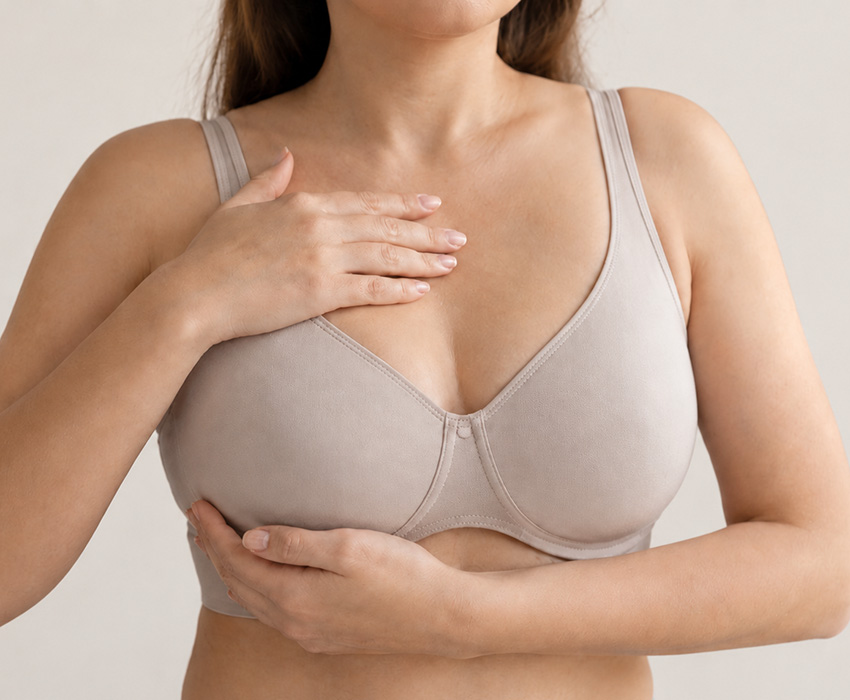
A large breast is not always associated with complaints. However, some patients feel permanently restricted in their everyday life. Typical symptoms are:
- neck, shoulder or back pain
- pressure marks from bra straps
- skin irritation or inflammation in the inframammary fold
- restrictions during sport and movement
- the feeling of a heavy breast
Sometimes these problems intensify after pregnancies, weight changes or with an increasing loss of skin elasticity.
The decisive factor is not the breast size alone
The decisive factor for a breast reduction is not the cup size. More important are the body proportions, the firmness of the skin, the connective tissue and the subcutaneous fat, as well as the individual complaints.
Some women feel their breast is too heavy. Others are bothered by a sagging, drooping shape or a low-lying nipple. Every situation is different, which is why every operation with us is discussed and planned individually.
What changes as a result of the operation
During a breast reduction we remove excess glandular, fatty and skin tissue. The breast is remodelled and the nipple is lifted if needed and adapted to the new breast shape.
Overall, the breast gains shape and support. From a surgical point of view, breast reduction is a special form of breast lift.
Shape, weight and proportion form a unit
Many patients wish for a more harmonious relationship between breast, upper body and silhouette. When planning the operation, we are guided primarily by the individual anatomy, the condition of skin and connective tissue and our patients’ expectations of the result.
Healing process and scars
After the operation, swelling, a feeling of tension and temporary discolouration are normal. The breast needs time to take on its final shape.
As with any surgical procedure, this is not possible without scars. How visible they are depends on the surgical technique and the individual tendency to form scars. In the first few months the scars are more noticeable and then gradually become lighter and softer. As the incisions are largely placed in the natural skin folds, the scars are usually barely visible over time.
Breastfeeding and breast reduction
We are repeatedly asked whether breastfeeding remains possible after a breast reduction. In principle this depends on the extent of the operation and the individual anatomy. The ability to breastfeed later can be preserved in many cases, but cannot be guaranteed. This point is discussed in detail with our patients already during the consultation and is taken into account in the surgical planning.
The treating specialist at the Swiss Derma Clinic in Zurich
Aesthetic breast operations are about surgical experience and an eye for natural aesthetics. Breast reduction at the Swiss Derma Clinic is performed by Dr méd. (I) Nunzioluca Chianese, specialist FMH for Plastic, Reconstructive and Aesthetic Surgery.
Arrange your personal consultation in Zurich.