In short: Adult acne often responds to treatment that targets both inflammation and blocked pores and suits how sensitive your skin is. Depending on severity, this may mean medicines applied to the skin, sometimes combined with tablets. Hormonal influences, previous treatments and any plans for pregnancy are all part of the assessment. Gentle skin care supports the therapy, and if flare-ups keep returning, longer-term maintenance treatment may be worthwhile.
Why does acne occur in adults?
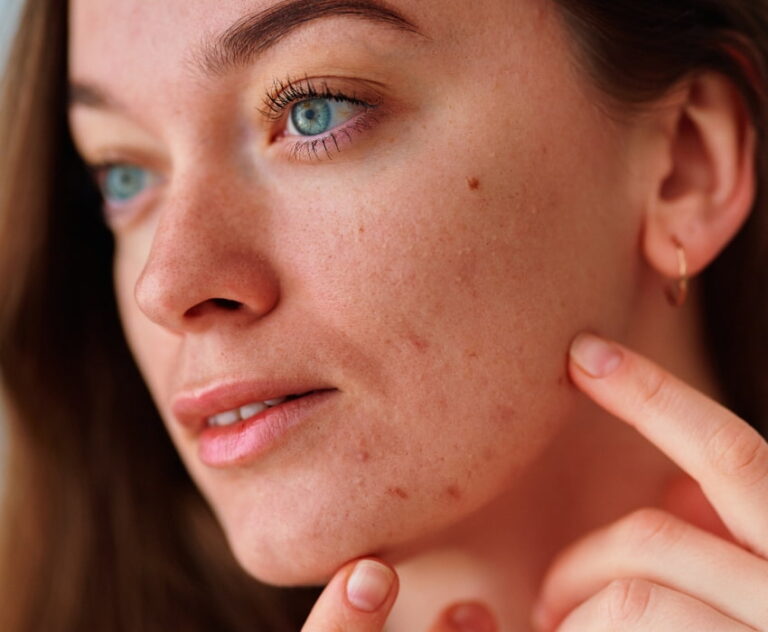
For some people, acne has continued since their teens. For others, it only starts later in life. Acne after the age of 25 is often called adult acne or late-onset acne. It affects women more often than men. Inflammation may appear on the chin and along the jawline, but also on the cheeks, neck, chest or back, so adult acne is not limited to the lower face.
Several processes work together in adults too: sebum production, blocked hair follicle openings and inflammation. Hormones influence the sebaceous glands, and the skin can be sensitive even to normal hormone levels. Acne therefore does not automatically mean there is a measurable hormonal disorder. Our overview of acne explains the general background.
When treating adults, your personal history is particularly useful. Do your symptoms get worse before your period? Have your contraception, medication or skin care products changed? Stress and unsuitable, pore-clogging cosmetics can also play a part. These connections are useful points for the consultation, but they are not a diagnosis. Please do not stop prescribed medication or your contraception on your own.
Is it really acne?
Blackheads and whiteheads, known medically as comedones, together with inflamed spots point towards acne. Deep nodules may also occur. In adults, however, other skin conditions can look similar. A treatment that suits acne is therefore not automatically right for every facial rash.
In rosacea, persistent redness, visible small blood vessels and recurring flushing may be the main features. Small bumps around the mouth or nose with dry, tight skin may fit perioral dermatitis. These are pointers, not a reliable self-diagnosis. If you are unsure, have your skin examined before combining further active ingredients.
Please mention additional signs such as irregular periods, newly increased body hair or thinning scalp hair. In these cases, a targeted hormonal assessment may be useful, for example for polycystic ovary syndrome (PCOS). Whether blood tests are needed depends on the overall picture. Spots on the chin alone do not prove a hormonal disorder.
Which treatment really helps?
The choice depends on the degree of inflammation, the depth of the lesions, the risk of scarring and your previous experience. Tolerability and daily life matter just as much: a treatment plan has to be easy to understand and realistic to follow regularly. The overview below explains the options but does not replace an individual prescription.
| Skin picture or situation | Possible approach | What matters |
|---|---|---|
| Comedones and milder inflammation | Treatment applied to the skin, such as benzoyl peroxide, retinoids or azelaic acid, combined if appropriate. | The choice takes skin sensitivity and contraindications into account. Dryness or irritation are possible. |
| More pronounced inflammatory acne | Additional oral treatment may be needed. | Antibiotics are used for a limited time and together with suitable topical therapy. |
| Persistent acne in women | In selected cases, a hormonally active treatment may be an option. | Contraception needs, pregnancy plans and individual risks have to be considered. |
| Deep nodules, scarring or insufficient response | Systemic therapy led by a dermatologist, possibly with an oral retinoid. | A careful weighing of benefits and risks and medical check-ups are essential. |
Benzoyl peroxide acts against bacteria involved in acne. Topical retinoids help, among other things, to counter blocked pores, while azelaic acid can influence inflammation and the formation of comedones. These medicines are applied to the affected areas as instructed, not generally just to individual visible spots. Which combination is suitable also depends on what your skin has tolerated so far.
Antibiotics are not a permanent skin care routine. Limited use and the right combination help to reduce the risk of resistance. Hormonally active treatment is not a standard solution for every adult woman with acne either. It is discussed in the context of your symptoms, possible contraindications and your life plans.
Mention pregnancy plans early
Retinoids for acne must not be used during pregnancy or when planning a pregnancy, including creams and gels. Strict rules on contraception and monitoring apply to oral retinoids. Please discuss any plans for children, pregnancy and breastfeeding before a treatment is chosen. If you become pregnant during retinoid treatment, stop using the medicine and contact your doctor immediately.
Which skin care supports treatment?
More cleansing does not mean less acne. Vigorous scrubbing can irritate the skin further. Even if your skin looks shiny, your skin care should protect the skin barrier. A well-tolerated moisturiser is particularly helpful when treatment causes dryness.
- Cleanse your skin gently with a mild, soap-free product. Remove make-up in the evening.
- Choose light skin care and sun protection labelled as non-comedogenic, meaning they are less likely to block pores.
- Avoid vigorous rubbing. Leave spots alone as far as possible, as repeated squeezing or picking can increase the risk of scarring.
- Coordinate additional peels and other active products with your treatment. If irritation persists, the plan should be adjusted.
There is not enough evidence for a special diet that reliably treats acne. If you suspect a link with certain foods, you can mention your observations at your appointment. Blanket bans on whole food groups are not a necessary part of every acne treatment. A balanced diet supports your general health but does not replace targeted therapy.
When can you expect improvement?
Acne treatment takes time. The first positive changes may become noticeable after around six to eight weeks. After about twelve weeks, it should be assessed whether the treatment is helping enough and is well tolerated. These are points of orientation, not a promise that your skin will have fully cleared by then.
Look at how things develop: are fewer new inflamed spots appearing? Are deep nodules less frequent? Can you use the treatment as agreed? If you barely use a product because of burning or dryness, that is part of the assessment too. If you have severe irritation, get worse or develop new scars, get in touch sooner rather than waiting for your scheduled follow-up.
Once the inflammation subsides, you can discuss how to maintain the result. For recurring adult acne, maintenance treatment can help to limit further flare-ups. This usually means an adapted topical therapy. Its length and intensity depend on your progress, and not everyone needs the same long-term treatment.
Remaining red or darker marks are not automatically scars. True scars change the texture of the skin. As long as new inflammation is appearing, keeping it under control remains important to limit further damage. Which treatment suits existing scars later on is assessed separately. You can find more on our page about acne and acne scars.
When is an assessment worthwhile?
Have painful nodules, early scarring or frequently recurring flare-ups assessed by a dermatologist. The same applies if a consistently used treatment does not help enough or if the diagnosis is unclear. A sudden onset together with changes in your cycle or increased body hair should also be mentioned. Emotional distress is a good reason to seek help as well, regardless of the number of spots.
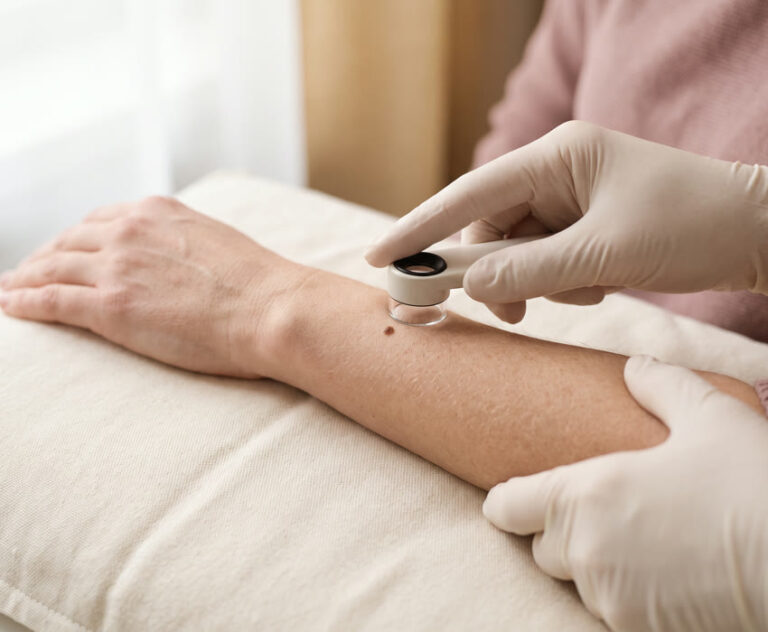
If you would like to have your acne treated in Zurich, we start at Swiss Derma Clinic by assessing your skin. A dermatological acne assessment includes classifying the type of acne, active inflammation, sensitivity and any scars. Our treatment of acne and acne scars includes medical and complementary dermatocosmetic procedures. Which of these make sense depends on your findings.
Please bring a list of your medication and skin care products. It also helps to know which treatments you have already used and for how long, whether side effects occurred and whether you have noticed a link with your cycle. Mention any wish to have children early on. This allows your experience with earlier treatments to be taken into account when planning the next steps.
Frequently asked questions
Are spots on the chin always hormonal?
No. Location alone does not prove a hormonal disorder. Hormones can also influence the sebaceous glands when blood levels are normal. What matters is the course of the acne, the skin findings and additional symptoms such as cycle disturbances or increased body hair.
Can I wear make-up with adult acne?
Yes. Choose non-comedogenic products where possible and remove make-up gently in the evening. If a product irritates your skin or your symptoms get worse under it, it should be considered when reviewing your skin care routine.
Is a cosmetic treatment enough?
With persistent inflammatory acne, medical treatment should be the focus. Cosmetic treatments can complement it. They do not replace a medical assessment in the case of deep nodules, scarring or unclear skin findings.
Why does acne come back after stopping treatment?
Treatment can control the condition while the tendency towards new inflammation remains. A relapse therefore does not automatically mean that the therapy did not work. Discuss whether adapted maintenance treatment makes sense for you.
This article does not replace a medical examination.