In short: Partly. In adults, botulinum toxin can temporarily reduce the force of the jaw muscle during night-time clenching. Whether this means you grind less often or wake up with less pain is hard to predict. If the main goal is to protect your teeth, a night guard fitted by a dentist is the obvious choice. If troublesome muscle pain persists despite suitable measures, an injection may be discussed after a dental assessment. In Switzerland, using it for bruxism is an application outside the approved indications.
When should grinding be seen by a dentist?
Perhaps someone next to you has heard a grinding sound at night. Perhaps you only notice at the end of a working day how tightly you hold your teeth together. Both can point to bruxism. During sleep, the jaw muscles work unconsciously. While awake, you may catch yourself tensing your jaw, for example while reading with concentration. Your teeth do not even have to touch.
An occasional grinding noise on its own is no reason for an injection. Make a dental appointment if you repeatedly wake up with sore jaw muscles, find it hard to open your mouth, your teeth become sensitive or a piece of a tooth edge breaks off. Even if you feel nothing yourself, it is worth mentioning observed grinding at your next check-up.
Your dentist will look at the biting surfaces, fillings and crowns, feel the jaw muscles and check how your jaw moves. A worn tooth edge on its own reveals neither when the wear occurred nor how hard you clench today. It helps if you can describe exactly where it hurts, since when and with which movement. This also makes it possible to check whether a single tooth or the jaw joint better explains the symptoms.
What can a night guard do?
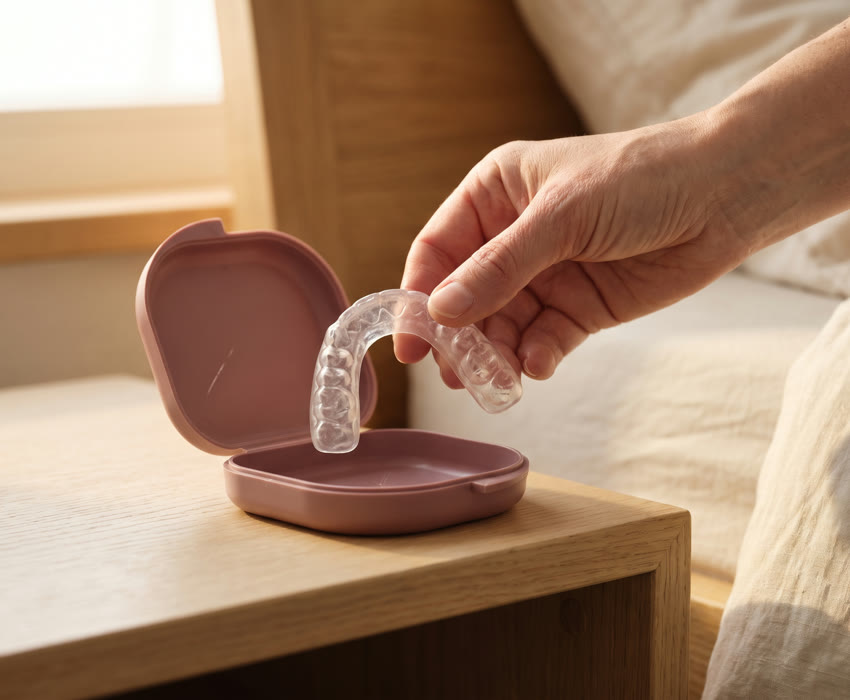
A custom-fitted night guard, also called an occlusal splint, covers the teeth of one jaw. If you grind during sleep, the opposing teeth meet the splint. It therefore protects tooth structure and dental work from direct wear. This is useful protection even if your jaw muscles stay active at night. Marks on the splint are therefore not in themselves a sign that the treatment has failed.
| What do you notice? | Which step fits? |
|---|---|
| Your dentist sees new signs of wear, but you have hardly any symptoms. | Discuss whether a night guard makes sense to protect your teeth and how the wear can be monitored. |
| You press your teeth together while working. | Choose a familiar trigger, such as opening your inbox. Briefly notice your jaw, let it relax and separate your teeth. |
| You wear a splint, but your cheeks ache at breakfast. | Take the splint with you for a check-up. Have the fit, jaw muscles and joints examined. Depending on the findings, targeted physiotherapy can help. |
If a splint presses, show it to your dentist. Describe where the pressure occurs and whether the symptoms existed before you started wearing it. This makes it possible to decide whether the fit needs adjusting or whether the pain needs its own treatment.
What do studies on botulinum toxin show?
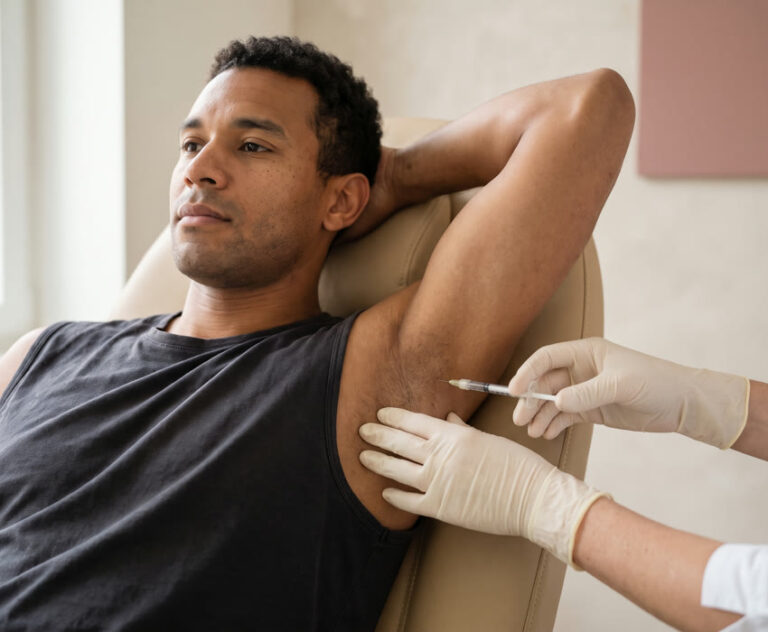
The masseter is the strong muscle you can feel at the side of your cheek when you bite down. Botulinum toxin temporarily dampens the signal from nerve to muscle there. You may know this active substance from the treatment of expression lines. For decisions about bruxism, what counts is what actually changes in clenching, chewing and pain.
In a small sleep laboratory study, researchers recorded how often the jaw muscles tensed and how hard they worked. After an injection into the masseter, the contractions were weaker. Compared with a sham treatment, the number of night-time episodes did not fall measurably. Other studies found fewer measurable episodes for a while. Whether you yourself feel relief cannot be read from a single measurement.
What about pain? In a comparative study, all participants had jaw muscle pain and probably ground their teeth during sleep. Pain decreased both with a splint and after the injection. The injection showed no clear advantage for pain. For some jaw movements, such as opening the mouth, the splint performed better. The studies mainly describe the period after a single treatment. How well repeated injections help in the long term and how safe they are then is less well established.
When might an injection be an option?
A reason for a medical consultation is persistent pain in the jaw muscles that restricts you, for example when eating. First, it should be clear where the pain comes from and what previous measures have achieved. At Swiss Derma Clinic in Zurich, our consultation on masseter treatment also covers your wishes regarding the jawline. Say clearly if your main aim is to chew with less discomfort and you do not want a visible change.
An injection does not replace dental care. It can be an addition when the diagnosis is clear, the teeth are protected and the muscle pain is still a burden. If your main concern is worn teeth, the splint remains the more important step.
Three goals, three answers
Protecting the teeth: this is what a night guard is for. Relieving muscle pain: splint, self-observation, physiotherapy and, in selected cases, an injection. Changing the jawline: an aesthetic goal that needs its own consultation.
What should the medical briefing cover?
In Switzerland, using botulinum toxin for bruxism is off-label use. The active substance is approved for other applications. Ask the doctor to explain what benefit they expect given your findings, what alternatives exist and how you would recognise an improvement together. A tangible goal might be eating your usual breakfast again with less muscle pain.
The reduced muscle strength can also be noticeable when eating. For example, your jaw may tire more quickly for a while when chewing firm bread. Small bruises at the injection site are possible. Tell the treating professional in advance about medication, known muscle disorders and existing swallowing problems. If new difficulties with swallowing, speaking or breathing appear after an injection, seek medical help immediately.
Frequently asked questions
Can I stop wearing my splint after the injection?
If your splint was fitted to protect your teeth, discuss whether to keep wearing it with your dentist. Even if your jaw feels more relaxed, the tooth surfaces can still rub against each other when you grind. The injection does not create a protective layer between the teeth.
What if I also snore?
Tell your GP about observed pauses in breathing, especially if you are very sleepy during the day. Sleep apnoea may be behind this and needs its own assessment. Mention these observations at your splint appointment as well.
Does a strong jawline mean I grind my teeth?
Bruxism cannot be diagnosed from the shape of the face. If the contour is your concern, our page on facial slimming at the jaw muscle describes this treatment goal. Our overview of the masseter and facial contour also explains how the muscle shapes the jawline.
Will the treatment make my face slimmer?
That is possible. If the jaw muscle is used less, it can shrink slightly in the weeks after treatment and make the lower half of the face look slimmer. How noticeable this is varies from person to person. If you do not want a visible change, mention this before treatment.
What should I bring to the consultation?
Useful things to bring are your current splint, your list of medication and short notes about a typical day. Note, for example, whether your cheek already hurts when you wake up or only when you chew. Also mention which measure has helped you with what so far. This makes it easier to tailor the next step to your symptoms.
This article does not replace a medical examination.