What are actinic keratoses?
Actinic keratoses are precursors of white skin cancer. They affect areas of skin that have been exposed to the sun for many years. UV exposure can cause cells in the uppermost layer of the skin to change.
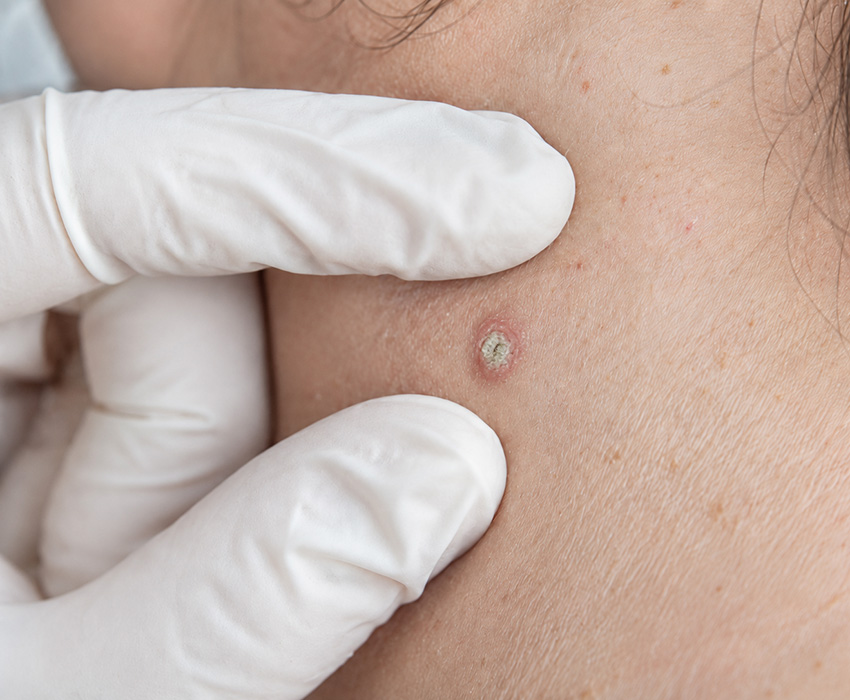
Typical signs are rough, scaly or horny patches of skin. Sometimes only a small rough spot can be felt on the skin. It may be skin-coloured, reddish or brownish. The keratosis may remain flat or become increasingly thick.
When should skin changes be examined?
Warning signs include increased keratinisation, irregular pigmentation, growth, itching, burning or bleeding.
However, actinic keratoses often cause no symptoms.
If a skin change thickens, becomes nodular or grows quickly, bleeds repeatedly or does not heal, it should be examined promptly.
If skin cancer is then suspected, we take a tissue sample and have it examined histologically.
Which areas of skin are affected?
Actinic keratoses can occur individually or affect an entire area of skin with several lesions.
Common areas:
- face and forehead
- hairless scalp and ears
- décolleté
- forearms
- backs of the hands
How are precancerous skin lesions treated?
The type of treatment depends, among other things, on the number, thickness and location of the changes and on the extent of the sun damage.
Treatment options for actinic keratosis at the Swiss Derma Clinic in Zurich, depending on the findings:
- cryotherapy with liquid nitrogen
- topical medication
- photodynamic therapy (PDT)
- laser treatments
- surgical removal
Cryotherapy for individual precancerous lesions
Individual, clearly defined actinic keratoses can, where appropriate, be frozen with liquid nitrogen. The cold damages the altered cells. After the treatment, redness, swelling and a temporary crust may form.
Photodynamic therapy for multiple precancerous lesions
With photodynamic therapy (PDT), we preferably treat larger sun-damaged areas of skin with an active substance that makes the skin sensitive to light. This substance accumulates in the altered cells. The skin is then irradiated with a special light source, which destroys the damaged cells. After the treatment, redness, burning and crusts may occur, which heal over the following days.
Bowen's disease: a squamous cell carcinoma in situ
Bowen's disease is often mentioned together with precancerous skin lesions, but it is already a very early squamous cell carcinoma. The tumour cells are located exclusively in the uppermost layer of the skin and have not yet grown into deeper tissue. In medical terms, this is referred to as squamous cell carcinoma in situ.
Important: consistent UV protection
Precancerous lesions such as actinic keratosis are a sign that the skin has already been damaged by years of UV exposure. Even after successful treatment, new changes may appear in other areas. Regular dermatological check-ups are therefore necessary in the long term.
- avoid direct, intense sun
- use a high sun protection factor
- protect your scalp and face with clothing
- avoid solariums
- observe your skin yourself
Detecting precancerous skin lesions early
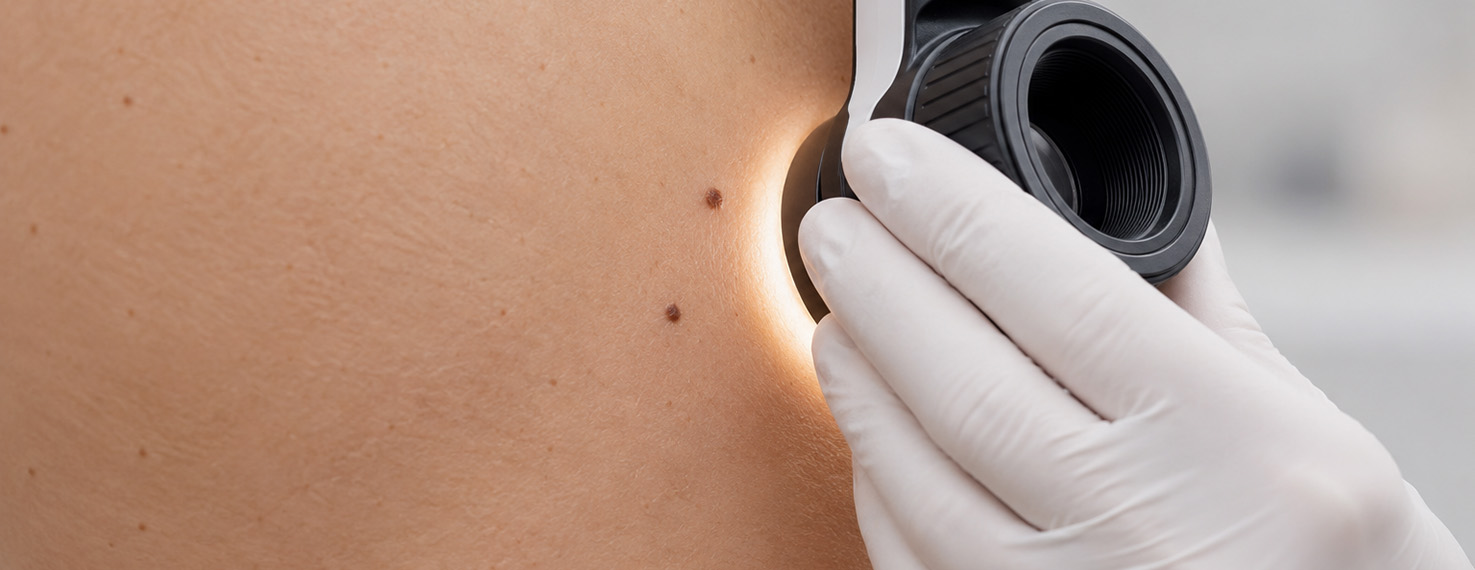
At the Swiss Derma Clinic, we can examine conspicuous skin changes dermoscopically, document them digitally and compare them over time.
If findings are unclear, we take a tissue sample and have it examined in a specialist laboratory. Book your appointment in Zurich here.
Your specialists for precancerous skin lesions in Zurich
At the Swiss Derma Clinic, we are experienced in dealing with precancerous skin lesions. All care, from diagnosis and therapy to follow-up, takes place at our practice.